
10 Landscaping Choices That Create Years of Trouble for North Carolina Homeowners

North Carolina Cooperative Extension calls mid-September through early December the best planting stretch of the year.
That window is open right now.
But one Saturday with a shovel can start a problem so big that the state’s Planned Community Act lets an HOA fine at $100 a day.
These are the landscaping choices that create years of trouble for North Carolina homeowners.
Note: This is general information, not legal advice. Property, homeowners association (HOA), and local ordinance rules vary and are subject to change.
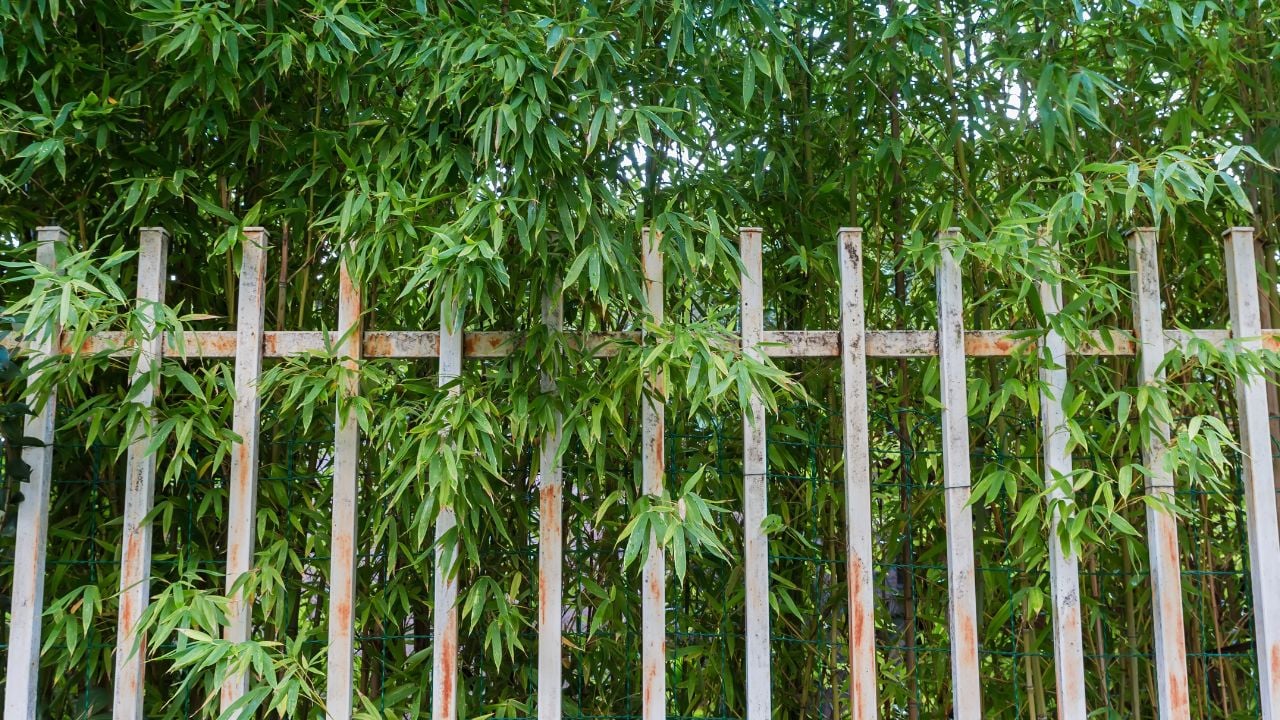
1. Running Bamboo Near the Fence
Homeowners still plant golden and running bamboo in North Carolina yards during the state’s fall planting window, looking for a fast, cheap way to block out a neighbor’s view.
Roots don’t stop at fences.
Running bamboo spreads through underground rhizomes that can push dozens of feet past where it was planted.
North Carolina follows a version of the self-help rule common in American property law.
A neighbor can cut the shoots off at the property line, but they can’t make the grove upstream stop sending new ones.
That leaves the homeowner fighting a spreading stand for years, usually with a rhizome barrier, repeated herbicide, or both.
2. Bradford Pear Out Front
Homeowners still plant Bradford and other Callery pear cultivars as a driveway tree in North Carolina, drawn to the white blooms that show up before almost anything else each spring.
The blooms don’t warn anyone about the branches underneath.
North Carolina State Extension warns the tree’s branch unions are weak by design, and a mild storm is enough to split the crown apart once it matures.
Bees cross-pollinate a planted pear with wild Callery pear growing nearby.
The seedlings grow into thickets armed with thorns up to four inches long.
North Carolina’s Bradford Pear Bounty program lets homeowners trade a cut-down Callery pear for a free native tree before any of that happens.
Skip that swap, and the weak branch unions keep doing what North Carolina State Extension describes for years.
A mature pear keeps dropping split limbs onto the driveway, the roof, or a parked car after every bad storm, until removing the whole tree is the only option left.
3. Leyland Cypress Planted Inches Apart
Leyland cypress is a popular privacy hedge in North Carolina, fast-growing enough to screen a yard from view within a few years.
Many homeowners don’t realize how close is too close.
North Carolina Cooperative Extension says homeowners commonly plant the trees only a few inches apart instead of the recommended 10 to 15 feet.
The tight spacing crowds the roots and cuts off airflow.
Crowded trees are exactly where canker and needle blight take hold.
Both diseases kill branches and whole sections of the hedge.
Canker has no chemical control.
Needle blight is different: Extension recommends a preventive fungicide, such as thiophanate-methyl or myclobutanil, applied from late spring through summer.
A homeowner ends up staring at a hedge with a gap in the middle that nothing else grows fast enough to fill.
4. English Ivy on the Siding
Homeowners plant English ivy as a low-maintenance groundcover in North Carolina yards, then let it go where it meets the house.
That’s the expensive part.
North Carolina State Extension classifies English ivy as invasive.
Its vines curl into gutters and damage painted surfaces, loose mortar, and aluminum siding, the agency warns.
The same vines climb trees and shrubs and eventually kill them.
Once ivy is established, Extension calls it nearly impossible to eradicate by hand.
Pulling it off a wall means scraping and repainting behind it.
On a tree, the roots resprout, so a homeowner repeats the whole removal almost every year.
5. Wisteria Climbing a Tree or Trellis
North Carolina homeowners plant Chinese wisteria for its purple spring blooms, usually training it up a trellis, arbor, or a tree at the edge of the yard.
It won’t stay decorative.
Left on a tree, wisteria can add enough weight that a heavy wind brings the whole tree down, North Carolina Cooperative Extension reports.
A stem left unchecked can also thicken to 10 inches across and girdle whatever it’s climbing.
Cutting or pulling rarely works.
Extension recommends the homeowner use chemical treatment instead, applied over several years as new sprouts keep coming back from the roots.
Psst! How much landscaping trouble is already sitting in your North Carolina yard? Run through this checklist and see where you stand.
6. Willow Near the Sewer Line
Willows and silver maples are popular shade trees in North Carolina because they grow fast and tolerate wet soil.
That thirst is the problem.
A Kentucky sanitation utility that studies pipe damage names willow and silver maple among the tree species with the most aggressive, water-seeking root systems.
Roots don’t crack pipes.
Tree roots exploit cracks and gaps that already exist in aging clay or cast-iron sewer lines, North Carolina Cooperative Extension notes.
Once inside, roots can spread two to three times as wide as the tree is tall.
A sapling planted near the line can grow into that pipe by the time it’s mature, and the fix usually starts with an expensive plumber’s bill.
7. Regrading Toward the Neighbor’s Yard
North Carolina homeowners regrade a soggy yard more often than they realize, adding fill dirt or reshaping a slope so water finally drains away from the house.
Where that water goes next is a legal question.
North Carolina follows what courts call the reasonable use rule, which lets a landowner grade and reshape drainage on their property even if it affects a neighbor.
Protection ends at “substantial damage.”
A homeowner who diverts water so it floods a neighbor’s yard, or who paves over a natural drainage channel, can face a lawsuit for the damage.
That liability can surface years after a homeowner finishes the grading.
8. Paving Past the Impervious Limit
Extra patio space, a wider driveway, or a paved fire pit area are common upgrades on older North Carolina lots.
By the time anyone runs the numbers, the concrete’s already down.
Each one eats into a limit many homeowners have never checked.
Raleigh is one of many North Carolina cities that caps how much of an older, smaller lot can be paved over.
Impervious limits there run as low as 20% of the lot, depending on the zoning.
Cross that line, and the fix isn’t simple.
The city requires either a professional engineer’s flood study or an engineered stormwater control measure before the extra paving can stay.
Both of those add an engineering bill on top of whatever the patio itself cost.
Skip that requirement, and Raleigh’s development code treats every day the lot stays out of compliance as a new violation.
The civil penalties can reach $5,000 a day until the property is brought back into line.
9. Skipping HOA Approval
A big share of North Carolina residents live inside a homeowners association, and landscaping is one of the first things its architectural review committee checks.
Skipping that step doesn’t save time.
North Carolina’s Planned Community Act lets an association issue a notice, then a fine, for landscaping installed without sign-off.
Unpaid fines don’t just disappear.
They can turn into a lien recorded against the home, the same tool a mortgage lender or a contractor uses to collect an unpaid bill.
What North Carolina HOA Fines Can Add Up To
North Carolina caps a homeowners association’s fine at $100 for a single landscaping violation once a hearing has happened.
After the fifth day past that hearing, the association can add another $100 for every day the yard stays out of compliance, with no second hearing required.
10. Topping the Crape Myrtles
Crape myrtles are the signature flowering tree in North Carolina yards, and every summer many homeowners cut them back hard to bare stubs.
Landscapers call it “crape murder.”
North Carolina Cooperative Extension says the practice delays flowering, weakens the tree’s branching, and makes it more vulnerable to insects and disease.
The cuts don’t heal clean.
Extension notes the tree responds by growing thick, knotted “knuckles” at each cut, and every year of topping adds another lumpy joint that never goes away.
Crape myrtles are naturally small, multi-trunked trees, not shrubs, so the yearly fix is simply cutting less.
3 North Carolina Phrases That Sound Polite. They’re Anything But That

Linguists at North Carolina State University have spent decades recording the way North Carolinians talk, and one pattern keeps turning up on tape.
The warmest-sounding line in the room is often the one that means trouble is on its way.
3 North Carolina Phrases That Sound Polite. They’re Anything But That
9 North Carolina Waterfalls Worth the Hike, Ranked by the Hikers Who’ve Made the Climb

Transylvania County alone holds more than 250 named waterfalls, and the waterfalls locals send visitors to rarely match the postcard everybody already knows.
The state’s oldest hiking club ranked them by the hikers who’ve made the climb themselves.
9 North Carolina Waterfalls Worth the Hike, Ranked by the Hikers Who’ve Made the Climb
