

3 North Carolina Phrases That Sound Polite. They’re Anything But That

Linguists at North Carolina State University (NC State) have spent decades recording how North Carolinians talk.
One pattern keeps showing up in the tapes: The warmest-sounding line in the room can mean trouble.
These are the North Carolina phrases that sound polite but carry a very different message underneath.
1. “Not to Be Ugly, But…”
North Carolinians open with “not to be ugly, but” right before saying something that would sound rude any other way.
The phrase sounds like a promise to stay kind.
It’s a warning.
In Appalachian and Southern speech, “ugly” describes behavior, not looks: Bad-tempered, mean, or disrespectful.
The Appalachian English dictionary at the University of South Carolina documents the usage across generations of mountain speech, the same speech that carries into North Carolina’s western counties.
So “not to be ugly” means “not to be mean,” and the sentence right after it usually tests that promise.
A cashier in a Boone grocery store says it right before telling a customer the coupon expired yesterday.
The courtesy up front is a habit, but it’s accompanied by bluntness that other Americans aren’t necessarily used to.
Almost nobody catches it the first time.
2. “Bless Your Heart”
North Carolinians reach for “bless your heart” so often that Wilmington humor writer Celia Rivenbark built an entire book around it, and the title gives the joke away: Bless Your Heart, Tramp.
The words sound like comfort, warm and sympathetic.
That’s rarely the whole story.
A neighbor in a Wilmington cul-de-sac hears them the week she parks a boat with a flat tire in her own driveway for the third summer running.
NC State linguist Walt Wolfram has spent decades documenting how North Carolinians talk, and he describes the phrase without much romance: A superficial compliment built to camouflage an underlying insult.
The warmth in the delivery isn’t an accident.
North Carolinians use it on purpose, so the words underneath don’t land as hard.
A grandmother in Winston-Salem can say the same four words to a sick friend and to a neighbor who just embarrassed herself, and the delivery sounds identical either way.
Only the timing tells you which meaning just landed.
3. “Might Could”
North Carolinians reach for “might could” whenever a plan sounds good but a promise sounds risky.
“I might could stop by Saturday” sounds like an offer, easygoing and open to it.
NC State’s Language and Life Project has recorded the phrase across every part of the state and every social class, and its researchers classify it as a double modal, a grammatical structure built to keep a commitment from sounding final.
Wolfram, the project’s longtime director, groups it with “bless your heart” as part of the same code: A friendly-sounding phrase that lets a North Carolinian avoid saying no directly.
North Carolina’s own governors have used the phrase in public for decades without anyone treating it as a slip.
It lets them sound decisive while keeping every option open.
A contractor on a Greensboro kitchen remodel says it about a Saturday start date in March.
April arrives before the crew does.
Nobody lied.
The homeowner just heard “yes” in a sentence built to promise nothing at all.
Psst! How much do you know about North Carolina’s sayings? Guess myth or fact, then tap each card to see how you did.
North Carolina’s Population Boom Is Testing the Code
North Carolina keeps adding new residents faster than nearly every other state, and many of them are hearing these phrases for the first time.
The state welcomed more new residents from other states than any other state in the country between mid-2024 and mid-2025.
That’s a wave large enough to reshape entire subdivisions in a single moving season.
Nobody hands out a translation.
The Numbers Behind North Carolina’s Newcomer Wave
North Carolina’s net gain from domestic migration came to about 84,000 people between mid-2024 and mid-2025.
That’s on top of statewide growth of roughly 146,000 people, pushing the population past 11.2 million.
North Carolina’s growth rate for that stretch came to 1.3%, the third-fastest pace of any state in the country.
North Carolina’s Dialects Run Deeper Than Manners
North Carolina’s politeness code is only part of a bigger picture: Distinct regional dialects linguists have spent decades mapping across the state.
Researchers with North Carolina State University’s Language and Life Project have recorded more than 3,500 interviews across the state, from Murphy to Manteo.
The Outer Banks carries its own vowel sound locals call “hoi toide,” a holdover close enough to old English speech patterns that linguists still study it.
The Appalachian mountains use “sigogglin'” for anything crooked or off-balance: A barn, a porch, or a picture frame.
The Piedmont, where many transplants land first, runs closest to the Southern accent outsiders expect.
Older residents in parts of the Coastal Plain still call a car’s trunk a “boot,” an older English form that survived in isolated rural communities long after it faded from everyday American speech.
It isn’t one accent.
No single map tells the whole story.
A word that means one thing in Boone can carry a slightly different weight by the time it reaches Wilmington.
In Ocracoke, Harkers Island, and Lumbee communities to the east, whether a speaker says “was” or “were” often depends on whether the sentence is negative, not on whether the subject is singular or plural.
6 Lidl Habits That Give Away a North Carolina Shopper
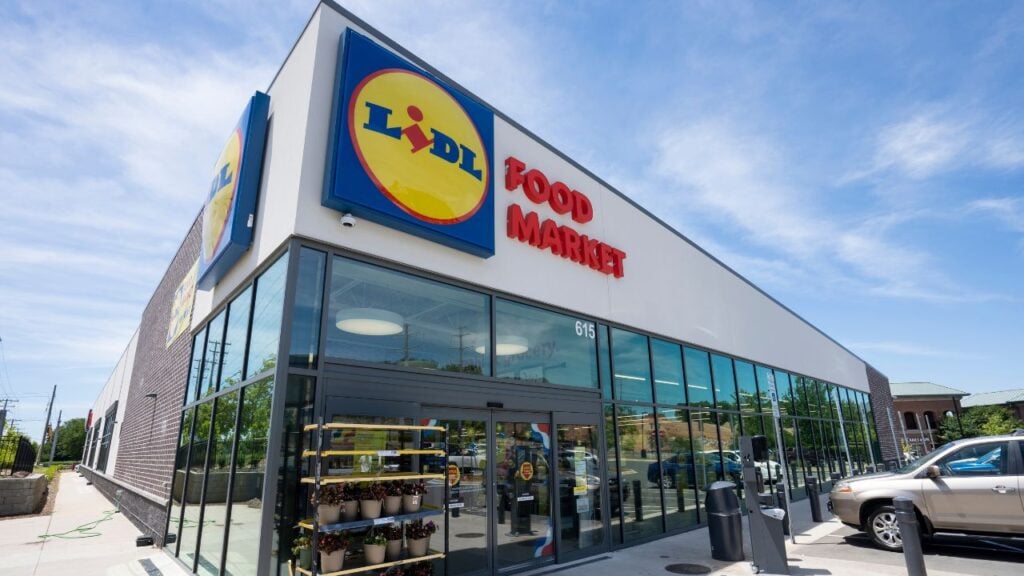
North Carolinians had a running head start on Lidl, shopping the chain for years before much of the country even learned how to pronounce it.
That head start still shows up at the register, in small habits a newer shopper never quite picks up.
6 Lidl Habits That Give Away a North Carolina Shopper
8 Money Mistakes North Carolina Renters Make Before Signing a Lease

A renter in Durham signs a lease at the kitchen table while the landlord hovers, and page three never gets a second look.
That’s the page carrying the dollar limits North Carolina law enforces, and skipping it costs more than many new renters expect.
8 Money Mistakes North Carolina Renters Make Before Signing a Lease
