
10 Louisiana Words That Mean Something Different in Louisiana

A visitor to Louisiana can hear a perfectly normal English word and still have no idea what it means.
Louisianans use these words every day, and a dictionary may not back them up.
Here’s a guide to what these words really mean, and why.
Note: This is general information, not legal advice. Louisiana statutes and Civil Code articles are subject to change.
1. Neutral Ground
Merriam-Webster defines the word neutral as not engaged on either side and lists a duel held on neutral ground among its examples.
In 1806, Spanish Lieutenant Colonel Simon de Herrera and American General James Wilkinson agreed that neither side would send forces into the area between the Sabine and Calcasieu Rivers.
Then the name traveled.
The American Heritage Dictionary labels the New Orleans sense Louisiana and Southern Mississippi.
Its history note ties the name to the strip of land between the English-speaking American and Creole neighborhoods that became Canal Street’s median.
The Picayune ran an item on “The Neutral Ground” on March 11, 1837, which 64 Parishes counts among the first clear published uses for Canal Street.
The second sense is the grass strip, often planted with shade trees, between a sidewalk and a street.
So if a New Orleans friend tells you to wait on the neutral ground, you’re heading for the grass strip, not a battlefield.
2. Debris
Debris means the remains of something broken down or destroyed.
Merriam-Webster lists ruins, rock fragments and rubbish under debris, not roast beef.
The debris on your roast beef po-boy is charred bits of beef flavored with rendered fat, according to Louisiana’s tourism office.
The debris also lends the dish a crisp bite.
You’re eating dinner, not damage.
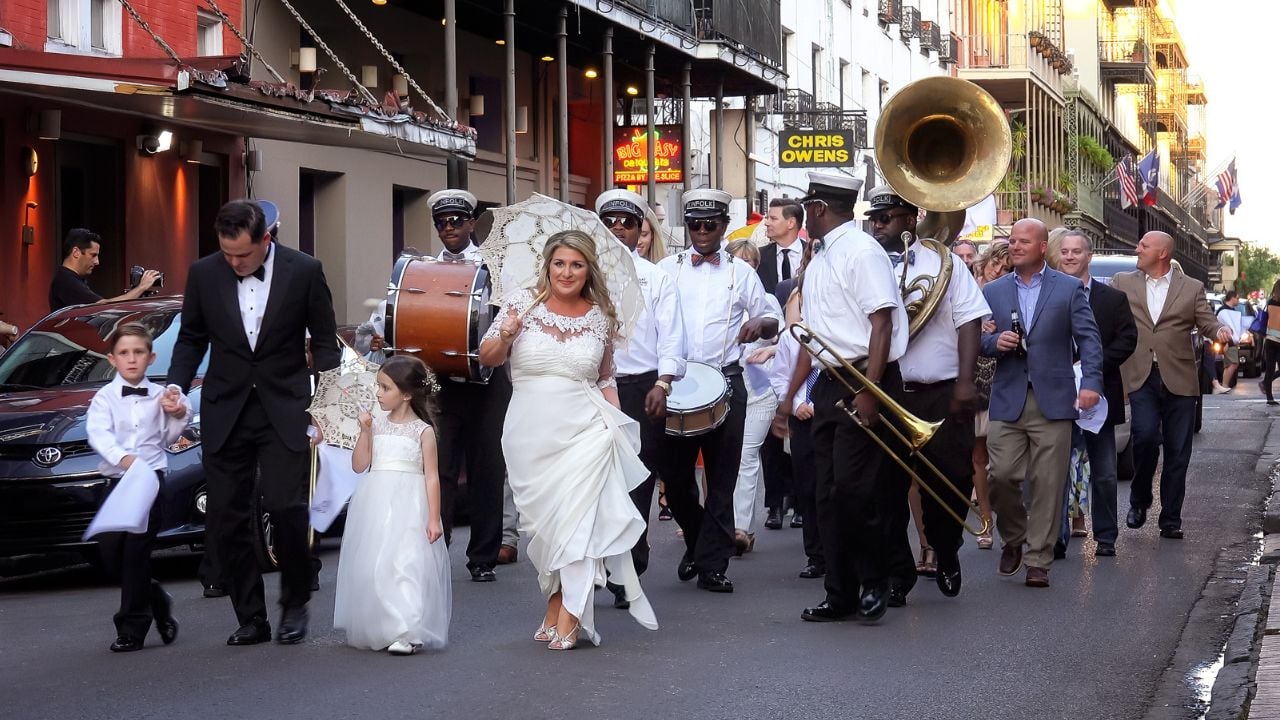
3. Second Line
Second line is an adjective in Merriam-Webster, meaning not the usual or preferred choice, as in second-line drugs to treat tuberculosis.
At a jazz funeral, the main line is the musicians, funeral directors, family and friends of the dead.
In New Orleans, the crowd marching behind them is the second line, according to 64 Parishes.
Then comes the music.
Some second liners make their own sounds by singing, clapping, blowing whistles, hitting cowbells and beer bottles, and shaking tambourines.
If you watch closely, many second liners show off dance steps such as the high step and the buck jump.
If you visit between September and May, at least one parade takes place every Sunday.
The second line split from the jazz funeral at some point in the late nineteenth century and developed a separate identity.
4. Tutor
If you hire a tutor for math, you get a person charged with the instruction and guidance of another.
Merriam-Webster’s legal dictionary adds a Louisiana civil law sense, a guardian of a minor.
Louisiana’s Department of Children and Family Services explains that a court appoints a tutor to be legally responsible for caring for a minor child.
Tutorship generally ends when the child turns 18 or is emancipated, though a court may extend it for a child with a serious developmental disability.
That isn’t homework help.
What a Louisiana Tutor Handles
A tutor’s duties come from the court’s order.
If a court appoints you, those duties may include the custody and care of the child, with medical decisions.
The same list includes raising and educating the child.
It also includes managing anything the child owns.
If the child owns property, the tutor gives the court an annual report.
A court can appoint a non-parent named in a parent’s will or, when the will names no one, a close blood relative.
The tutor takes an oath and posts security equal to the child’s assets, and the court appoints an undertutor for oversight.
5. Coulee
Coulee has four meanings in the American Heritage Dictionary.
Geography decides which one.
Out West, it’s a deep gulch or ravine with sloping sides, often dry in summer.
The Upper Midwest uses it for a valley with hills on either side.
Louisiana and southern Mississippi use it for a small stream, bayou or canal, or a streambed that’s often dry depending on the season.
A fourth sense, a stream of molten lava, carries no regional label.
So when you see a coulee on a map of bayou country, you’re looking for a stream or streambed, not a Midwestern valley.
6. Banquette
Banquette has three meanings.
Merriam-Webster lists banquette as a raised way for gunners along a trench, a long upholstered bench and, labeled Southern US, a sidewalk.
The New Orleans tourism group New Orleans & Company defines a banquette as a elevated pathway.
So if a New Orleans guide sends you along the banquette, you can picture a sidewalk instead of a bench.
7. Prescription
If you hand a pharmacist a prescription, you’re handing over a written direction for the preparation and use of a medicine.
Louisiana’s Civil Code uses the same word for a time limit.
Article 3447 defines liberative prescription as a way of barring an action after a period of inaction.
In plain terms, liberative prescription works as a deadline for filing a lawsuit, and once the period runs out, the right can no longer be enforced in Louisiana courts.
Say the law sets a period for one type of claim and you file a day after it ends.
You’re likely too late.
Merriam-Webster’s legal dictionary lists that Louisiana sense.
It also lists a sense for gaining an interest in land, such as an easement, through long-term, continuous, open and hostile use.
No pharmacy is involved.
8. Parish
Merriam-Webster’s first definition of parish is a church district, the area committed to one pastor.
In 1807, the Americans in the Territory of Orleans looked at the twenty-one church districts left from late colonial times.
After some adjustments, they adapted those districts into nineteen official parishes.
Church districts became civil ones.
The third sense is a civil division of the state of Louisiana corresponding to a county in other states.
When you cross from one parish into the next, you’re crossing what other states call a county line.
The Census Bureau also calls these divisions parishes.
9. Interdict
Merriam-Webster’s legal dictionary defines interdict as to prohibit or bar an act, or to cut off something like a drug shipment by force.
In Louisiana civil law, it also means to take away a person’s right to care for themselves or manage their affairs because of mental incapacity.
Article 389 of the Civil Code uses the noun interdiction, and says a court may order the full interdiction of an adult or an emancipated minor.
Only a court decides.
Interdiction requires an infirmity that leaves the person unable to consistently make reasoned decisions about the care of their person and property.
Being unable to communicate those decisions counts too.
A court can order interdiction only when less restrictive means can’t protect the person’s interests.
If you meet the word in a Louisiana interdiction case, it concerns a person’s decisions, not a ban.
Psst! How many of these Louisiana words do you already know? Run through this checklist and see where you stand.
10. Gallery
Gallery, in Merriam-Webster, can mean a room devoted to the exhibition of works of art.
If you’re in Louisiana, a gallery can also be an open, roofed porch running along at least one side of a house.
Texas, Arkansas and Mississippi also use gallery for a porch.
Merriam-Webster labels its porch sense Southern US and Midland US.
The American Heritage Dictionary’s usage note says the porch sense probably came into the English of 18th-century Louisiana from Acadian French.
So if someone in Louisiana, Texas, Arkansas or Mississippi asks you to meet on the gallery, you can expect a porch.
The paintings can wait.
11 Things Professional Louisiana Pet Sitters Notice the Minute They Enter Your Home

Your dog may be the first to greet your pet sitter at the door.
But your dog isn’t the only thing getting their attention.
11 Things Professional Louisiana Pet Sitters Notice the Minute They Enter Your Home
7 Workplace Rights Louisianans Assume They Have and Don’t

Fewer than 5 workers out of every 100 in Louisiana belong to a union, according to the U.S. Bureau of Labor Statistics.
That raises the question of which workplace rights Louisianans can count on.
