
10 Luxury Features That Create More Work for Minnesota Homeowners

Minnesota’s frost line reaches five feet deep in the northern half of the state, according to maps Minnesota’s Department of Labor and Industry publishes for builders.
The ground freezes that deep every winter.
Homeowners bury, pour, and build all kinds of expensive extras into a Minnesota lot, and every one of them has to survive the freeze each winter.
These are the luxury features that often end up creating more work for Minnesota homeowners.
1. Heated Driveways
A heated driveway is sold to homeowners as an end to shoveling, melting snow through cables or tubing buried under the pavement.
But many don’t consider the high electric bill it can create.
A 400-square-foot system running through a full Minnesota winter costs around $288 a season to operate, per one manufacturer’s cost breakdown for Minnesota and its Midwest neighbors.
That’s on top of Minnesota’s average electricity price, which ran 12.35 cents per kilowatt-hour in 2024, per the U.S. Energy Information Administration.
The snow season drags on long enough that the system keeps tripping back on, storm after storm, for months.
Many systems also skip the garage apron and the walk to the mailbox, so a homeowner still grabs a shovel for the edges the cables never reach.
2. In-Ground Pools
Owning an in-ground pool means a full open-and-close cycle for homeowners every single year, something a Sun Belt pool owner never bothers with.
Swim season runs from around mid-May to mid-September, a few short months squeezed between two long stretches of cold.
The season goes fast.
Before the first hard freeze, pool owners lower the water, blow out every line, and pull the pump.
Skip any of that, and cracked pipes or burst fittings are waiting in spring.
3. Sprinkler Systems
Sprinkler systems bury a homeowner’s irrigation pipe just deep enough to survive a lawn, and nowhere near deep enough to survive the winter.
The frost line runs as deep as five feet in the northern part of the state, per the state’s building code.
An irrigation line sitting that shallow has nothing between it and a freezing winter.
So every fall, Minnesota homeowners hire someone to blast the lines clear with compressed air, a service that runs about $75 to $85 in the Twin Cities.
That’s not optional.
Miss the appointment, and a cracked pipe or a split backflow valve costs a lot more to fix once the thaw finds it.
The Gap That Cracks Minnesota’s Sprinkler Lines
Minnesota’s irrigation lines typically sit only 10 to 18 inches underground, a shallow range many sprinkler contractors treat as normal.
Minnesota’s building code requires footings to clear a frost line of 42 inches in the southern part of the state and a full 60 inches in the north.
That gap between the pipe and the frost is exactly why a skipped fall blowout cracks a line many homeowners assumed was buried plenty deep.
4. Complex Rooflines and Skylights
A heavy snow load finds a lot more edges to pile up against on a luxury home’s complex roofline with skylights.
Minnesota’s building code engineers roofs to carry as much as 60 pounds of snow per square foot in the northern part of the state.
Every valley, dormer, and skylight in that roofline is a spot where heat escapes unevenly, melting snow on the warm patches and refreezing it at the cold eaves.
Ice dams start right there.
Removing one from a Twin Cities roof runs about $1,200 on average, and a busy roofline with more edges tends to land on the expensive end of that range.
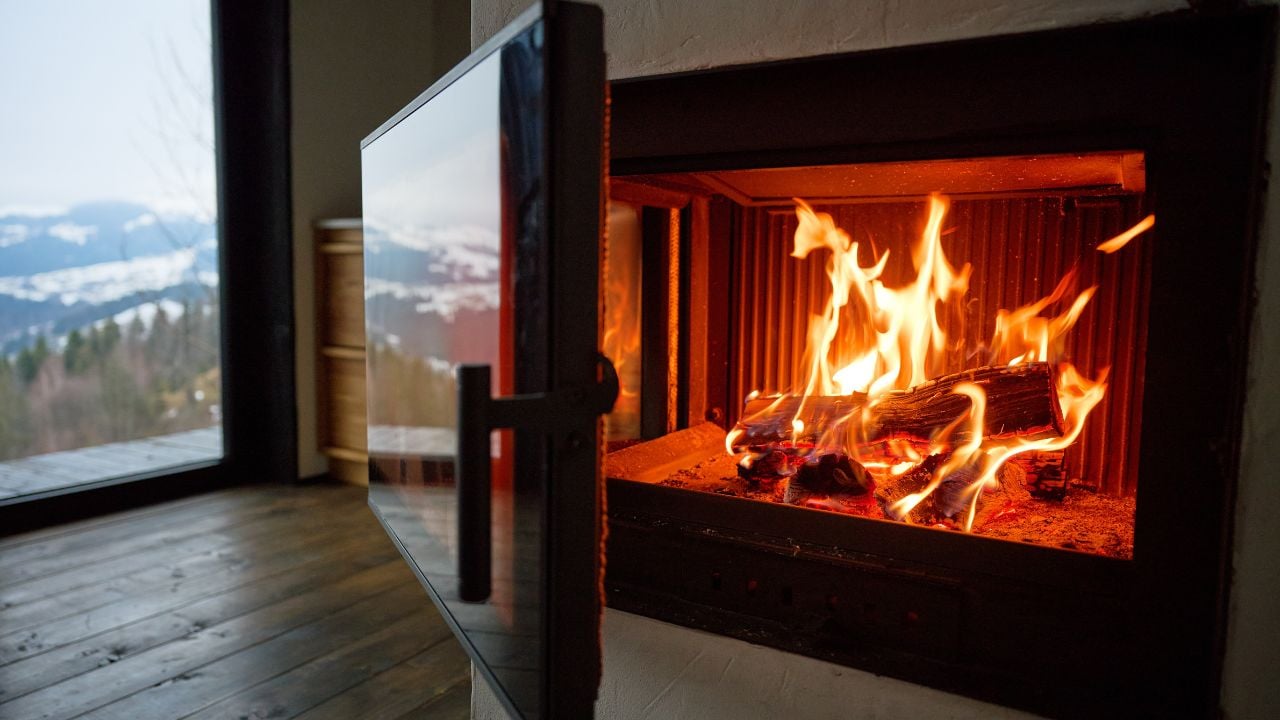
5. Wood-Burning Fireplaces
Wood-burning fireplaces earn their keep for homeowners during a winter that stretches on for months.
All that extra burning builds up creosote faster than it would in a milder climate, and creosote is flammable.
That adds up fast.
The Chimney Safety Institute of America recommends a certified sweep inspect a wood-burning system once a year, and clean it whenever the buildup calls for it.
A heavy-burning household often needs that cleaning more than once a season.
Repeated freeze-and-thaw cycles can crack mortar joints over time as well, so an exterior chimney is worth a visual check for gaps in the brick.
6. Large Decks
Large decks create more work for homeowners than a small patio ever will, since every extra footing sits in ground that shifts each spring.
The clay-heavy soil around the Twin Cities swells through every freeze-thaw cycle, and a footing set too shallow shifts right along with it.
A cracked footing follows.
Builders call it frost heave, and it shows up as a deck board that suddenly won’t sit level anymore.
More square footage also means more boards exposed to the snow load, plus more surface for ice to grip.
A big deck needs more shoveling and de-icing to keep the wood from rotting underneath it.
A small patio skips that work.
7. Hot Tubs
Winter makes a hot tub work harder, dropping the outside air far below the water’s temperature.
The heater has to fight a much bigger gap between the water and the air than it does in a mild climate.
That gap only grows wider on the coldest nights.
The heater loses ground first.
One Duluth hot tub retailer estimates that cold weather alone can push a household’s running cost up by 20% to 30% compared to a mild-season month.
A frozen cover latch or a snowdrift against the cabinet adds a chore on top of that.
8. Elaborate Landscaping
Elaborate landscaping features run on a growing season that stays short on both ends.
The state’s growing season sits between a last spring freeze and a first fall freeze, per the Minnesota Department of Natural Resources (DNR).
Both dates can arrive with little warning.
Neither date waits.
That leaves a tight window to plant an elaborate bed and just as tight a window to tear it down before the ground locks up.
Tender, non-native shrubs and perennials that fill out a showcase yard also need burlap wrapping or a mounded layer of mulch to survive a cold snap.
A simpler yard of hardy native plants skips that whole ritual.
9. Walkout Basements With Extensive Glazing
Minnesota’s heating bills run highest in homes with walkout basements and extensive glazing, since glass loses heat far quicker than an insulated wall.
All that glass gives winter far more surface to pull warmth through than a few small basement windows ever would.
Minnesota’s energy code caps that heat loss at a fenestration U-factor of 0.32, the limit written into the climate zones that cover the entire state.
A glass wall that size has to clear that same limit as a single small window.
Meeting it costs more.
The window wells built into that design fill with drifting snow every storm.
A Hennepin County drainage company warns that snowmelt pooling in an uncovered well can seep in and flood the room below.
A homeowner with a walkout level clears those wells every storm, a chore a home without one never has.
Psst! See how these ten features stack up side by side, then sort or filter the table for the feature sitting in your yard.
10. Ornamental Water Features
Winter is hard on an ornamental water feature left outside to face it.
A pond or fountain left full and running heads into sub-zero temperatures that crack pipes, pumps, and skimmers left in the ground.
Every fall, pond owners drain the feature, pull the pump, and store it somewhere that won’t freeze.
A koi owner works harder.
A pump moving at least 2,000 gallons an hour has to run all winter to keep a hole open in the ice, according to a Twin Cities pond company.
Skip that, and the fish underneath run out of oxygen.
A deicer alone won’t do the job, either, since it only keeps a small opening clear rather than warming the water underneath.
Skip that winter routine, and a feature that cost thousands to build can crack apart before the ice even melts.
9 Signs You Grew up in Minnesota, No Matter Where You Live Now

Minnesota counts more residents with Norwegian roots than any other state, more than 810,000 by one count, and that heritage leaves fingerprints well past the family tree.
Many Minnesota kids say “uff da” long before they know what it means, and that’s just one sign locals carry with them for life.
9 Signs You Grew Up in Minnesota, No Matter Where You Live Now
9 Reasons People Are Leaving Minnesota in 2026

Minnesota has lost a net 47,865 residents to other states since 2019, a steeper loss than 33 other states posted over that same stretch.
That kind of drain doesn’t happen for just one reason, and many Minnesotans packing up in 2026 point to the same handful of frustrations.
