

10 Pieces of Job Search Advice That Hurt More Than Help Young Ohioans

A recruiter spends about 7.4 seconds scanning a resume, according to an eye-tracking study from the career site TheLadders.
That’s usually after software looks at it first.
A Harvard Business School study found 99% of Fortune 500 companies filter applicants through tracking systems before a person opens anything, and most job-search advice predates all of it.
These are the pieces of job search advice that hurt more than help young Ohioans.
Note: This is general information, not legal advice. Salary-history and hiring rules vary by city and employer size and are subject to change, so confirm current requirements with Columbus’s Community Relations Commission.
1. Leading With an Objective Statement
Leading a resume with an objective statement is the first line on a lot of early-career Ohio resumes, sitting right where a hiring manager’s eyes land first.
TheLadders put that 7.4 seconds on the clock with eye-tracking back in 2018.
An objective statement spends several of those seconds describing what the applicant wants.
That reads as wasted space.
Career centers now tell jobseekers to swap it for a two-line skills summary instead, the kind a hiring manager can act on inside those first seven seconds.
Ohio’s unemployment rate held at 3.4% this July, low enough that competition for an entry-level opening often comes down to resume quality, not a shortage of jobs.
For a young Ohioan applying to a dozen openings a week, cutting the objective statement clears space for the parts an employer wants to read.
2. Mass-Applying to Every Posting
Mass-applying to every posting in sight is the advice behind sending one generic resume to fifty different openings and hoping something sticks.
Ohio employers posted 275,000 job openings in October 2025 alone, up from 259,000 the month before, according to the U.S. Bureau of Labor Statistics’ regional tracking.
That’s not a shortage.
One resume-optimization firm’s 2026 analysis of its applicant pipeline found the average resume is missing 52% of the keywords listed in the job posting it’s answering.
Applicant tracking programs rank resumes by how closely they match each opening’s listed skills.
The same file mailed to fifty different openings ends up tailored to none of them.
With that many Ohio postings moving in a single month, a resume built for ten of them beats an untouched one sent to fifty.
3. Calling to Follow Up
Calling to follow up on an application used to be the move that showed initiative, the advice a parent or a school counselor still hands out today.
The 99% figure came out of a 2021 Harvard Business School and Accenture study, and the screening isn’t limited to Fortune 500 companies.
Ohio’s state government hires the same way.
The state runs applications for its job openings through an online tracking system, the same kind of software those Fortune 500 companies use.
So a call to a state office’s general line almost never reaches anyone connected to that opening.
Wrong desk.
An email leaves a message in an inbox someone opens, instead of a front desk with nothing to do with the hiring decision.
4. Showing up Unannounced
Showing up unannounced with a resume in hand was standard advice for decades, the walk-in approach many parents still swear by.
Many hiring processes today run through an online system from the very first click, so the employee at the front counter almost never has any connection to that opening.
OhioMeansJobs, the state’s free job-search network, runs the same way now.
A county center posts a jobseeker’s resume online so an employer’s skills-matching search finds it, not a front counter.
The person who greets a walk-in candidate is rarely the one reviewing that stack of applications.
Nobody there can hire you.
A small, family-run shop with a hand-written help-wanted sign in the window is the one exception, and even that’s fading as more of them start posting online too.
5. Mailing a Thank-You Note
Mailing a handwritten thank-you note used to be the classy piece of job search advice every career book recommended.
First-Class Mail typically takes 1 to 5 days to arrive, per the U.S. Postal Service’s published delivery window.
Ohio employers made 186,000 hires in October 2025 alone, the same federal labor tracking shows.
Too slow.
By the time an envelope reaches the office, the next round of interviews is often already scheduled, sometimes already finished.
An emailed thank-you note arrives the same day and keeps pace with hiring that moves that fast.
6. Staying off LinkedIn
Staying off LinkedIn on principle is advice some jobseekers still hear, the idea that a resume should speak for itself without any networking site attached.
Ohio runs a version of that same search.
OhioMeansJobs lets a jobseeker post a resume that goes straight into an employer’s skills-matching search, the same idea LinkedIn runs on at a national scale.
A jobseeker who skips both is invisible to two searches instead of one.
Invisible doesn’t land an interview.
A profile doesn’t have to be fancy to work on either platform.
The profile just needs to stay current, with an accurate work history and a short line about the kind of role someone’s looking for.
For an Ohioan just starting a career, showing up in that search can be the difference between an employer finding a candidate and passing them over completely.
7. Refusing to Discuss Salary
Refusing to discuss salary at all is advice many jobseekers still follow, the old rule that says never name a number first and never answer if asked.
Columbus employers have been barred since 2024 from asking about an applicant’s salary history, but they can still legally ask what that applicant expects to earn.
That’s a different question entirely.
A jobseeker who deflects every compensation question on principle ends up stalling an interview over a question the law never touched.
Employers move faster with a candidate who can name a realistic range and keep talking.
What Columbus, Ohio’s Salary Law Covers
Columbus, Ohio’s ban applies only to employers with 15 or more workers inside the city.
It took effect on March 1, 2024.
The ban stops at salary history.
A violation can cost an employer between $1,000 and $5,000, with Columbus’s Community Relations Commission hearing the complaint.
Toledo and Cincinnati each passed salary-history bans years earlier, covering the same size of employer, so Columbus isn’t the only Ohio city with this rule on the books.
8. Assuming You Need a Degree
Assuming a four-year degree is required just to apply is advice a lot of young Ohioans grew up hearing from a parent or a school counselor.
Governor DeWine’s 2023 executive order directed Ohio’s state government to strip degree requirements from job listings that don’t legally need one.
That changed fast.
The state that employs thousands of Ohioans stopped requiring a diploma for many of its postings.
Private employers across Ohio have been dropping the same requirement too, especially for entry-level and technical roles where a portfolio or a certification says more than a diploma does.
A young Ohioan who skips an opening because the listing says bachelor’s preferred can end up ruling out a job the employer would have filled without one.
9. Suiting up for Every Interview
Suiting up for every interview, no matter the employer, used to be the safe advice nobody could criticize.
Stylists interviewed for a 2026 Fortune report describe interview dress codes as having grown slightly more relaxed since hybrid and remote work reshaped how offices dress day to day.
A Baldwin Wallace University student in Ohio found that out firsthand.
She showed up to an insurance-company interview in a blazer and pants while the staff around her wore jeans and T-shirts.
She later said she worried she’d come across as trying too hard.
Turns out, she wasn’t wrong.
A tailored suit is still frequently expected for executive interviews and for fields like law and finance, the same reporting found.
That old advice hasn’t disappeared everywhere.
An applicant walking into a Columbus law firm or a Cincinnati bank still gets more mileage from a suit than one walking into a casual tech office.
The safer move for many other Ohio jobseekers is checking a company’s social media or website first, then dressing one notch above what current employees wear.
Psst! How much do you know about the history behind job hunting? Take our quiz and see how many you can get right.
Quiz
Job Search IQ
Answer these questions on job-hunting history and Ohio’s workforce rules. We bet you can’t get them all right. Prove us wrong?
The 1938 law that created the federal minimum wage also capped the workweek at how many hours?
10. Wasting Space on References
Wasting space on a closing line about references being available on request closes out a lot of early-career Ohio resumes.
The line takes up room without adding a skill, a date, or a number.
Employers already know they can ask for references without being told, according to the University of Cincinnati's career-services guidance on the topic.
No work at all.
The University of Cincinnati's career center recommends cutting the line entirely and keeping a short reference list ready for whenever an employer asks.
That freed-up space is worth one more accomplishment, one more number, one more reason to keep reading.
A short work history already fights for every line on a first resume.
9 Things Ohio Drivers Do That Would Get Them a Ticket in Other States
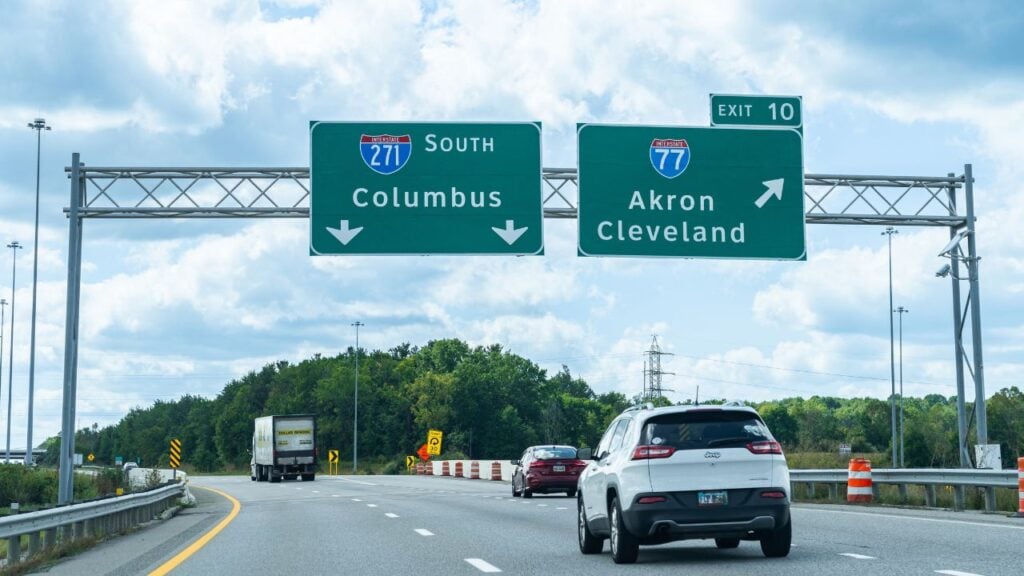
Many driving habits behind the wheel never draw a second look back home.
Carry one of them across the Ohio state line, and it can turn into a very different conversation with a very different officer.
9 Things Ohio Drivers Do That Would Get Them a Ticket in Other States
8 Ohio Restaurant Chains the Rest of the Country Has Never Tasted

Ohio restaurant chains built entire menus around recipes that never crossed the state line.
Move a few states over, and both the chili spot and the double-decker burger joint disappear completely, along with the only place that ever served them.
8 Ohio Restaurant Chains the Rest of the Country Has Never Tasted
