
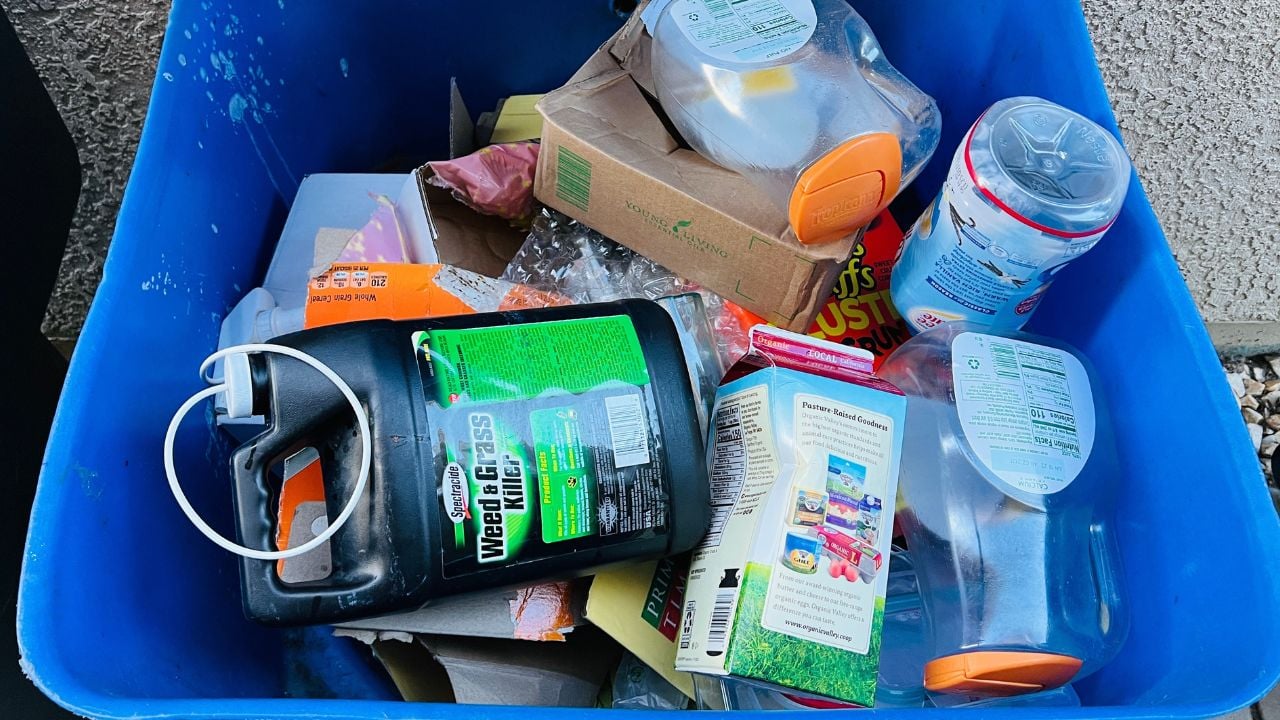
10 Things Oregon Residents Should Never Put in a Recycling Bin

Sixty-one fires broke out at two of the Portland area’s waste and recycling stations in 2025.
Most traced back to the same cause: A battery someone tossed in with the trash or the recycling.
These are the things Oregon residents should never toss into a recycling bin.
Note: This is general information, not legal advice. Recycling and hazardous waste rules vary by city and hauler and are subject to change, so confirm the current guidelines with the Oregon Department of Environmental Quality.
1. Plastic Bags and Film
Many Oregonians reach for the blue cart out of habit whenever a stack of grocery bags piles up under the sink.
That’s the wrong bin.
Plastic bags, bread bags, bubble wrap, and the stretchy film wrapped around a pallet are not accepted in any curbside program in the state.
Loose plastic tangles in the rollers and axles on the sorting line the same way it would tangle around your hand.
Workers have to stop the belt and cut it free.
Grocery stores, including Fred Meyer and Safeway, keep a drop-off bin near the entrance built just for plastic bags.
What Crossing Oregon’s Contamination Line Costs
Oregon has measured contamination in curbside recycling at roughly 8% to 13% of everything collected, a benchmark that dates back to the state’s response to China’s import restrictions.
That threshold still decides more than people realize.
Sorting workers can pick a stray bag or clamshell off a moving belt by hand.
Once a load’s contamination crosses the threshold, though, haulers can’t sell it as clean material anymore.
At that point, haulers send the whole truckload to the landfill, cardboard, cans, and clean paper included.
2. Garden Hoses and Cords
A garden hose coiled on top of an Oregon recycling cart looks harmless enough.
It isn’t.
Hoses, ropes, extension cords, and string lights all jam the equipment that sorts Oregon’s recyclables by material.
One tangled hose can force a sorting line to shut down for repairs.
Haulers from Eugene to Medford ask residents to keep hoses and cords out of the cart for exactly that reason.
A worn-out hose belongs at a hardware store’s metal-recycling bin, or out with bulky waste on a scheduled pickup instead.
3. Propane Tanks
Propane tanks dropped in an Oregon recycling cart still hold pressurized gas inside, even tanks that read empty on the gauge.
Empty doesn’t mean safe.
Oregon treats every one as hazardous waste, not recycling.
Metro’s household hazardous waste sites, Metro Central in Northwest Portland and Metro South in Oregon City, take them for free.
Small one-pound camping canisters follow the same rule.
Check for a valve before anything metal goes in the cart.
4. Loose Batteries
Batteries caused 58 of the 61 fires Oregon’s waste system logged at just two Metro transfer stations in 2025.
That’s nearly weekly.
A lithium battery tossed loose into a recycling cart can spark and ignite a whole truckload of paper and cardboard on the ride to the sorting facility.
Oregon lawmakers passed a statewide battery recycling law in 2026 to get ahead of the problem.
Until it takes full effect in 2029, loose batteries belong at a hardware store’s battery drop-off or a household hazardous waste site, not your garbage cart.
5. Needles and Sharps
Oregon law makes it illegal to drop a used needle or lancet into either the trash or the recycling bin.
Needles, syringes, and diabetes test lancets have to go into a rigid, puncture-proof sharps container with a screw-on lid, sealed and labeled, before they ever leave the house.
Loose sharps put sorting workers at risk of a puncture injury on the line.
Pharmacies across Oregon, including many Fred Meyer and Rite Aid locations, sell approved sharps containers for a few dollars.
Some county health departments hand them out free.
6. Clothing and Textiles
Clothing never belongs in Oregon’s recycling bin, wearable or not, according to the state’s Department of Environmental Quality (DEQ).
Fabric jams sorting screens.
Workers pull it out by hand before it goes straight to the landfill instead of a new use.
A stained t-shirt or a pair of worn-out jeans might look harmless enough for the cart.
The rule doesn’t bend for condition.
Goodwill, the Salvation Army, and clothing donation boxes around the state take it instead, torn zippers and missing buttons included.
7. Foam Cups and Containers
Oregon has kept polystyrene foam out of curbside recycling for years, well before the rest of the state’s rules caught up.
Foam coffee cups, foam plates, meat trays, and the block packaging that ships around a new TV all count.
Skip the cart entirely.
Foam isn’t accepted anywhere in Oregon’s curbside system.
It breaks into small pieces that scatter and contaminate everything nearby the moment a sorting belt jostles it.
A few retailers and specialty recyclers take clean foam block packaging back if a resident is willing to make the drive.
8. Plastic Clamshells
Plastic clamshells are the familiar shape still missing from Oregon’s new statewide recycling list, even after it took effect July 1, 2025.
Those hinged-lid containers holding strawberries, spinach, or a to-go salad are still excluded from every curbside program in the state.
The hinge and the thin plastic confuse sorting equipment built to read rigid shapes.
Plus, the material has little resale value once it’s separated out.
Rinse clamshells out and reuse them for leftovers instead or check whether a local specialty recycler takes them by appointment.
9. Glass in the Wrong Bin
Oregon keeps glass separate from the rest of curbside recycling in many parts of the state.
Portland’s version is a dedicated yellow bin that sits right next to the blue cart.
Bottles and jars that land in the wrong container cause problems on the way to the sorting facility.
That’s costly, not harmless.
Glass breaks during collection.
The shards mix into paper and cardboard bales, contaminating a batch that was otherwise clean enough to sell.
Rinse bottles and jars, pull off the metal lids, and set them in a glass-only bin or drop site instead of the mixed cart.
Psst! How much do you know about America’s recycling history? Take our quiz and see how many you can get right.
Quiz
America’s Recycling IQ
Answer these questions on recycling’s biggest firsts and facts. We bet you can’t get them all right. Prove us wrong?
Who designed the familiar three-arrow recycling symbol in 1970?
10. Aerosol Cans With Product Inside
Aerosol cans land in Oregon recycling carts every day still holding a little product, whether it's hairspray, spray paint, or the last spritz of sunscreen.
That's the problem.
A can only counts as recyclable once it's completely empty, according to the state's RecycleOn program.
Recyclers in Clackamas, Multnomah, and Washington counties are now testing whether residents empty their cans first.
Too many non-empty cans showing up in the bin could get aerosol cans pulled from Oregon's curbside list entirely.
A can with anything left inside counts as hazardous waste, not recycling.
Metro's household hazardous waste sites take it for free, the same drop-off used for old propane tanks.
The test takes seconds: Hold the can over the trash, press the nozzle, and listen for a hiss or any liquid left inside.
Whipped cream canisters, hair spray, sunscreen, shaving cream, and cooking spray all qualify once nothing sprays out and nothing sloshes when shaken.
8 WinCo Foods Quirks That Confuse New Oregon Residents

WinCo Foods runs on rules new Oregon transplants never see coming, starting with the parking lot that looks like a warehouse nobody bothered to dress up.
Bring quarters, bag your own groceries, and skip the credit card, since this discount grocer many Oregonians favor plays by its own rulebook.
8 WinCo Foods Quirks That Confuse New Oregon Residents
9 Candies 1970s Oregon Kids Couldn't Resist
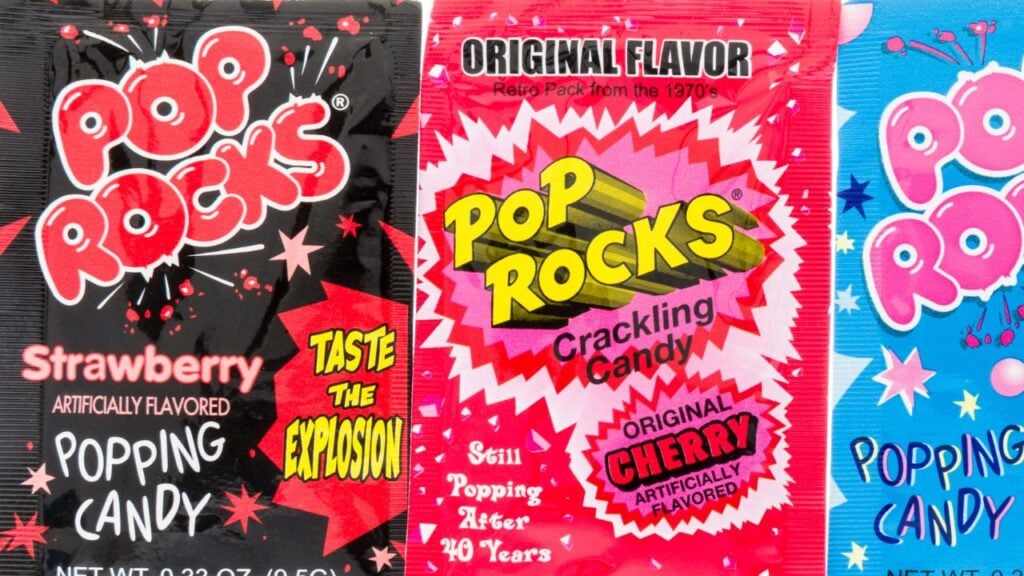
Long before blue bins and sorting rules, Oregon kids grew up on wax bottles, Pixy Stix, and a sugar rush that could power an entire afternoon on a bike.
Nine of those candies still bring back a rush of nostalgia for anyone who grew up in the state.
