
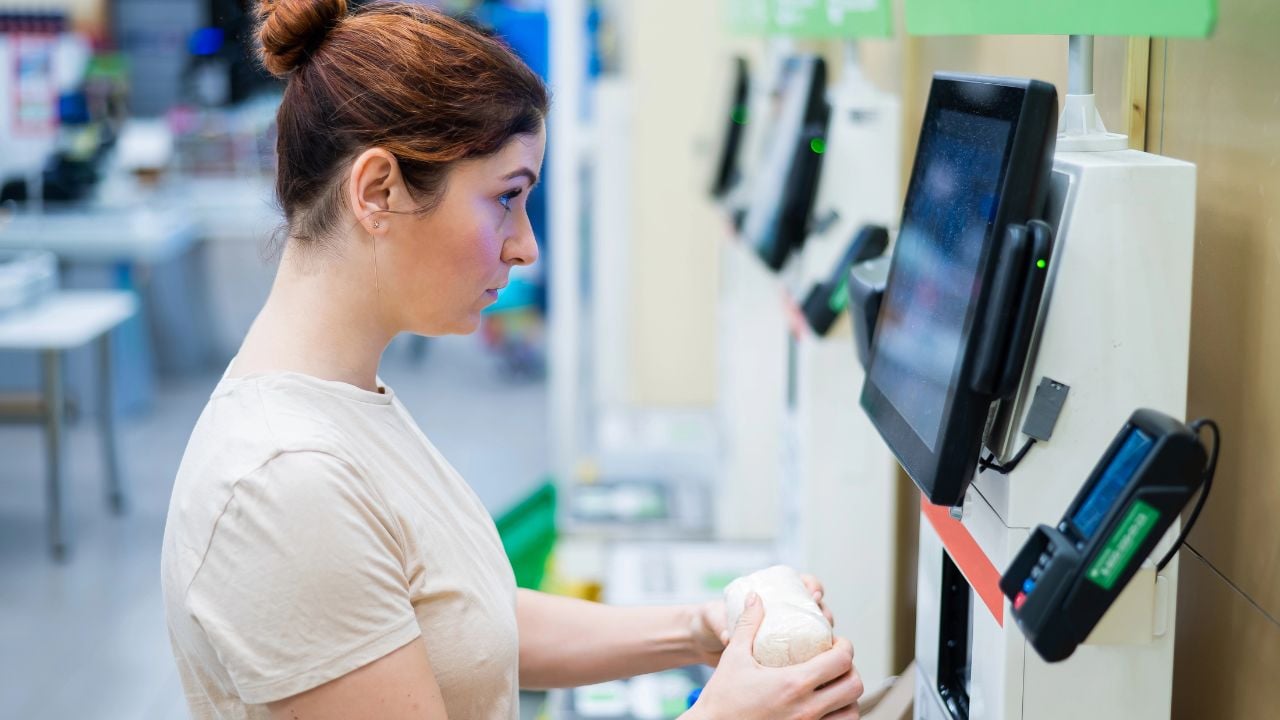
10 Things Self-Checkout Did to Florida’s Grocery Store Experience That We Should All Be Angry About

Self-checkout was sold as a convenience.
For the grocery store, it absolutely is.
But for the rest of us, it’s a different story. This is why so many Floridians are angry about self-checkout.
1. We Became Unpaid Employees
Self-checkout transferred labor from a paid cashier to an unpaid customer, and the grocery store kept the margin.
The customer scans, bags, and processes their own transaction. The store reduced its labor cost, but the customer’s grocery bill didn’t go down to reflect this contribution.
That’s not a convenience. That’s a shift in who does the work with no corresponding shift in who gets paid for it.
Grocery stores that have replaced most of their checkout lanes with self-checkout machines have essentially outsourced cashiering to their customers without acknowledging what they’ve done.
2. The “Unexpected Item in the Bagging Area” Has Stolen Our Time
The self-checkout weight sensor that guards against theft by monitoring what’s in the bagging area is in a permanent state of low-grade suspicion about the customer using it.
You scan an item. You place it in the bagging area. It weighs what it weighs.
The machine then disagrees and stops the transaction.
You wait for the staff member who’s monitoring sixteen machines simultaneously to come clear the error.
The staff member comes, the transaction resumes, and you scan the next item until the problem happens again.
The cumulative time that grocery shoppers have spent waiting for someone to override the bagging area sensor is immeasurable.
It represents a productivity loss that no customer asked to absorb.
3. It Made Checkout Slower for People With Full Carts
Self-checkout can be faster than a staffed lane for three to five items.
But for a full week of groceries, it’s almost always slower. Significantly slower.
The customer often scans at a pace no professional cashier would, bags as they go because there’s no one else to do it, and manages the process with none of the efficiency that comes from doing it eight hours a day.
Grocery stores that reduced staffed lanes and expanded self-checkout made the checkout experience worse for customers doing substantial shops.
4. It Reduced Human Interaction
The checkout cashier was a consistent point of human contact in a routine errand that otherwise involves minimal interaction with other people.
Many regular shoppers who went to the same grocery store every week developed real, if brief, relationships with the cashiers they saw consistently.
They knew names, and they asked about families.
The thirty-second exchange at the register was a minor but genuine piece of community connection.
Self-checkout replaced that with a touchscreen that doesn’t ask how your week is going and doesn’t remember that your daughter just graduated.
5. It Made Theft the Customer’s Problem
Self-checkout created a theft opportunity that staffed checkout didn’t have.
Grocery stores responded by treating every self-checkout customer as a potential thief.
You now get your receipt checked at the exit as if you’re a criminal.
There are weight sensors that unfairly stop your transactions, and cameras are pointed at the bagging area, constantly watching you.
The customer who came to buy groceries and did nothing wrong is now subject to verification procedures that exist because the checkout system the store chose created a vulnerability that the store is asking the customer to compensate for.
6. It Broke Down the Skill of Efficient Bagging
Professional grocery baggers developed real skills.
They knew what went with what, what couldn’t be crushed, what needed to stay cold together, and how to maximize bag space without damaging anything.
Self-checkout customers bag their own groceries with whatever skill level and attention they bring to the task.
That produces a range of outcomes from competent to a situation where the bread is under the soup cans.
People who know how to bag groceries do fine. But the collective average across all self-checkout users is a different story.
7. It Created a New Category of Checkout Anxiety
The self-checkout experience introduces an ambient stress that the staffed checkout lane didn’t have.
Am I going too slow? Did I scan that correctly? Is the machine about to flag something?
Why did it pause? What do I do when it pauses?
Is someone watching me? Why is someone watching me?
Grocery shopping shouldn’t produce these questions. Staffed checkout didn’t produce them.
But self-checkout introduces them for every transaction, for every customer, at every visit.
The stress is small and it’s real, and it didn’t exist before the machines did.
8. It Disproportionately Disadvantages Older Shoppers
The self-checkout interface, designed for customers who are comfortable with touchscreens and quick with technology, creates genuine difficulty for older shoppers who didn’t grow up with this kind of interface.
Grocery stores serve customers across a full age range.
Self-checkout typically is easier for younger people and creates an obstacle for older people that the staffed checkout didn’t present.
Older shoppers who struggle with self-checkout aren’t doing anything wrong.
They’re using a system that wasn’t designed with them in mind.
9. It Made Buying Alcohol a Production
Self-checkout can’t independently process age-restricted purchases.
So, buying a bottle of wine or a six-pack triggers an age verification pause that requires a staff member to come to the machine, check your ID, clear the hold, and release the transaction.
The efficient checkout experience that self-checkout promised ends the moment alcohol enters the order.
The staffed checkout lane that used to handle this seamlessly, by having a cashier who could check ID and process the sale in one motion, was undoubtedly better for this transaction category.
10. It Made Everyone Suspicious of Everyone Else
Self-checkout didn’t just make customers do their own scanning.
It made customers aware that they’re being watched while they do it, and it made the people watching aware that they’re in the business of monitoring customers rather than helping them.
The relationship between grocery store customer and grocery store staff used to be about service.
But self-checkout turned part of it into surveillance, with the store watching for theft and the customer aware of being watched.
That shift in the nature of the transaction changed something about what it feels like to buy groceries that no customer signed up for.
11 Mistakes People Make When Buying Food at Costco

Even in the wonderland of Costco savings, customers commonly make mistakes that can (often unknowingly) spoil the fun. Here are some tips on what errors to avoid so that every Costco run you make turns out to be a win.
11 Mistakes People Make When Buying Food at Costco
24 Items That Have Alarmingly High Levels of Microplastics

You can’t see, smell, or taste microplastics. But research reveals they’re showing up in our everyday lives.
Here are 24 common items where microplastics hide and why you need to pay attention.
