
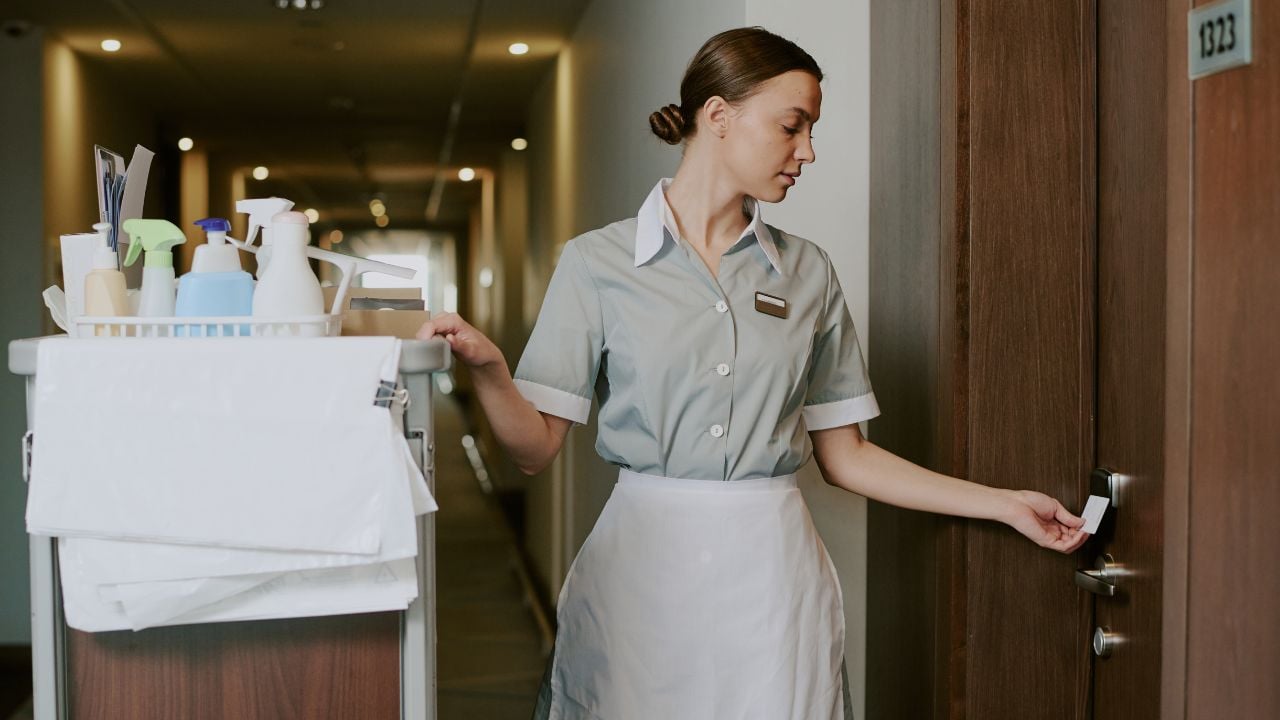
10 Things South Carolina Hotel Housekeepers Notice the Minute They Enter a Room

South Carolina’s hotels and vacation rentals pulled in $6 billion in 2025, according to the state’s tourism agency.
Every dollar of it moves through a room a housekeeper has to reset.
These are the things South Carolina hotel housekeepers notice the minute they enter a room, both before and after a guest leaves.
1. Smoke or Vape
Cigarette or vape smoke reaches a housekeeper’s nose before their eyes even finish taking in the rest of the room.
That smell clings to curtains and carpet fast, and many hotel chains now back up the first whiff with in-room air-quality sensors.
The sensor tacks a cleaning fee of $250 to more than $560 onto a guest’s bill.
It isn’t foolproof.
Steam off a hot iron or the blast from a hair dryer can trip the same alarm.
A housekeeper’s nose still gets the final say before a charge lands on the bill.
2. Rust-Colored Stains Along the Mattress Seams
The instant the door opens, a hotel housekeeper’s eyes go straight to the mattress seams and the headboard, the two spots a slept-in bed exposes first.
Rust-colored stains, dark specks, or tiny eggshells along those seams are the tell for bed bugs.
The Grand Strand has drawn a run of lawsuits over exactly that.
One attorney says he’s handled more than 200 cases of bed bugs from the Myrtle Beach area since 2018, according to the Post and Courier.
No agency inspects for it.
South Carolina has no bed bug law on the books, and the state’s health department doesn’t track hotel complaints at all.
A sharp-eyed housekeeper is often the only line of defense a room has.
3. The “Do Not Disturb” Sign’s Duration
The moment a hotel housekeeper is clear to walk in past that sign, they already know how long it’s hung there.
Hilton flags a manager once a sign has hung on one door for more than 24 straight hours, and Wynn Resorts moves after just 12.
Those thresholds vary by chain, but the American Hotel and Lodging Association says many now fall somewhere between 24 and 72 hours.
Past that window, a housekeeper isn’t guessing anymore.
Nobody skips that step.
They log the time and tell a supervisor.
Someone with more authority takes it from there.
4. Which Towels, Robes, or Hangers Went Missing
A housekeeper’s first sweep of the room, the instant the door opens, already shows whether the towel rack, robe hooks, or hanger bar came up short.
A 2026 survey of more than 1,200 hotel staff found towels are the most-taken item by far, missing from 88% of rooms its respondents cleaned.
Bathrobes went missing 66% of the time, at roughly $50 apiece to replace.
Add up every hanger, hairdryer, and stray toiletry, and the same survey put the industry’s yearly loss at around $100 million.
Housekeepers track it all.
5. Windows Open With the AC Running
Before a housekeeper is two steps into the room, they can already feel hot air fighting cold air.
The air conditioner (AC) is usually the reason.
A guest cracks a balcony door for the ocean breeze.
The air conditioner keeps running anyway because the thermostat has no idea the door’s open.
Switching to smart thermostats altogether can cut a hotel’s guestroom energy use by 30% to 35%, per Hotel Management.
That number is for the technology overall, not a fix for this one open door.
It’s wasted energy.
A housekeeper closes the door, resets the thermostat, and moves on.
Many guests never know it happened.
6. Cash or Jewelry Sitting in Plain Sight
Spot cash or jewelry left out in plain sight, and a housekeeper stops to report it before anything else.
South Carolina law caps what an innkeeper owes for lost cash or jewelry at $2,000.
That cap only applies if the guest followed the hotel’s posted safe-use rules and the hotel was still negligent.
There are no shortcuts here.
That’s why hotels train staff to log a find on the spot: The date, the room, and the name of whoever found it all go in a register.
The item then goes into a locked cabinet, where jewelry and electronics typically sit for six months before the hotel can do anything else with them.
7. Whether the Bed Was Slept In
A hotel housekeeper knows within a couple of seconds whether a bed was slept in, and that call sets the pace for the whole clean.
When the guest is still checked in, a stayover clean usually wraps up in 20 to 30 minutes.
A checkout gets the full treatment: Stripped linens, a bathroom scrub, and a restock push that runs closer to 30 to 45 minutes.
Multiply either number across a full floor of rooms.
A hotel often expects one housekeeper to clear 12 to 18 rooms in a single eight-hour shift.
The clock doesn’t pause.
8. Blood or Biohazard Situations
The moment blood is visible from the doorway, a hotel housekeeper stops before going any further into the room.
Federal workplace-safety rules kick in right there.
There’s no skipping it.
Under the Occupational Safety and Health Administration’s (OSHA) bloodborne pathogens standard, a hotel has to treat that room as an exposure risk once blood is visibly present.
The hotel then has to equip and train whichever staff member handles the cleanup.
That means gloves, a sealed bag, and a different set of steps than a normal checkout clean.
What OSHA’s Rule Doesn’t Cover
OSHA’s bloodborne pathogens standard is narrower than many South Carolina hotel guests assume.
Linens soiled with vomit, urine, or sweat don’t trigger the same protocol on their own.
The rule turns on visible blood alone, so a hotel housekeeper handling an unpleasant but blood-free mess still bags it, just without the extra biohazard steps.
9. Whether the Smoke Detector Still Works
A housekeeper’s eyes flick up to the smoke detector the instant they step into the room, more out of habit than instruction.
South Carolina hotels answer to the state’s fire code, adopted through the Office of State Fire Marshal, which requires a working detector in every guest room.
A housekeeper reports a missing cover or a pulled battery long before the next inspection cycle comes around.
That’s not optional.
Maintenance usually hears about it within the hour.
10. Sand, Salt Spray, and Wet Beach Gear
Sand is what South Carolina’s coastal hotel housekeepers fight most, the way inland housekeepers fight dust.
Myrtle Beach alone drew more than 18 million visitors in 2024, and a good share of them track the beach straight into the carpet.
Wet towels draped over lampshades, sandy flip-flops by the door, and a cooler still dripping in the tub add extra time to the clean.
That’s a wipe-down and a longer vacuum pass a room in Columbia or Greenville wouldn’t need.
Salt air corrodes metal fast.
It happens every single time.
A coastal housekeeper checks the metal on lamps and faucets for the dull, gritty film that inland rooms never seem to get.
Psst! How much do you know about hotel and motel history? Take our quiz and see if you can ace it.
Quiz
Hotel History IQ
Answer eight questions on Holiday Inn, the first motel, and hotel tipping history. We bet you can’t get them all right. Prove us wrong?
In what year and city did Kemmons Wilson open the very first Holiday Inn?
How Fast a Housekeeper's Shift Moves
A hotel housekeeper's shift runs on a clock that many guests never see.
Seven years of injury records from about 60 hotel properties, examined in a 2006 study, found housekeepers got hurt on the job 86% more often than other hotel workers.
More than 90% of the housekeepers surveyed for that same study reported ongoing pain from the work.
It stays invisible to guests.
That's the workforce behind South Carolina's $6 billion hotel and vacation rental industry in 2025, a figure the state's tourism department released as part of a record year statewide.
None of it moves without somebody clearing a dozen-plus rooms before checkout time rolls back around.
Bending, lifting, and scrubbing repeats itself across 12 to 18 rooms in a single eight-hour shift.
That pace is what pushed the injury numbers as high as they went in that same 2006 study.
7 Charges on Every South Carolina Power Bill That Have Nothing to Do With Electricity
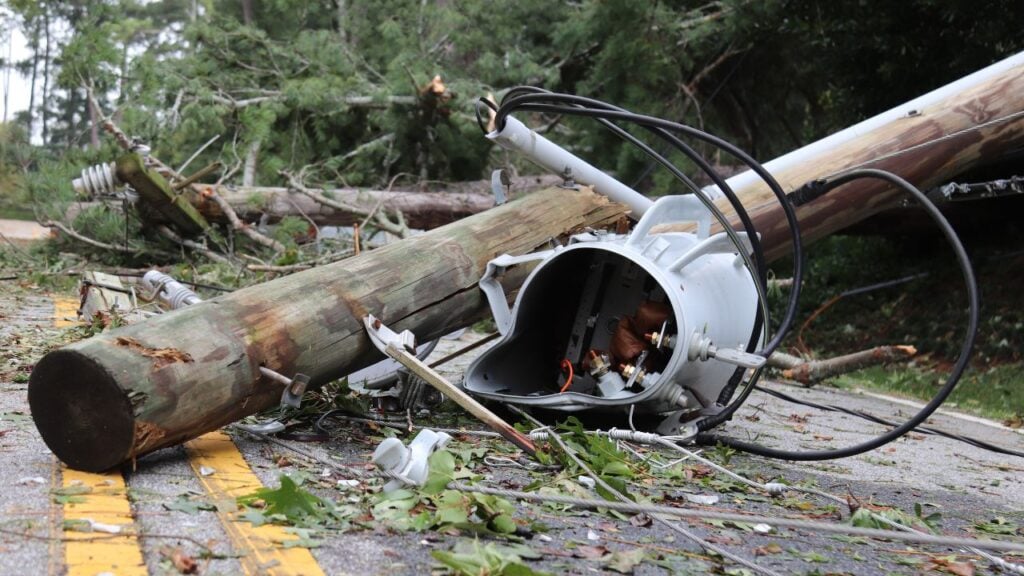
Duke Energy Carolinas customers started paying $4.58 more every month in January 2026 to retire bonds sold after Hurricane Helene.
That's just one line buried in a South Carolina power bill that has nothing to do with the electricity used that month.
7 Charges on Every South Carolina Power Bill That Have Nothing to Do With Electricity
9 Forgotten Southern Suppers That Vanished From South Carolina Kitchens

Think you could set a proper South Carolina supper table using only what a family cooked a hundred years ago?
The dishes that once anchored a South Carolina weeknight table have disappeared one generation at a time.
9 Forgotten Southern Suppers That Vanished From South Carolina Kitchens
