
10 Ways Mainers Get Ready for Winter That Out-of-Staters Find Excessive

If a snowplow clips a mailbox on a state highway in Maine, you’re not owed a new one.
That’s one reason Mainers start preparing before the first snowflake, and why a checklist that looks like overkill to visitors starts to make sense.
Here’s what to do before winter hits Maine, plus the help available if heating costs get steep.
Note: This is general information, not legal, financial or safety advice. Statutes, fines and program rules are subject to change.
1. Checking Your Oil Tank
In winter, falling snow and ice are one of the two main causes of heating oil spills, as they damage fuel filters and outside lines.
Frost heaves, rust and general wear can affect your tank too.
The Maine Department of Environmental Protection (DEP) checklist asks about rust, weeps (slow leaks), wet spots or excessive dents on the tank.
It also asks about drips or leakage around the filter and valves.
If you see rust or an oily patch of wetness, call a licensed oil heat technician.
Don’t touch the tank.
A light paint color on an outside tank minimizes corrosive condensation inside it.
2. Insulating Your Home
Pipes can freeze and burst if they run through unheated spaces without insulation.
Heat tape or heating the space can reduce the risk, but insulating it can be a better solution.
Insulation works through outages.
Weatherizing your home, which pairs insulation with air sealing, can also eliminate ice dams on your roof.
As of October 2026, Efficiency Maine’s insulation rebates for single-family homes, duplexes and condominiums go up to $8,000 for low-income households.
In the program’s example, a $9,000 job costs $5,000 after the $4,000 rebate open to any income.
With the low-income rebate, the same job costs $1,000 and pays back in 1.9 years.
3. Switching to Studded Tires
Maine law bars studded tires only from May 1 to October 1, so you can run them the rest of the year.
The Maine transportation commissioner can also issue a permit for studs outside those dates, for a fee between $3 and $15.
4. Building a Plow-Ready Mailbox
A mailbox on a state or state-aid highway sits at the owner’s risk, the Maine Department of Transportation (MaineDOT) warns.
If a plow or other highway crew damages it, you’re not entitled to a replacement or compensation.
In many cases, the best setup is an extended-arm post, a post with an arm that holds the mailbox so it swings freely.
That lets a plow sweep near or under the box without damage.
Out-of-staters often balk at a mailbox built to swing.
A red reflector on the arm helps your local plow driver see and avoid the mailbox in a storm.
Plow drivers are called snowfighters.
Whenever possible, place your mailbox after your driveway opening.
U.S. Postal Service standards put the bottom of the mailbox 41 to 45 inches above the shoulder.
Staying closer to 45 inches makes a plow truck’s wing less likely to strike it.
5. Watching the Heating Oil Price
With about two-thirds of Maine homes using petroleum products for heat, primarily heating oil or propane, heating oil prices are worth watching.
DOER’s survey of delivered fuel prices updates every week from September through April.
As of October 5, 2026, the average for heating oil was $5.97 a gallon.
Prices ranged from $5.45 to $6.81 a gallon.
On a hypothetical 200-gallon fill, that $1.36 gap would come to $272.
It lists cash prices and leaves out discounted prices, including pre-buy and introductory deals, so what your dealer charges may differ.
Ask your fuel provider about automatic delivery, which lets the provider monitor your use so you don’t run out.
Some customers lock in a price for predictability.
Fixed-price contracts are binding once signed, so read the terms first.
Psst! How much do you know about Maine? Take our quiz and see if you can ace it.
Quiz
Maine Pop Quiz
Answer these questions on Maine history, geography and weather records. We bet you can’t get them all right. Prove us wrong?
What’s the lowest air temperature ever recorded in Maine, set on January 16, 2009, at Big Black River?
6. Packing a Car Kit
A winter car kit should include jumper cables, flares or a reflective triangle and an ice scraper with a brush.
You should also pack a blanket, a map, water, snacks, a car phone charger and a flashlight with fresh batteries.
A 2011 release from MaineDOT and the Maine State Police adds a small bag of sand for wheel traction, a small shovel and a gas tank topped off all winter.
Pack your kit early.
7. Preparing for Outages
Start with an inventory of the electric items you rely on.
Then plan for batteries or a portable charger, and keep a flashlight for every person in your home.
Once the power's out, keep the refrigerator and freezer doors closed.
The U.S. Department of Agriculture's national guidance says a refrigerator keeps food safe for up to four hours, and a full freezer holds its temperature for about 48 hours.
A half-full freezer lasts about 24 hours.
If your heat goes out too, you can dial 2-1-1 or text your zip code to 898-211 for a list of warming centers.
8. Installing Carbon Monoxide Alarms
The Maine Center for Disease Control and Prevention says to put a battery-powered carbon monoxide alarm, or one with battery backup, outside each sleeping area.
Alarms also belong on every level of your home.
Test them every month.
The Maine Emergency Management Agency says a generator belongs outdoors, at least 20 feet from windows and doors.
That rules out a basement, a cellar bulkhead, a garage and a porch, even with the doors and windows open.
A Maine study of the January 1998 ice storm outages found that putting a gasoline generator in a basement or garage could raise the risk of poisoning up to 300-fold.
9. Scheduling Your Heating Tune-Up
To get ready for winter, the Maine Office of State Fire Marshal recommends cleaning and inspecting your chimney and furnace every year.
A certified chimney sweep or furnace professional should do the work.
A fireplace can spark a fire if the chimney is cracked, blocked or coated with creosote.
Schedule your annual maintenance as soon as possible so the system runs efficiently.
10. Applying for Heating Assistance
The Home Energy Assistance Program (HEAP), which helps pay heating costs, opened applications for the 2026-2027 season on August 3, 2026.
Applications stay open until funds run out or May 29, 2027.
MaineHousing encourages you to apply as early as possible.
Benefits include help paying for fuel and emergency fuel delivery.
Your fuel provider usually receives the benefit directly, and it appears as a credit on your account.
If you have an extremely low supply of heating fuel, you may qualify for crisis assistance through the Energy Crisis Intervention Program.
Crisis program applications start November 1.
Start by filling out a HEAP application, then contact your local Community Action Agency.
Measuring a Cord
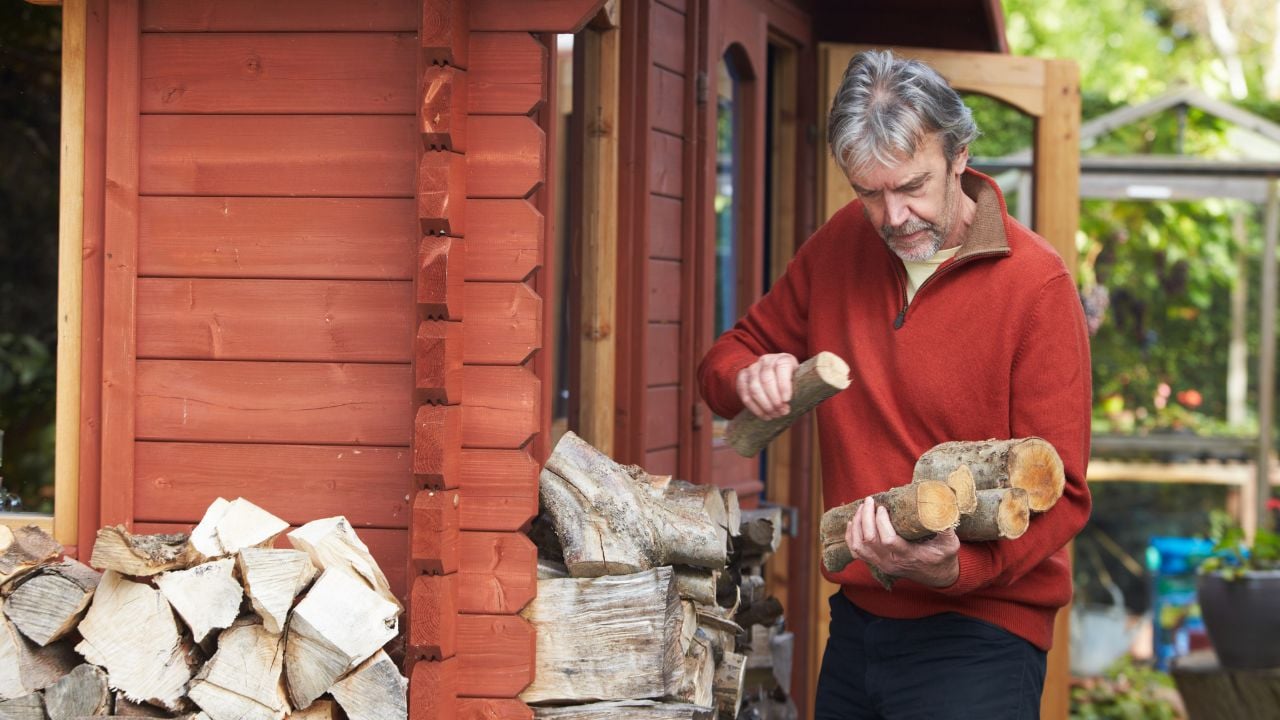
For about 1 in 10 Maine households, wood is the primary space-heating fuel, a share only Vermont tops.
If you buy firewood by the cord, Maine law defines a standard cord as 128 cubic feet of wood stacked tight.
That's a stack 4 feet wide, 4 feet high and 8 feet long.
A face cord is 4 feet high and 8 feet long, with the stick length agreed between you and the seller.
Loose Firewood Volumes
Firewood sold loose goes by the cubic foot or the loose cord, unless you and the seller make other arrangements.
A loose cord of sticks averaging 12 or 16 inches measures 180 cubic feet of wood, bark and air.
A loose cord of sticks averaging 24 inches measures 195 cubic feet.
State Plow Fleet
In an average winter, MaineDOT plans for about 30 events that need snow or ice treatment.
The fleet of roughly 400 plow trucks covers about 8,200 lane miles of state roads.
Crews also use an anti-icing approach on those roads.
If you're on the road in a storm, leave ample room for plow trucks, emergency vehicles, disabled vehicles and utility crews working to restore power.
Utility Disconnection Protections
From November 15 through April 15, a utility needs approval from the Maine Public Utilities Commission (PUC) to disconnect your residential electric or natural gas service.
Between those dates, state law bars an electric utility from sending you a notice with a disconnection date unless the PUC's consumer assistance and safety division approves first.
Any notice that mentions disconnection has to say that disconnection can't happen without that division's advance permission.
A utility that breaks those notice rules can face a civil penalty of up to $2,500.
To ask about options for avoiding winter disconnection, call the PUC's Consumer Assistance Hotline at (800) 452-4699.
7 Dishes You'll Find at Every Maine Church Supper

Many Maine church suppers have a menu you'll recognize.
These are the dishes you'll find at many Maine church suppers.
7 Dishes You'll Find at Every Maine Church Supper
5 Maine Town Nicknames Nobody From Out of State Understands

When someone tells you where they're from in Maine, a town nickname often follows.
Out-of-staters are often left trying to match it to a town they've heard of.
