

11 Expenses South Carolina Retirees Say Became Harder to Justify After They Stopped Working

A homeowners insurance bill in South Carolina now averages nearly $3,000 a year.
That’s before flood coverage or a mortgage even enters the math.
These are the South Carolina expenses retirees say became harder to justify once they stopped working.
Note: This is general information, not financial, tax, or insurance advice. Rates, dues, and premiums are subject to change.
1. Property Tax on Your Paid-Off House
South Carolina retirees who finally pay off the mortgage still open a tax bill from the county every fall.
The state assesses an owner-occupied home at just 4% of its market value, and that reduced assessment is part of why South Carolina’s average effective property tax rate lands around 0.49% of what a home is worth.
On a $350,000 house, that works out to roughly $1,715 a year.
Paid on a salary, that bill barely registers.
Paid entirely from savings and a Social Security check, it lands differently.
A retiree pays the same rate a working homeowner does, dollar for dollar.
2. Your Yearly Car Tax Bill
A car loan payoff never touches South Carolina’s yearly car tax bill, which arrives every year whether or not there’s still a paycheck to cover it.
The state assesses a personal vehicle starting at 9.75% of its value in year one, sliding down a set depreciation schedule to 6% by year six, per the South Carolina Department of Revenue’s Revenue Advisory Bulletin #01-9, the guide county auditors use to assess every titled vehicle.
A three-year-old car worth $20,000 falls into the 8.25% bracket that year, which works out to $1,650 in assessed value.
Horry County’s own 2025 tax levies put the base county-and-school millage for unincorporated residents at about 171 mills, and a typical fire district charge on top pushes many addresses to 190 or 200 mills total.
Run $1,650 in assessed value through a total like that, and the bill lands somewhere in the $300s for that same car.
Then add the state’s $40 biennial registration fee on top of that.
A salary once covered that bill without much notice.
A fixed retirement income has to plan for it every single year, whether the county mails a reminder or not.
3. Your Homeowners Insurance Premium
Homeowners insurance premiums in South Carolina keep rising regardless of whether the person paying them still collects a paycheck.
The average homeowner’s policy in the state now runs about $2,962 a year, per 2026 data from Insure.com.
That’s close to $247 a month.
A working salary folds an increase like that into next month’s budget without much notice.
On a fixed retirement income, the same increase means finding room somewhere else to cover it.
Many coastal retirees say the premium alone now rivals a small car payment.
4. Keeping Flood Insurance Current
Flood insurance in South Carolina doesn’t come with a mortgage-payoff clause that cancels it.
Premiums under the Federal Emergency Management Agency’s (FEMA) Risk Rating 2.0 model vary by flood zone and elevation, and South Carolina’s average flood policy runs about $769 a year, or $64 a month, per Forbes Advisor’s state-by-state review of National Flood Insurance Program (NFIP) rates.
A home sitting closer to open water, lower to the ground and a shorter walk from the shoreline, pays well above that state average, sometimes several times as much.
None of it’s optional when a mortgage lender requires the policy, sometimes for decades after closing.
A mortgage payment can end.
The flood risk underneath it doesn’t.
Retirees who paid off that mortgage keep paying the premium anyway, even though the fixed income covering it never grew to match.
5. HOA Dues in a 55+ Community
Sun City Hilton Head, one of South Carolina’s largest retirement communities, charges every homeowner a base homeowners association (HOA) fee no matter how often residents use the pool or the pickleball courts.
That fee runs about $2,688 a year, or $224 a month, before any extra neighborhood charges.
Some Sun City neighborhoods layer landscaping charges or special assessments on top of that base number.
The dues don’t shrink the year a resident retires.
They only tend to rise.
6. Country Club Dues
Private golf clubs on Hilton Head Island, one of South Carolina’s best-known retirement destinations, charge initiation fees steep enough to buy a car outright.
The average initiation fee at a private club on the island runs about $43,000, with monthly dues stacked on top of it.
A member who joined decades ago, back when a salary made that number feel smaller, faces the same bill on Social Security and a pension.
Some longtime members downgrade to a social membership just to keep the club without the full golf dues.
It doesn’t shrink in retirement.
7. Your Medicare Supplement Premium
South Carolina retirees who add a Medicare Supplement plan take on a brand-new monthly bill the moment Medicare coverage starts.
A Medigap Plan G policy in the state averages about $122.25 a month in 2026.
That’s on top of Medicare’s own Part B premium, deducted straight from a Social Security check before it even lands.
Many of those same retirees spent their working years with an employer picking up part of the health insurance bill.
That coverage doesn’t carry into retirement.
No employer covers a slice of it, and the whole bill belongs to the retiree now.
8. State Tax on Retirement Withdrawals
A retirement withdrawal doesn’t slip past South Carolina’s income tax the way Social Security does.
The state’s top income tax rate is 6%, and it kicks in on income above just $17,830.
Retirees 65 and older can deduct $10,000 of retirement income before that rate applies.
Pull more than that from an individual retirement account (IRA) in one year, and the state taxes the extra at its top bracket almost immediately.
A paycheck’s income tax came out automatically, gone before the money ever reached a bank account.
A retirement withdrawal means watching that same tax bite come out of savings built over decades, one deliberate withdrawal at a time.
The deduction helps.
It doesn’t erase the bill.
How South Carolina’s Retirement Deductions Stack
South Carolina gives retirees two separate deductions, and they don’t simply add together.
The $10,000 deduction covers only retirement income.
It applies to IRA and pension withdrawals, not to a paycheck or freelance earnings.
A separate $15,000 deduction applies once a resident turns 65, but the state reduces that second deduction by whatever retirement deduction is already claimed.
A retiree who claims the full $10,000 retirement deduction has only $5,000 of the age-65 deduction left to use.
9. Your Electric Bill
Dominion Energy customers across South Carolina are watching the same electric bill rise this year, whether they still bring home a salary or not.
Dominion Energy has proposed a rate settlement, still pending South Carolina Public Service Commission approval, that would push the average residential bill, based on 1,000 kilowatt-hours a month, from $157 to $169 a month.
That’s about $144 more a year for the same amount of power, if regulators sign off.
Someone still on a payroll could offset a jump like this with an extra shift or a few hours of overtime.
A Social Security check that rises by a few dollars a year, at most, doesn’t.
Summer air conditioning alone can push usage well past that 1,000-kilowatt-hour baseline, with no raise coming to offset it.
Psst! Curious how these South Carolina costs measure up against your own retirement savings? Run the numbers below and see how far they stretch.
10. Insuring a Car You Barely Drive
South Carolina drivers who retire and cut way back on commuting still pay a bill sized like they’re driving every day.
The average full-coverage car insurance policy in the state runs about $3,421 a year in 2026.
That’s close to $285 a month for a car that might sit in the driveway three days out of five.
Some insurers offer a low-mileage discount for exactly this situation.
Not everyone asks.
Many South Carolina retirees never realize the discount exists.
11. Property Tax on the Boat You Kept
Boat owners in South Carolina still face one of the steepest tax rates in the country, at least for this tax year.
State lawmakers signed a law cutting the boat tax, but the assessment ratio doesn’t start dropping from 10.5% until tax year 2027.
A boat tax bill was easy to fold into a paycheck that arrived every two weeks.
On a fixed retirement income, the same bill means asking whether the weekend fishing trips still justify the line item, especially with relief still a year away.
A retiree who kept the boat for weekend fishing on Lake Murray or a slip in Charleston Harbor pays the full old rate for one more year.
The relief is coming.
It just isn’t here yet.
The cut phases in over the following years once it starts in 2027, not all at once, so a boat owner won’t see full relief the moment the new rate first takes effect.
A retiree budgeting a boat against a fixed Social Security check waits through that phase-in the same as any working owner, just without a raise coming to offset it.
9 Home Insurance Surprises Hitting South Carolina Homeowners in 2026

On February 1, South Carolina’s insurer of last resort for coastal wind and hail raised its rates 7.5% on houses and 25% on mobile homes, without a single storm making landfall first.
Insurers build these increases out of rate filings and reinsurance bills that many homeowners never bother to open.
9 Home Insurance Surprises Hitting South Carolina Homeowners in 2026
9 South Carolina Squatter Rules That Leave Homeowners Powerless
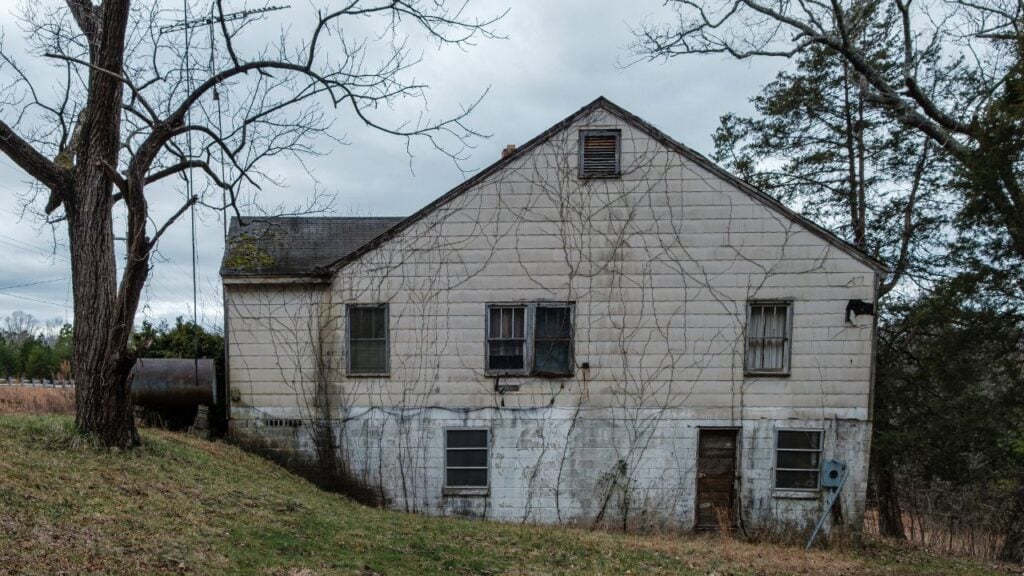
A stranger’s mattress turns up inside an empty Horry County beach house, and every instinct says change the locks that same night.
Do that in South Carolina, and the homeowner could be the one writing a check to the squatter.
9 South Carolina Squatter Rules That Leave Homeowners Powerless
