
11 Reasons Florida Home Insurance Premiums Are Exploding Right Now

Open a Florida insurance renewal and brace yourself, because the number on the page these days stings.
Florida ranks as the most expensive state in the nation for home coverage, and a handful of forces keep it there.
This is why home insurance premiums in Florida are getting so high.
Note: This article is for general information and isn’t financial, legal, or insurance advice. Rates, programs, and laws change and vary by home and location. Talk with a licensed agent or the Florida Office of Insurance Regulation before you make decisions.
1. Storms Keep Coming
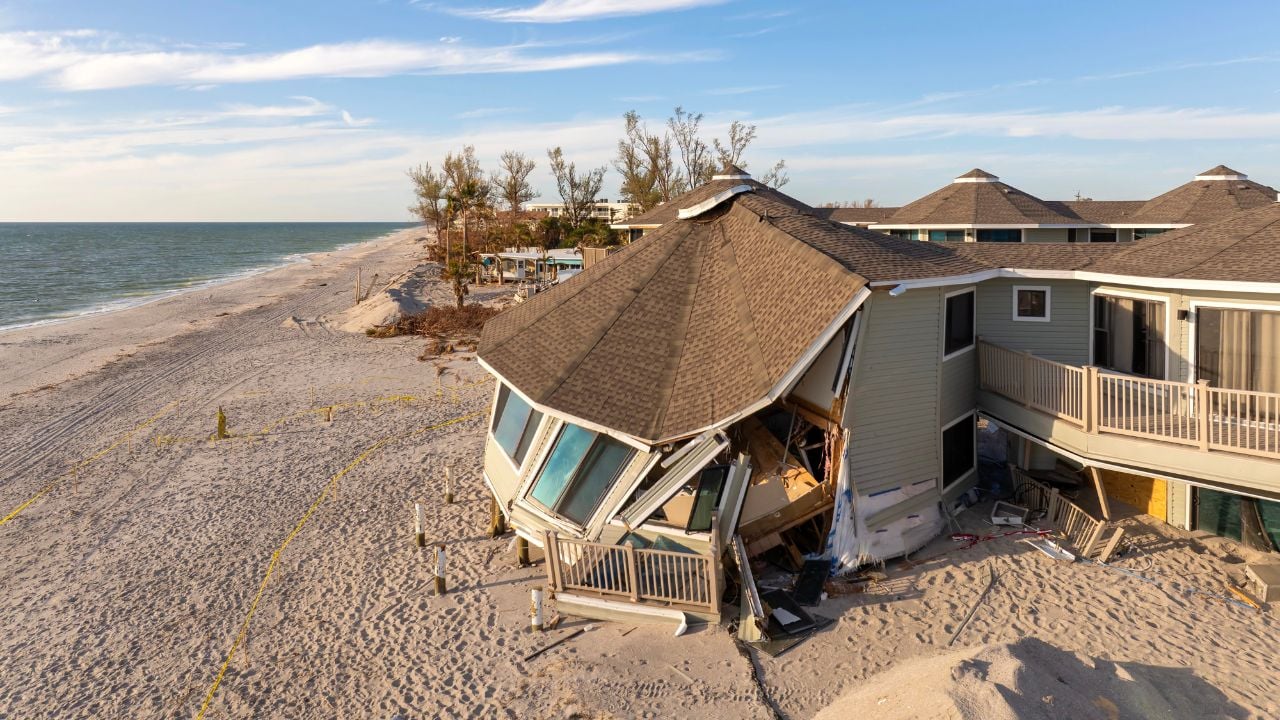
Florida sits in the bullseye for hurricanes, and the past few seasons have been merciless.
Hurricane Helene ran up $78.7 billion in total costs in 2024, and Milton piled on another $34.3 billion a few weeks after.
The Big Bend region took three hurricanes inside a single year.
Every major storm drains the reserves insurers hold to pay claims.
They rebuild those reserves with one tool: your premium.
Florida’s long, crowded coastline hands every storm a wide target, and a single landfall can erase a year of premiums in a weekend.
2. A State Built for Disaster
As any long-term Floridian knows, storms aren’t a fluke.
They’re the pattern.
Between 1980 and 2024, Florida logged 94 billion-dollar weather disasters, and the pace has picked up.
Over the most recent five years, the state averaged close to seven of them a year.
Insurers price that frequency into every policy, because a home in a high-loss state costs more to cover than the same home in a calmer one.
That logic sits behind your bill.
You’re paying for a map that drops your house in the path of trouble.
3. Reinsurance Got Pricey
Insurers carry their own insurance, a backstop called reinsurance that kicks in after a catastrophe.
Florida’s carriers lean on the global reinsurance market harder than most, since one bad season can swamp them.
When reinsurance prices hardened in 2022 and 2023, carriers passed the expense to homeowners.
It landed on your bill.
Reinsurance has eased since then, yet it claims a large slice of every premium dollar in the state.
Pull that thread and a chunk of your bill traces back to a reinsurer in London or Bermuda.
4. Lawsuit Abuse
For years, the courtroom drove Florida’s premiums as much as the weather did.
The numbers are tough to swallow.
Florida generated about 9% of the nation’s home insurance claims and nearly 80% of its lawsuits.
Old rules let attorneys collect their fees from insurers, which turned small disputes into court battles.
Carriers baked that legal risk into every rate.
Lawmakers scrapped the one-way attorney fee in 2022, the rule that fed the lawsuit machine, and the savings reached policyholders over time.
5. The “Free Roof” Trap
Storm chasers turned the Florida roof into a racket.
Crews knocked on doors after every storm, promised a “free roof” on the insurer’s dime, and filed inflated claims.
Triple-I tied those roof schemes to years of underwriting losses.
The hangover lingers.
Carriers treat any roof older than 15 years as a deal-breaker, and a worn roof can sink a quote on its own.
6. Insurers Went Under
The losses pushed weaker companies off a cliff.
Nine Florida property insurers went insolvent between 2021 and 2023, and their customers woke up with no coverage.
When carriers vanish, the survivors hold more power over price.
Less competition. Higher bills.
More than 800,000 owners landed on Florida’s last-resort plan when the market dried up, and that crowding pressured rates for everyone.
7. The Citizens Trap
When no private carrier will touch a home, the owner falls back on Citizens, the state insurer of last resort.
It swelled to 1.4 million policies by 2023, the largest insurer in Florida.
That scale hides a catch.
If a monster storm drains Citizens, the company can levy assessments on policyholders across the state, including people it doesn’t cover.
There’s a second sting.
Once a private offer lands within 20% of the Citizens price, the owner has to take it, costlier or not.
8. Rebuilding Costs Jumped
A claim has to rebuild the house, and that bill keeps climbing.
Lumber, labor, and materials all cost more after the inflation wave of recent years.
Industry experts point to rebuilding costs rising faster than the broader inflation rate.
When a rebuild costs more, the insurer charges more from the start to cover it.
A home insured below its rebuild cost can leave the owner short after a total loss, so coverage limits keep rising with construction prices.
9. Storms Are Stronger
Warm ocean water acts like fuel, and the Gulf has run hot.
The result shows up at landfall.
The U.S. has absorbed a Category 4 or 5 hurricane in six of the past eight years, according to federal data.
Bigger storms carry bigger payouts.
Bigger payouts carry steeper premiums.
The Gulf hit record warmth in recent years, and that heat lets a storm jump from mild to monstrous in a day.
10. Flood Coverage Costs Extra
Here’s the gap that blindsides new owners: a standard home policy doesn’t cover flood.
In a state ringed by water, that’s a serious hole.
After Helene and Milton, flood claims pulled nearly $8 billion from the federal flood program.
So most Florida owners buy a separate flood policy, and that premium stacks on top of the homeowner insurance bill.
Federal flood pricing has shifted under a newer risk model, and plenty of coastal owners have watched that line item jump.
11. Too Many Homes at Risk
Florida keeps booming, and much of the new construction crowds the coast.
Federal forecasters flag that rising exposure as a core reason disaster costs keep climbing.
More homes in the storm’s path means more property to insure and more to lose in a single hit.
The risk pool grows heavier with each new rooftop.
Florida has ranked among the fastest-growing states for years, and a chunk of that growth lands where the wind and water hit with the most force.
Where Rates Head Next
The story isn’t all grim.
Reforms have dragged litigation down and coaxed carriers back.
Triple-I counts 18 new insurers entering Florida since the changes, a rarity in a market that most of the country is fleeing.
Citizens has shrunk, and it filed its largest rate cut for 2026.
The state’s guaranty fund moved to end a 1% surcharge two years early, with as much as $650 million in savings for policyholders.
A calm 2025 hurricane season added to the relief.
No named storm made Florida landfall, which let insurers breathe and file for lower rates.
For your own bill, the roof rules everything.
A newer roof, impact-rated windows, and a fresh wind mitigation report can carve real money off a quote.
Shop your policy before each renewal. Carriers price the same house in different ways, and the gap can run into the thousands.
6 States Snowbirds Are Picking Instead of Florida

Florida still wears the snowbird crown, but the grip is loosening.
So where are snowbirds going instead?
The moving data tells the story, and these states keep coming up.
The Moving Trucks Don’t Lie: 6 States Snowbirds Are Picking Instead of Florida
6 Florida Towns Where $2,071 a Month Is Enough to Retire Well

Everyone says you can’t retire on Social Security by itself anymore, with the average Social Security retirement check coming to $2,071 a month in 2026.
That’s not entirely true in Florida.
Here’s where the math still works in the Sunshine State.
6 Florida Towns Where $2,071 a Month Is Enough to Retire Well
