

11 Things Delawareans Are Tired of Explaining to the Rest of the Country

Tell someone you’re from Delaware, and the follow-up questions can come quickly.
Delawareans hear plenty of the same ones, and the real answers are often more interesting than people expect.
Here’s what locals are tired of explaining, and the answers worth knowing.
1. Return Day
At Return Day in Georgetown, some opposing candidates ride in the same car during the parade.
If you’ve followed a campaign season, that’s a different picture.
Georgetown’s town website says the celebration happens every two years, on the Thursday after the November general election.
You can catch it this year on Thursday, November 5, two days after the November 3 election.
Then comes the hatchet.
Delaware Public Media describes Return Day as the long-standing tradition where Democrats and Republicans come to bury the hatchet after an election.
The town website says the program also includes the reading of the election results from the Courthouse tower.
2. Diamond State Legend
If you’ve heard that Thomas Jefferson gave Delaware its Diamond State nickname, many reference works say the same, according to Monticello’s encyclopedia.
If you go looking for his words, the quotation credited to Jefferson hasn’t been found in any of his writings.
The earliest known appearance of that quotation in print is a 1948 guidebook, Delaware: A Guide to the First State.
The legend came late.
The nickname itself is older, since an 1852 book mentions it in passing.
3. Twelve-Mile Arc
The Twelve-Mile Arc forms Delaware’s northern border.
Instead of following a river or mountain range, it traces a distinct arc.
If you trace that arc on a map, you’re following part of a circle with a twelve-mile radius centered on New Castle.
The story begins in 1681, when King Charles II granted William Penn a charter for the colony of Pennsylvania.
The Park Service says the Duke of York, concerned about protecting his remaining territory from Penn’s new colony, directed that a boundary be established using that circle.
Where Delaware’s Twelve-Mile Arc Is Centered
The Twelve-Mile Arc’s original center was at the end of New Castle’s Broad Dike, near 3rd and Chestnut Streets.
You can find a historical marker at that spot today, the Park Service says.
By the mid-18th century, the center had moved to the cupola of the New Castle Court House.
In 1763, surveyors Charles Mason and Jeremiah Dixon completed a new survey using the court house as the center point.
Stone markers placed at half-mile intervals trace the arc.
4. New Jersey Border
Inside the Twelve-Mile Circle, Delaware’s river border with New Jersey follows New Jersey’s shore, so you won’t find it in the middle of the river.
The Supreme Court’s 1934 ruling gave Delaware the river and the soil beneath it, up to the low-water mark on New Jersey’s side.
In a 2008 opinion, the Supreme Court backed Delaware’s authority to refuse a permit for a liquefied natural gas terminal pier.
The opinion describes a pier and related structures extending some 2,000 feet from New Jersey’s shore into Delaware.
On New Jersey’s shore inside the Twelve-Mile Circle, the river in front of you belongs to Delaware.
5. New Sweden
New Sweden was the first permanent European settlement in what’s now Delaware, according to the Delaware Public Archives.
If you picture only English settlers at the start of the story, you can add the Swedes to it.
A Sweden Company expedition landed in March 1638 and sailed on two ships, the Kalmar Nyckel and the Fogel Grip.
Under Peter Minuit’s leadership, the colonists built Fort Christina to protect the new settlement.
The fort took its name from Queen Christina of Sweden.
Wilmington began there.
The Dutch conquered the colony later, and the English followed.
6. National Park Status
President Obama established First State National Monument in March 2013, the first unit of the National Park System in Delaware.
Until then, the public media outlet WHYY reported, Delaware was the only state in the country without a national park.
The monument was redesignated as First State National Historical Park in 2014, the National Park Service says.
First State National Historical Park has six sites, and you’ll find them spread throughout the state.
If you plan to visit, the list includes The Dover Green and the New Castle Courthouse Museum.
Psst! How much do you know about Delaware’s history? Take our quiz and see if you can ace it.
Quiz
Delaware Fact Check
Answer these questions on Delaware’s history and landmarks. We bet you can’t get them all right. Prove us wrong?
On June 15, 1776, Delaware’s legislators met at the New Castle Court House and passed a resolution separating Delaware from what?
7. North or South
Delaware's Census region is the South, and the Census Bureau places it in the South Atlantic division.
If you work from Census regional data, you'll find Delaware grouped with Maryland and Virginia.
Delaware was one of four slave states to stay in the Union, a University of Delaware historian told the public media outlet WHYY in 2015.
You might expect the Emancipation Proclamation to have settled the question.
It didn't apply there because Delaware was a border state.
The University of Delaware says only 1,798 enslaved people remained in the state in 1860.
The 13th Amendment's ratification in December 1865 freed those still enslaved in Delaware.
Delaware didn't ratify the 13th Amendment until February 1901.
8. Gunpowder Before Chemicals
You may know DuPont as a chemical company.
DuPont started out making gunpowder along the Brandywine.
French immigrant E. I. du Pont bought land there in 1801 and began building a gunpowder mill in 1802, according to Hagley Museum.
The company built a second powder yard, the Hagley Yard, in the fall of 1812.
It built a third powder yard downstream from the Hagley Yard in 1839.
By the end of World War I, demand for black powder was declining.
The company was shifting its focus toward the chemicals and consumer products made at other plants.
9. Court of Chancery
Delaware's Court of Chancery dates to 1792, when the state's second constitution created it.
If you're wondering what a court of equity does, the court's history page says it provides relief when no adequate remedy is available at law.
Equity courts historically operated without juries.
The court's website says it's widely recognized as the nation's preeminent forum for disputes over the internal affairs of Delaware business entities.
On the court's judges page, you'll find one Chancellor, six Vice Chancellors and seven Magistrates in Chancery.
10. Highest Point
Delaware's highest point sits near a survey monument on Ebright Road in Wilmington.
If you go looking for it, you'll find a survey mark that denotes an elevation of 447.85 feet above sea level, according to the Delaware Public Archives.
To reach ground at least two feet higher, you'd head just west of Ebright Road, the Delaware Geological Survey says.
The survey puts the highest actual elevation in the state at around 450 feet above sea level.
11. Newark
Newark, Delaware, received a charter from King George II by 1758.
Many people hear the name and think of New Jersey.
If you're searching for directions to Newark, you'll want to check the state before you leave.
It's a college town.
The city's history page says Newark's growth came from a local private academy evolving into the University of Delaware, now the city's largest landowner.
The Philadelphia, Wilmington, and Baltimore railroad linked Newark to points north and west in 1837.
The state granted Newark its present charter in 1965, which strengthened the council-manager form of government.
8 Things That Surprise Newcomers Who Move to Delaware
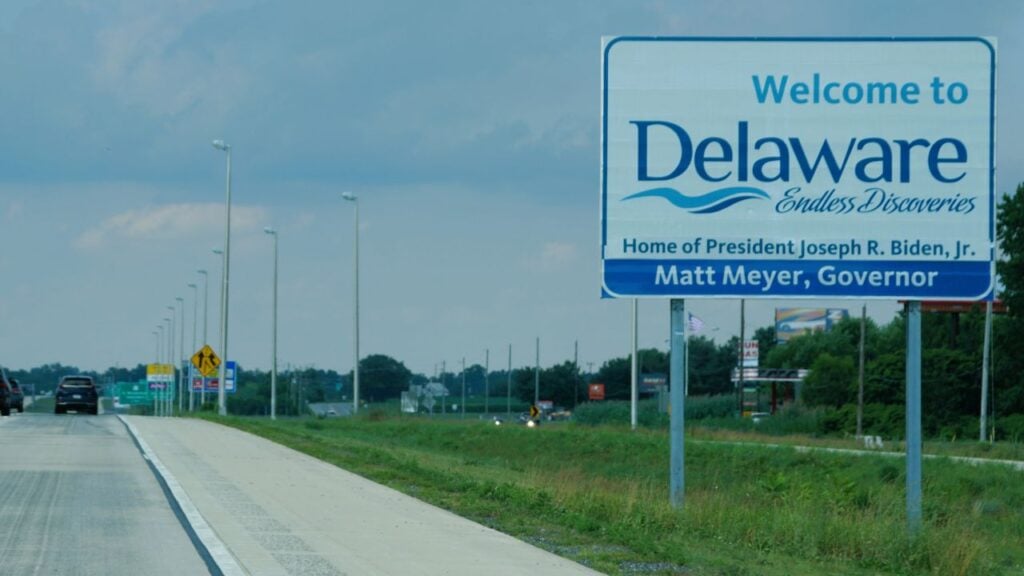
Moving to Delaware from a bigger place takes some adjusting.
Here's what surprises the newcomers who make the move, for better and for worse.
8 Things That Surprise Newcomers Who Move to Delaware
8 Delaware Words and Phrases That Make No Sense to the Rest of the Country

Some Delaware words and phrases don't travel past the state line.
Here are eight of them.
8 Delaware Words and Phrases That Make No Sense to the Rest of the Country
