
11 Things Every New York City Kid Did That Kids Anywhere Else Never Will

If you were under 44 inches tall, you rode the New York City subway for free.
Growing up in the city came with perks, and some of them sound like another world to kids anywhere else.
Here’s what every New York City kid did that kids anywhere else never will.
1. Hydrant Spray Caps
Kids playing in the spray of a fire hydrant is a classic New York City scene.
It’s also legal, as long as the hydrant has a City-approved spray cap.
If you’re 18 or older, you can request a cap for free at your local firehouse.
The cap also lowers the risk that the force of the water injures a child, the city says.
What a Spray Cap Changes
New York City’s spray caps limit an open hydrant to 20 to 25 gallons of water a minute.
A hydrant opened illegally releases more than 1,000 gallons a minute.
Opening a hydrant without a cap can bring a fine of up to $1,000, imprisonment for up to 30 days, or both.
2. Stickball
New York City is the first place that comes to mind for stickball, according to Major League Baseball.
The game is baseball played in the street, usually with a broomstick handle for a bat and a pink rubber ball called a Spaldeen.
Kim Ng, now a league commissioner, played it all the time growing up in Fresh Meadows, Queens.
A manhole was second base.
A red car was third.
The version that seems to have started in the Bronx uses regular bases and fielders.
Pickup games happen on whatever street is in your neighborhood.
3. Alice in Wonderland Statue
Central Park’s Alice in Wonderland statue was a gift to the city’s children from publisher George Delacorte.
He gave it as a memorial to his wife, Margarita.
Sculptor José de Creeft modeled Alice’s face on his daughter.
At the May 1959 dedication, 11 of the Delacortes’ grandchildren unveiled the statue.
Then they climbed up on it.
Children still do, so you may find a few climbers on the statue.
4. Double Dutch
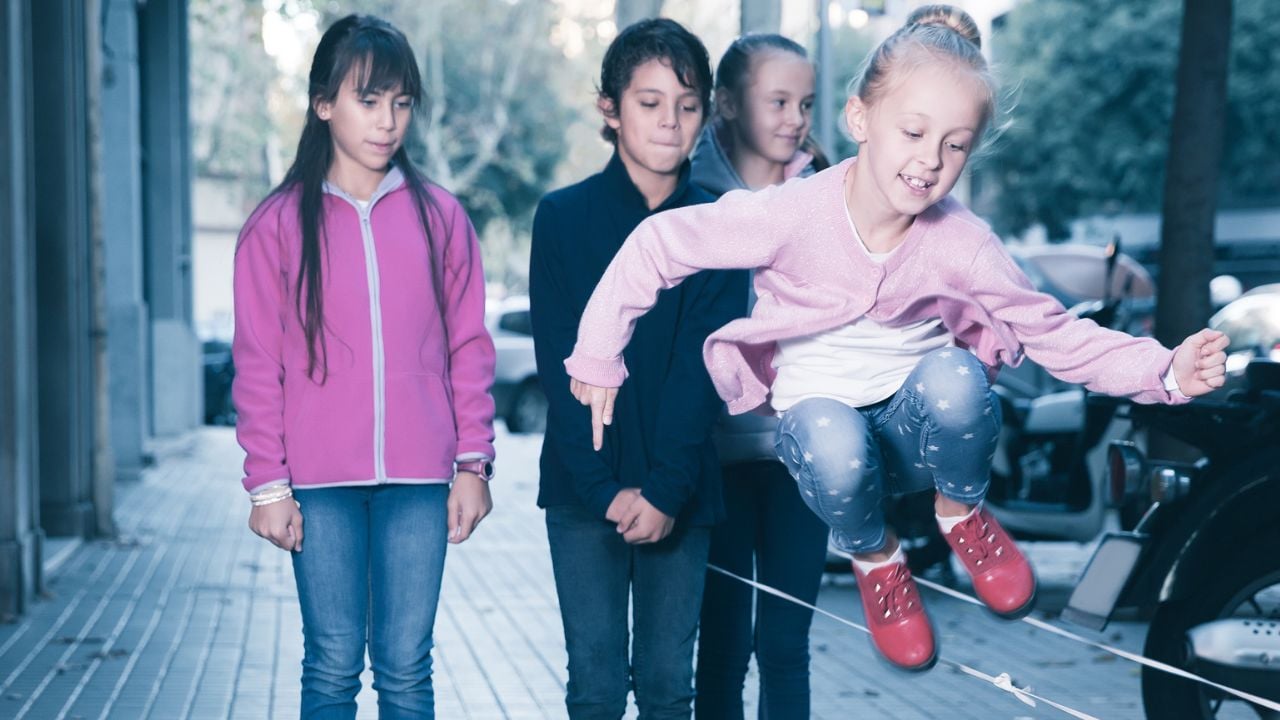
Double Dutch is a jump rope game that New York City helped turn into a sport.
You jump while two ropes turn at once.
By the late 1950s, it had nearly disappeared from the city, partly because there was so little room to play.
In 1973, police detectives David Walker and Ulysses Williams revived it as organized team competition.
The first tournament followed in 1974.
The game’s heyday ran through the 1970s and 1980s.
One group of Bronx girls jumped it on Bainbridge Avenue.
5. Play Streets
The city’s Street Design Manual describes Play Streets as car-free streets where children can play.
Organizers must keep activities going, so kids on a Play Street get games, sports, crafts and performances.
Summer Play Streets run Monday through Friday from 8 a.m. to 5 p.m., for up to six weeks between July 1 and Aug. 31.
6. Free Pools and Swim Lessons
Parks Commissioner Tricia Shimamura says the city’s outdoor pools are where children first learn to swim.
New York City’s outdoor pools were free to everyone in 2026, with a season that ran from June 27 through Sept. 13.
Eleven of the pools opened in 1936 as part of a federal public works project.
The Parks Department also offered free swim lessons for children ages 18 months to 17 years at 18 pools.
About 19,000 young people learn to swim through the department each year.
Psst! How much do you know about New York City? Take our quiz and see if you can ace it.
Quiz
Five Boroughs Trivia
Answer these questions on New York City landmarks, parks, and getting around. We bet you can’t get them all right. Prove us wrong?
Under the New York City Health Code, where do bodega cats stand?
7. Free Subway Rides
The New York City subway is free for children under 44 inches tall who ride with a fare-paying adult.
You can bring up to three of them on one fare.
The same rule covers local, limited, rush and Select Bus Service buses.
A lot of New York City kids learn the subway early.
It's height, not age.
8. Summer Rising
Summer Rising is a free summer program for New York City students in kindergarten through eighth grade.
Students spend a full day there, with classroom learning, field trips, arts activities and outdoor recreation.
It's open to all of them.
Meals are included.
New York City Public Schools and the Department of Youth and Community Development run the program together.
9. Student OMNY Cards
Many New York City public school students ride to class on a Student OMNY Card instead of the old Student MetroCard, according to amNY.
Students who live a half-mile or more from school get four free rides a day.
The MTA says about half a million students receive one.
One LaGuardia High School student from Staten Island takes a bus and then the 1 train to school, a trip she says takes about an hour and a half.
10. Storytelling at the Andersen Statue
Kids in New York City have heard stories at the Hans Christian Andersen statue in Central Park since 1957.
On summer Saturdays, they cluster around the statue to hear a group of professional storytellers.
Many climb onto Andersen's lap.
Sculptor Georg Lober's statue of the author dates to 1956.
You'll find the statue on a terrace overlooking Conservatory Water.
11. Brooklyn Children's Museum
Brooklyn Children's Museum opened in 1899 as the first museum dedicated to children, according to the Brooklyn Public Library.
There was a Tree Club.
Field trips from the museum included watching birds in Prospect Park.
The live animals included a spider monkey.
The museum had received more than 9 million visitors by 1939.
Today you'll find the museum in Crown Heights, Brooklyn.
6 Things You'll Only Find at a New York City Diner
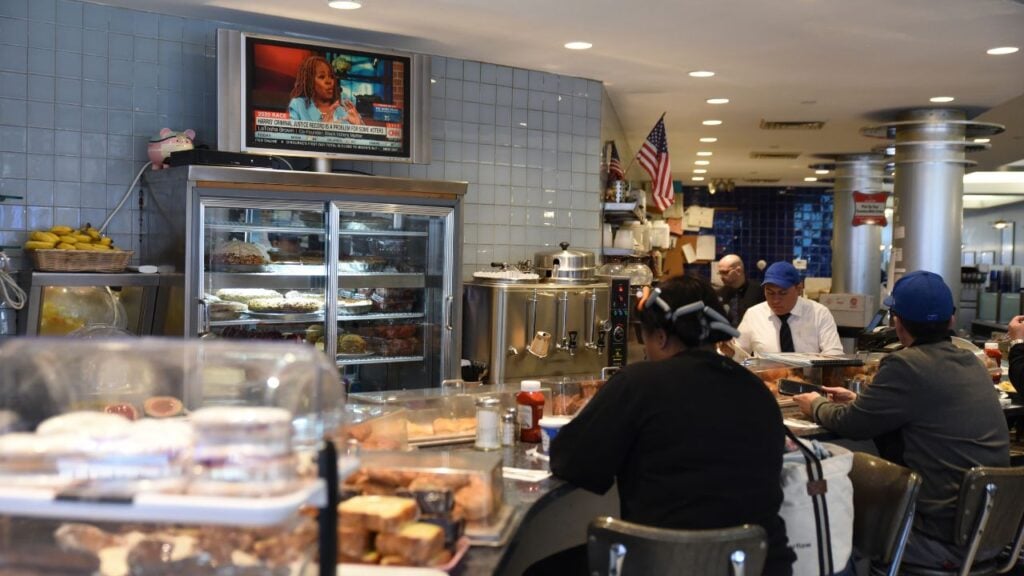
A blue paper cup with a Greek key pattern still turns up at some New York City diners.
An egg cream, on the other hand, has no egg and no cream.
6 Things You'll Only Find at a New York City Diner
9 Heirlooms New York Families Fight Over More Than Money

A New York City co-op board can reject an heir who inherits shares in the building.
A family handgun, a camp upstate and a recipe box can start fights too.
