
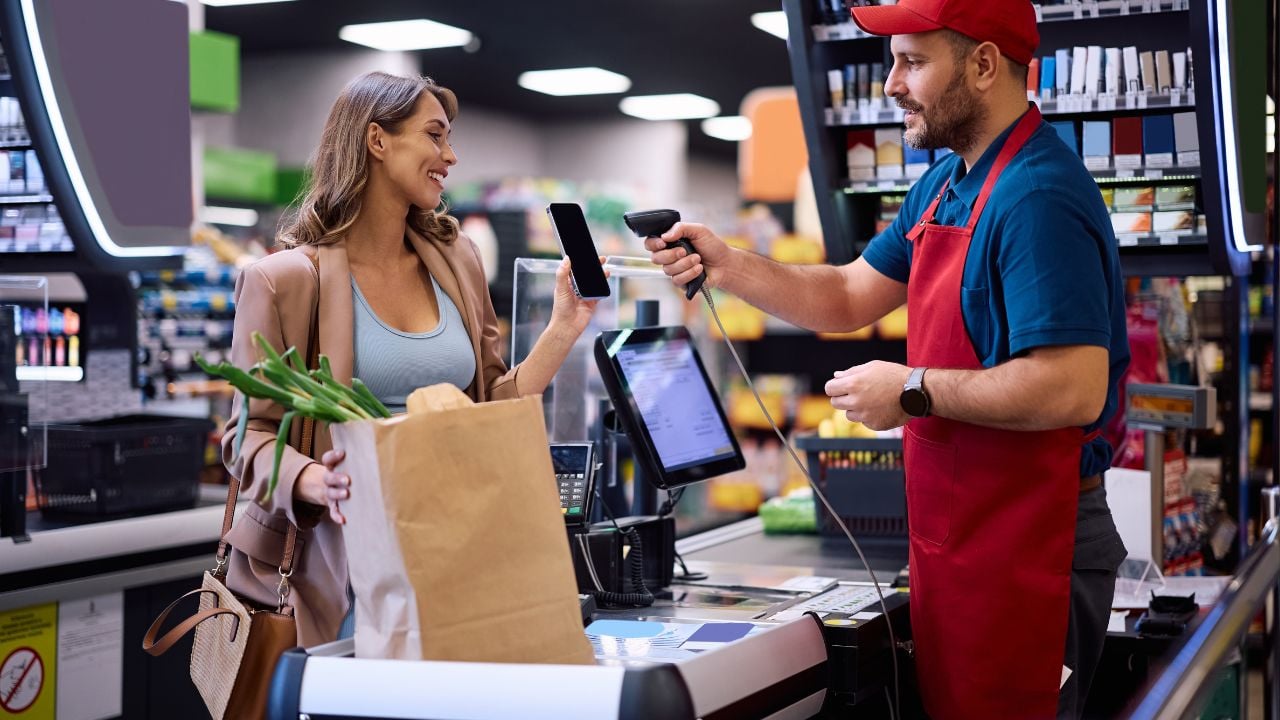
11 Things Florida Grocery Cashiers Notice About You Within 10 Seconds

Put D batteries, a blue tarp, and a five-gallon gas can on the belt, and the cashier knows what the forecast says before you open your mouth.
The rest of what they catch comes from register training and from state laws nobody mentions at the door.
These are the things a Florida grocery cashier sorts out about you in the first ten seconds.
1. Red Box on Your License
A cashier reads your driver’s license for alcohol purchases faster than you can get your wallet back in your pocket, and your birthday isn’t what they’re after.
Florida prints a red box on the front of an under-21 license, and that box carries the date the holder turns 21.
No math required.
Nobody at the register is counting backward from today or hunting for a birth year in small print.
They’re reading a date the state already worked out for them.
That’s why the check goes quicker than you expect, and why handing the card over face up saves everybody a beat.
2. What Rides Under Your Cart
Before a cashier touches your first item, they’ve already looked at the bottom rack of your cart, and stores have a name for what they’re looking for.
Bottom-of-the-basket loss covers everything too big or too heavy to lift onto the belt.
In one industry poll of grocery retailers, 80% named cashier error as the leading source of it, well ahead of shopper theft.
Nobody bent down.
A case of water, a 40-pound bag of dog food, a folding beach chair, and a 12-roll pack of paper towels roll out the door unpaid every week that way.
Every store breaks that loss total out lane by lane, and the question that saves it runs about four words.
3. Hot Food in Your Cart
A cashier knows whether Florida will tax your order the moment they see what you brought, and hot food is why.
Groceries are exempt from Florida sales tax, but the exemption stops at anything the store sells hot.
Pull a rotisserie chicken out of the warmer, and the state taxes it.
Take the cold rotisserie chicken from the refrigerated case, and it goes untaxed.
Two prices, one chicken.
Florida taxes a ready-to-eat sandwich the same way, warm or straight out of the cooler, which surprises almost everybody.
The warmer is the whole difference, and the shopper behind you with cold groceries pays no tax at all.
4. Your Produce Sticker
Loose produce is the part of your order a cashier keys in by hand, and they check every piece for its sticker.
That little oval is a price look-up code, and it separates two apples that look identical on the belt.
A four-digit code means conventionally grown, and a five-digit code starting with 9 means organic.
So a banana is 4011 and an organic banana is 94011.
No sticker, no code.
Peel it off in the produce aisle, or pull organic peppers out of the conventional bin, and a cashier has nothing left but a guess.
Every guess costs somebody money, which is why they’d rather hold the bag up and ask you.
5. Whether Your Order Splits
Long before the card comes out, a cashier can see a Women, Infants, and Children (WIC) order forming on the belt.
Florida’s program pays only for approved foods, and the store’s cash register system already has those types and brands programmed in.
No substitutions.
Florida WIC states that plainly, so an item that isn’t on the list won’t go through on the card no matter how close it looks.
A set size of cereal, a certain block of cheese, and a case of infant formula on the belt mean the order is heading for two payments.
Many cashiers slide those items to the front before you ask, since a clean split beats backing items out afterward.
6. Your Hurricane Cart
Set D batteries, a case of water, a blue tarp, and a five-gallon gas can on the belt, and the cashier knows what the forecast cone looks like before they’ve seen the news.
They read the total, too.
Florida made household batteries in the AA, AAA, C, D, 6-volt, and 9-volt sizes, tarps of 1,000 square feet or less, portable generators of 10,000 running watts or less, and fuel cans of five gallons or less permanently exempt from sales tax on August 1, 2025.
For years, lawmakers switched that break on with temporary sales tax holidays and let it lapse again.
The exemption stays on the books all year now, so a June storm cart and an October storm cart ring up at the same flat total.
7. Which Language You Answer In
Cashiers pick which language to open in before you reach the belt, and in Miami-Dade County they’re right most of the time.
About three in four residents age 5 and older there speak a language other than English at home.
So a greeting at a Sedano’s register in Hialeah starts in Spanish, and your first two words decide whether it stays there.
Nobody’s testing you.
Answer either way, and the line keeps moving, though a cashier who guesses right saves both of you a beat.
Drive up to Ocala or out to Pensacola, and the cashier makes the same guess starting from English.
Psst! How much do you know about the American checkout line? Take our quiz and see if you can ace it.
Quiz
Checkout Line Pop Quiz
Answer these questions on registers, carts, and barcodes. We bet you can’t get them all right. Prove us wrong?
Shoppers refused to touch the first shopping carts in 1937. What finally won them over?
8. What Time You Got There
The clock matters the second you set a six-pack of beer on the belt, and the answer changes with your address.
Florida bars alcohol sales between midnight and 7 a.m., then hands every county and city the power to write its own hours on top of that.
The cutoff moves.
One store rings up beer at 6:45 on a Sunday morning, and a store 20 minutes up the road can't touch it until later.
Cashiers near a county line learn both schedules because a customer who crossed a bridge rarely knows they crossed a rule too.
9. Your Trip Next Door
Ask a cashier at a Florida supermarket for tequila, and they'll point you out the door.
A package store in Florida has to be devoted exclusively to liquor sales, with no doorway connecting it to any other room.
Beer and wine only.
So the supermarket rings up your six-pack of beer and your bottle of red, and the package store next door handles the tequila from its own entrance off the parking lot.
A cashier reads that trip off your cart in a second, and the directions arrive before you've finished asking.
10. Eating It in the Store
How you carry a pastry to the register changes what you pay for it.
The same exemption law that leaves hot chicken taxable carries a caveat for bakery items sold by a store with eating facilities, and supermarkets keep adding cafés with tables.
Six pastelitos sealed in a bakery box are headed for your kitchen, so they stay exempt.
It's all in the packaging.
A loose croissant on a tray beside a cortadito looks like something you're eating on the spot, and it rings up taxed.
So the question about whether your order is going home isn't small talk.
The register can't print a total until somebody answers it.
11. How Old You Look
Cashiers run a guess on your age from across the lane, and Florida law is why they never get casual about it.
Sell alcohol to someone under 21, and the person who handed it over faces a second-degree misdemeanor on a first offense, then a first-degree misdemeanor for a second violation inside a year.
That's the cashier.
A separate Florida statute sets the same age of 21 for nicotine, with the same personal exposure for whoever rings it up.
The store risks its beverage license, and the person scanning your beer at a Jacksonville register risks a misdemeanor on their own record.
Ask them to eyeball it instead of pulling out your card, and you're asking a stranger to gamble that record on your face.
11 Things Floridians Refuse to Do in August No Matter What

Florida's winter is the easy part, and August is the test.
While summer winds down up north, the worst of the heat and the busiest weeks of hurricane season are both still ahead.
11 Things Floridians Refuse to Do in August No Matter What
9 Florida Resident Perks Tourists Pay Full Price For

A family from Indianapolis pays full freight at the Magic Kingdom ticket window.
The next family in line shows a Florida driver's license, and the price drops by more than half.
