
11 Things North Carolina Grandmothers Never Wrote on Recipe Cards, Making Recipes Impossible to Get Right

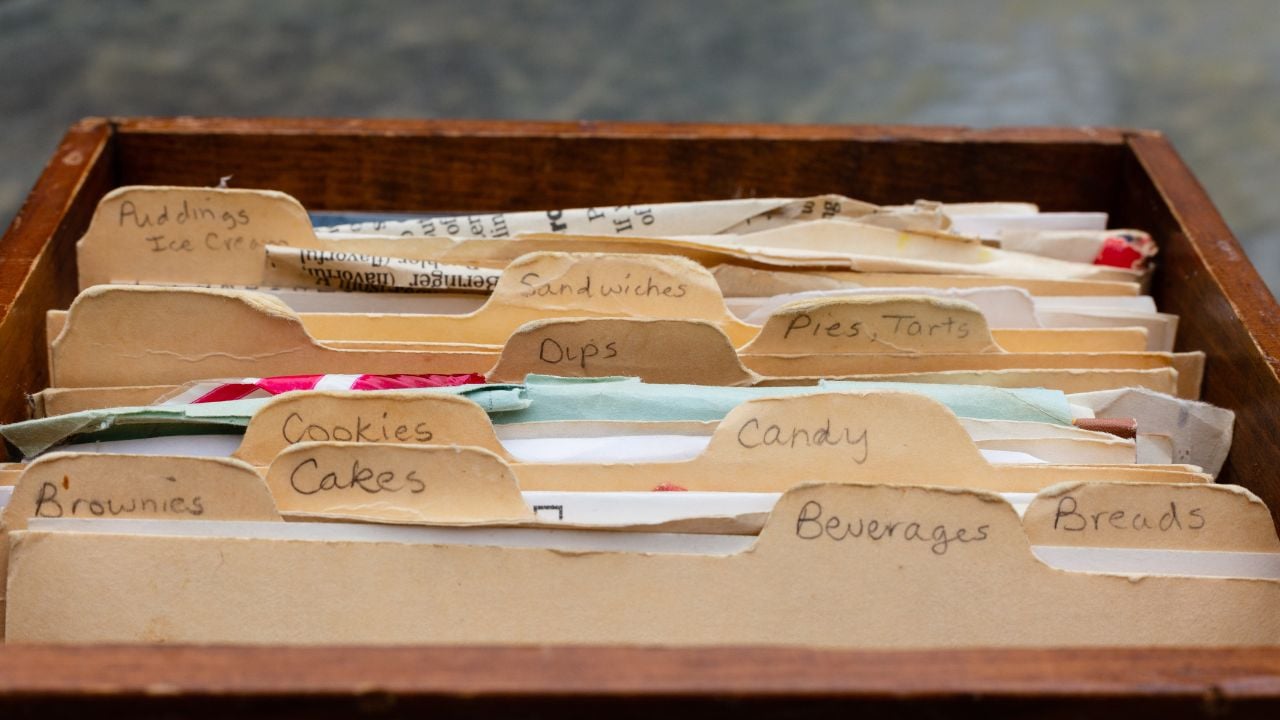
A recipe box sits on a kitchen counter in Winston-Salem, its cards frayed at the corners after fifty years of hands.
One card reads, “Aunt Ruby’s chicken and pastry, don’t rush the dumplings.”
Nobody in the family has managed to get the dumplings right since.
These are the details North Carolina grandmothers left off their recipe cards because they assumed everyone could cook by instinct.
1. Enough Flour to Make It Right
A North Carolina grandmother’s recipe card almost never lists an exact cup count for flour.
It says “enough to make it right.”
No cup required.
Butter shows up as “a knob,” something close to two tablespoons by the estimate of cooks who study these old cards today, and salt turns into “a pinch,” about an eighth of a teaspoon.
She finished the gravy with a few shakes of Texas Pete instead of a spoon, and that bottle has been made in Winston-Salem for generations.
Her hands did the measuring instead.
2. Oven Heat, Not Oven Degrees
A grandmother in the North Carolina mountains often cooked on a wood-burning stove years after a kitchen down in the Piedmont had a gas range with a dial.
So she wrote heat in words instead of numbers.
A “slow oven” meant around 275 to 300 degrees.
“Moderate” landed at 350 to 375, and “hot” pushed past 400.
No dial existed.
She learned her own stove’s quirks over years of biscuits, the way one side ran hotter than the other and the back corner scorched a pan before the front ever browned.
That knowledge never made it onto the card.
Her own hands were the only thermostat in that kitchen.
3. Doneness by Sound, Smell and Touch
A kitchen timer meant almost nothing to a grandmother in the North Carolina Piedmont.
She pan-fried livermush, the cured pork-and-cornmeal loaf that Piedmont towns still hold festivals over, and judged it done by the smell of the crisping edges, not a clock.
She gave bread the same treatment, a knuckle rap on the bottom of the loaf, and a hollow sound back meant it was ready, a trick bakers rely on today.
Pressing a finger to the top of a pound cake settled it, springing back if it was ready and staying dented if it wasn’t.
None of it showed up as a number.
She just knew.
4. Notes in the Margin
The recipe itself filled the middle of the card, but a grandmother crowded the details that mattered most into the margin.
“Mama’s oven runs hot, cut five minutes.”
“Double this for the tobacco harvest crew.”
“Add a little more sugar than it calls for.”
She turned a recipe into a running conversation between herself and whoever cooked from it next.
Not on any printout.
A modern recipe card leaves no room for that.
5. Whose Kitchen It Came From
A card rarely just named the dish.
Whoever copied it onto the card gave it a name too, “Aunt Ruby’s pound cake” or “the Hendersons’ potato salad from the Wrightsville Beach reunion,” tying the dish to a kitchen and usually a Sunday somebody still remembers.
Daughters and nieces crossed out married names and updated them as the same card moved into new households.
Names came and went.
The dish outlived the name on it more than once.
6. Four Decades, One Ingredient
Pull an old card from a Piedmont kitchen drawer, and the ingredient list often carries handwriting from four different decades.
Butter went through its own detour first, during World War II, when the government rationed it, and cooks in mill towns like Greensboro and Gastonia stretched their supply with margarine instead.
That margarine came colorless, and each box carried its own packet of yellow dye to mix in by hand.
A later hand crossed out lard for Crisco.
Another hand crossed out Crisco for vegetable oil.
Three swaps, one card.
One recipe, four decades.
Psst! Think old-fashioned kitchen wisdom always holds up? Flip these cards and see what’s myth and what’s fact.
7. Recipes Written on Whatever Paper Was Handy
Not every family recipe started life on an actual card.
Cooks scrawled many of them on the back of a church bulletin, an envelope, or a torn sheet from a feed-store notepad.
North Carolina church suppers, known across the state as dinner on the grounds, hosted a lot of that trading, with cooks copying a neighbor’s dish onto whatever paper sat in their purse.
Paper didn’t matter.
You can tell exactly when and how a card joined the collection just from its mismatched size in the box.
Some recipes never made it onto a proper card at all.
8. Grease Stains Were the Star Rating
Long before star ratings and review counts, a recipe card had its own honest measure of popularity.
The grease stains.
Cooks reached for the card spotted with butter and batter every single week for a Piedmont covered-dish supper, while a cook pulled the clean, crisp card from the back of the box only once, then let it disappear into the stack again.
Some families joke that the best recipes in the box are the cards you can barely read anymore.
The mess was the whole point.
9. “A Mess” Instead of a Measurement
North Carolina recipe cards lean on a vocabulary that never made it into a standard cookbook.
“A mess of beans” meant enough for supper, picked fresh from a garden row behind a Piedmont farmhouse.
No scale, ever.
“Enough to cover” meant a cook judged the broth or batter by the pan in front of her, not by a number on a card.
“A good double handful” of pecans or cornmeal did the job a quarter cup does today.
The whole vocabulary assumed the cook already knew her own kitchen.
10. Testing the Grease With a Wooden Spoon
Frying chicken or hushpuppies meant judging hot grease without a thermometer anywhere in the kitchen, the same test used for decades at the lakeside fish camps that dot the North Carolina Piedmont.
A cook dropped the dry handle of a wooden spoon into the oil and watched what happened.
Small, steady bubbles rising around the wood meant the grease was ready.
A calm, still pot meant wait longer, and a wild, spitting boil meant pull the pan back before something burned.
That same test still works today, thermometer or not.
No gadget needed.
11. Recipe Boxes Outlive the Cook
A recipe box was never just about the recipes.
It became a family record instead, the closest thing some households have to a written history.
A grandmother’s handwriting sits next to her daughter’s on the same card, and a granddaughter’s rounder cursive sometimes fills in a line that had worn away.
Three generations, one card.
These cards pass down through mountain estate sales in places like Asheville and small-town Piedmont funerals more often than through birthdays.
A cousin usually ends up with the whole box, and the rest of the family starts asking to borrow just one card at a time.
Nobody ever offers to give the whole box back.
8 North Carolina Mountain Towns Locals Love (and 3 Tourists Overrun)

A line of out-of-state plates crawls toward the same famous overlook, everyone angling for the same photo.
A few miles back, locals turn off onto a side road toward a town those cars will never find.
8 North Carolina Mountain Towns Locals Love (and 3 Tourists Overrun)
8 Harris Teeter Perks North Carolina Shoppers Over 60 Shouldn’t Overlook

Harris Teeter got its start in Charlotte and still runs its headquarters in Matthews, North Carolina.
Many shoppers over 60 are leaving savings on the table every week without realizing it.
8 Harris Teeter Perks North Carolina Shoppers Over 60 Shouldn’t Overlook
