
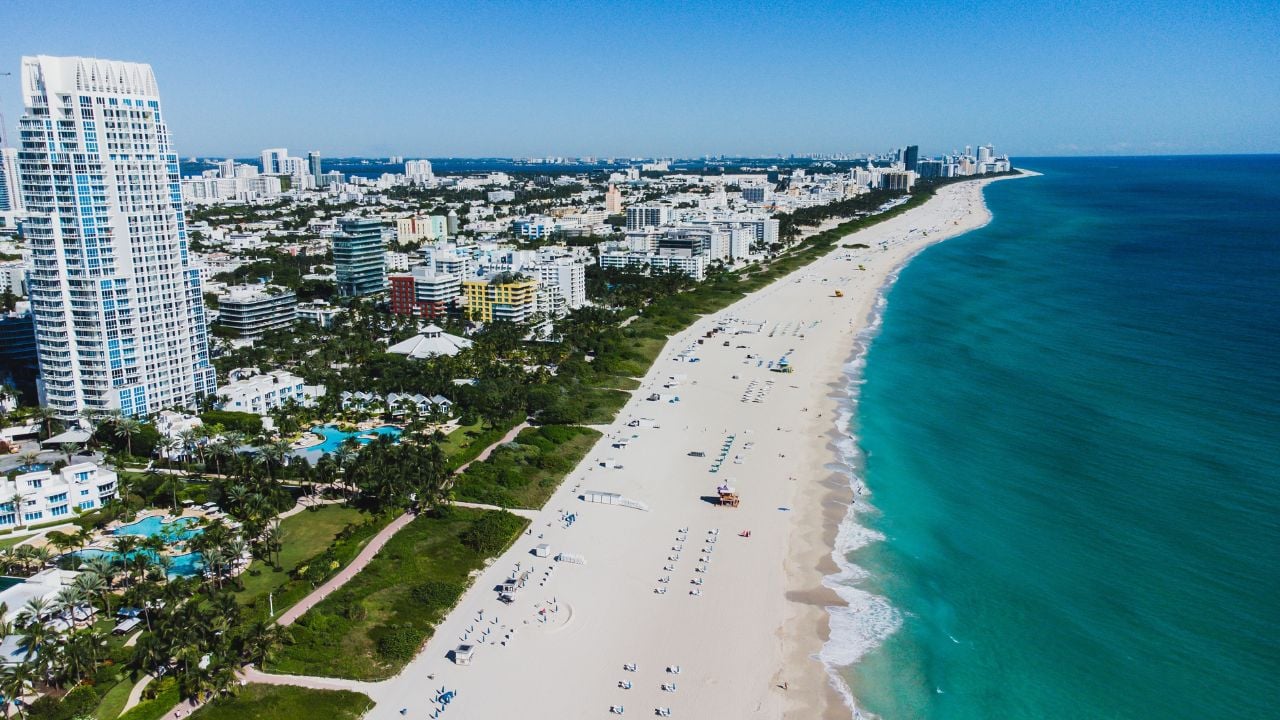
11 Things Only Longtime Floridians Notice at the Beach

Anyone can find a public beach in Florida with a phone and five minutes.
Reading it once you’re standing on the sand is a different skill.
A first-timer needs a lifeguard tower just to figure out what’s going on, while a longtime local reads the flags, the smell in the air, and the crowd before setting down a single towel.
These are the things only longtime Floridians notice at the beach.
1. Dry Sand Isn’t Always Public
Some Florida beachfront sand belongs to the public.
Some of it doesn’t.
The line between the two sits inside a legal doctrine most vacationers never hear about, called customary use.
Florida lets the public walk, fish, and swim on private dry sand above the average high-tide line if that use has stayed “ancient, reasonable, without interruption and free from dispute” for generations.
A 2018 law made that harder to prove, since a town had to win a court case before it could declare a stretch of beach open under the doctrine.
Gov. Ron DeSantis signed a fix for Walton County in June 2025, handing local officials the authority to recognize customary use without a judge weighing in first.
Longtime beachgoers already know which stretches locals have always shared, and which belong to the house behind the dune.
Few visitors ever ask.
2. Flag Colors Everyone Misreads
A purple flag flies over the lifeguard tower at Cocoa Beach, and a couple two towels down debate whether it means sharks are close.
It doesn’t.
Florida’s beach warning system flies purple for dangerous marine life, mostly jellyfish, sea lice, and stingrays, not sharks.
Yellow means a moderate current, red means rough surf and a strong pull, and a double red closes the water to everyone.
A longtime beachgoer glances at the pole the way a driver checks a mirror, without breaking stride toward the shoreline.
The purple flag rarely stops anyone from swimming.
It just means watch your step and keep an eye out once you’re in the water.
3. Filling in Your Holes
Sea turtles nest on Florida beaches from May through October, dragging themselves past the tide line most nights to lay a clutch of eggs.
A sandcastle moat or a knee-deep hole left behind can trap a hatchling trying to crawl to the water, or even a nesting turtle crawling up.
Filling in every hole before dusk isn’t yet written into state law.
Habit, not law.
Longtime beachgoers stomp down their pits and flatten their moats before they pack up, the same way they’d fold a towel.
A newcomer who spends the afternoon digging a trench for the kids often walks off and leaves it standing.
That trench becomes somebody’s obstacle course after dark.
4. When the Seaweed Piles Up
Ever notice a summer when the beach smells like it’s gone bad?
Brown mats of sargassum seaweed pile up along the shoreline some years, thick enough to bury a beach chair.
By early summer 2026, trackers reported the sargassum drifting through the Gulf of Mexico at record levels, with the worst of it washing up in the Keys and along the southeast coast.
The mats rot in the sun and release hydrogen sulfide, the same gas that gives rotten eggs their smell.
Rotten eggs, basically.
Longtime beachgoers check a seaweed report before picking which beach to visit.
A first-time visitor just wonders why the sand smells so bad.
5. That Cough Isn’t Allergies
A red tide bloom of the algae Karenia brevis can turn a beach day into a scratchy throat within minutes.
The algae releases brevetoxins into sea spray, and an onshore wind carries them straight up the beach.
Coughing, sneezing, and itchy eyes follow for most people, and the symptoms fade once you leave the water’s edge.
It’s not pollen.
Longtime residents check the wind direction and a red tide map before choosing which beach to visit that week.
Kids, older adults, and anyone with a breathing condition usually feel it worst.
Swimming stays legal during a bloom, but many people leave early anyway.
Psst! How much do you know about Florida’s coastline? Take our quiz and see if you can ace it.
Quiz
Florida Coast IQ
Answer these questions on Florida’s beaches and coastline. We bet you can’t get them all right. Prove us wrong?
Which stretch of Florida coast has logged more documented shark bites than anywhere else on Earth?
6. Sand That Squeaks
Scoop a handful of sand on a Panhandle beach like Pensacola or Destin, and it can squeak against your fingers.
That sand is almost pure quartz, ground so fine and uniform that locals call it sugar sand.
Try the same test on Cocoa Beach or New Smyrna Beach, and the sand won't squeak, colored a warmer gold-brown from broken shell and coquina mixed into the quartz.
Same state, different rock.
A longtime beachgoer can often guess which coast a photo was taken on just from the color of the sand in the background.
Tourists usually assume every Florida beach looks alike until they've stood on both coasts.
7. Trucked-In Sand
Storms and rising seas strip sand off Florida's beaches every year, so counties truck in replacements to keep the shoreline from disappearing.
For decades, dredges pulled that replacement sand from offshore sandbars a few miles out.
Miami-Dade County used up its offshore supply back in 2014.
Now the sand under sunbathers on Miami Beach mostly rides in on trucks from inland mines in Central Florida, hauled in by the ton.
None of it is original.
A longtime beachgoer who has watched a renourishment project up close knows the "natural" beach under their chair might be younger than their own kids.
8. Night Diggers
Small round holes dot the dry sand every morning, and almost nobody sees who dug them.
Ghost crabs do the work after dark, burrowing at a steep angle down to four feet deep so the sea breeze can reach the bottom of the tunnel.
Pale enough to vanish against dry sand, they duck underground the second a shadow moves.
They're already home.
Longtime beachgoers grab a flashlight after sunset and go looking, since a ghost crab hunt is a cheap way to entertain the kids.
Come daylight, whoever dug the hole is asleep four feet under, and the hole is the only proof anyone was ever there.
9. Bottle Rules Change by County
Carry a glass bottle onto an Escambia County beach, and you're breaking a local ordinance the moment you set it in the sand.
The next county over might allow it.
Alcohol and glass rules in Florida get set town by town and county by county, not by the state.
One beach bans both, another allows drinks in a plastic cup, and a third restricts only the glass.
Fines for glass alone can run into the hundreds of dollars, depending on the county.
Check before you pour.
Longtime beachgoers know their regular spot's rules without thinking twice.
Newcomers packing the same cooler for two different beaches in one trip can get a very different reception at each one.
10. Your License Plate Is the Permit
Beach driving along Daytona Beach and New Smyrna Beach used to mean a paper permit stuck to the windshield.
Not anymore.
Volusia County's Park Volusia program switched its beach driving and parking permits to a virtual system, so a vehicle's own license plate now serves as the pass.
Drivers can normally roll onto the sand from sunrise to sunset, from November through April.
During sea turtle nesting season, May through October, those hours shrink to 8 a.m. to 7 p.m. or sundown, whichever comes first.
Longtime beachgoers already have their plate registered before Memorial Day weekend even shows up on the calendar.
Show up in a rental during turtle season without checking the hours, and a ranger waves you back toward the dune walkover instead.
11. Same Beach, Different Price
Two Florida towns twenty minutes apart can charge wildly different prices for the same square foot of sand.
Palm Beach Shores charges a nonresident $350 for an annual beach parking sticker.
Satellite Beach, a short drive north, charges nonresidents just $75 for the same kind of pass.
Same view, different bill.
Fort Lauderdale charges its own residents $75 a year to park at the beach, and Collier County won't sell an annual permit to a nonresident at all, only a $10 daily rate at the gate.
Longtime beachgoers in one town brag about their $75 sticker to friends in another town who just paid four times as much for the same view.
12 Things Snowbirds Pack for Florida That Locals Find Hilarious
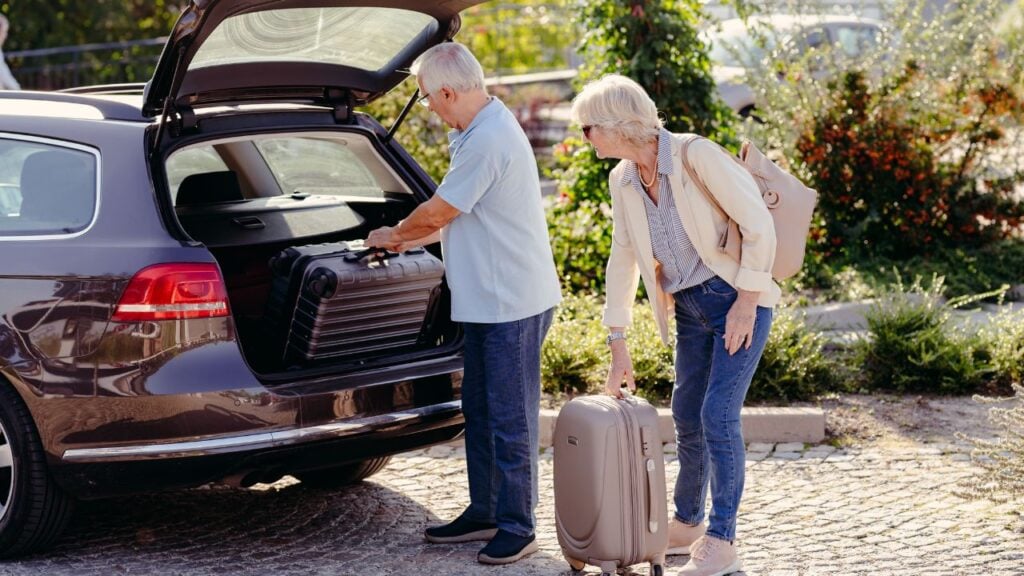
A snowbird's car pulls into a Fort Myers rental every October loaded like the movers are still on their way, and the neighbors stop counting the boxes by the third trip up the stairs.
Half of what rode down I-95 heads back north in the spring, still zipped in its original bag.
12 Things Snowbirds Pack for Florida That Locals Find Hilarious
14 Habits That Give Away a Florida Lifer, for Better or Worse

A Florida lifer gives themselves away without saying a word, and it shows up in reflexes built over four decades of heat, storms, and bugs the size of a thumb.
Some of those habits are pure survival, and a few just make their relatives up north shake their heads.
14 Habits That Give Away a Florida Lifer, for Better or Worse
