
14 Habits That Give Away a Florida Lifer, for Better or Worse

You can spot a Florida lifer without hearing them say a word.
It’s in their reflexes.
Four decades of heat, storms, and bugs the size of your thumb rewire how a person moves through the day.
Some of it is survival, some of it is pure Florida, and some of it makes their families up north shake their heads.
These are the habits that give away a Florida lifer, for better or worse.
The Gator Gets a Shrug
About 1.3 million alligators live in Florida.
They turn up in all 67 counties, the pond behind the strip mall included.
A longtime local spots the two eyes riding the surface, clocks the size, and steers the dog to the far side of the water.
No screaming.
The rule they live by is short: You keep your distance, you keep kids and dogs back from the edge, and you never toss a gator a snack.
Feeding one teaches it to link people with food, and that’s when it turns dangerous.
A transplant, meanwhile, films the same alligator for twenty minutes and sends the video to everyone back in Ohio.
Sixty Degrees Feels Freezing
The first cold front of the year drops the temperature into the low sixties, and a lifelong Floridian reacts like the tundra moved in.
Out come the hoodies.
Somebody starts a pot of chili, digs the one pair of closed-toe boots out of the closet, and posts about the “arctic blast” on Facebook.
School kids show up in parkas over shorts.
It sounds soft to anyone who grew up shoveling snow, and it is.
But your body does acclimate, and forty years of ninety-degree summers reset what it calls cold.
At 62 degrees, that jacket makes complete sense to them.
Setting Your Watch by the Storm
From June through September, Florida runs on a thunderstorm schedule you could set an alarm to.
The sea breeze rolls in off both coasts, the two fronts collide over the middle of the state, and the sky opens up most afternoons around three.
That daily collision makes the corridor between Tampa and Orlando the lightning capital of the country.
So a lifer mows the lawn at 8 a.m., not 4 p.m.
Anything else outdoors gets done before lunch.
You learn to beat the clouds.
The storm blows through in forty-five minutes, the sun comes back, and the wet pavement steams in the heat.
The Twice-a-Year Bug Scrub
Lovebugs coat every windshield on I-4 twice a year, once from April into May and again from August into September.
They drift a few feet off the ground, right at bumper height, and they die by the thousands against your grille.
Then the clock starts.
The splattered remains turn acidic as they bake in the sun, and left overnight they can etch the paint for good.
So a seasoned driver hits the car wash that same day, keeps a damp dryer sheet in the console, and scrubs the front bumper before dinner.
Newcomers learn this the expensive way.
The bugs don’t bite or sting, and the swarms have thinned out over the past decade, yet lovebug season still turns every driver into a part-time detailer.
Your Car Is a Sun Bunker
A Florida parking lot in July turns a locked car into an oven, so the car itself becomes a fortress against the sun.
The reflective windshield shade goes up every time, no exceptions.
A lifer parks nose-out under the lot’s one shade tree, drapes a towel over the seat, and cracks the windows a sliver.
They test the steering wheel with two fingers first, the way you check a hot pan.
The wheel burns.
The seatbelt buckle turns into a branding iron by noon, and everyone has scorched a knuckle on that buckle at least once.
That’s why the sun shade goes up first, every time.
Palmetto Bugs Barely Register
Every so often a palmetto bug the size of a thumb turns up in a Florida kitchen, and the response is a sigh.
You grab a shoe.
The soft-sounding name is a Southern cover for a large American cockroach, and knowing that is half the trick.
They come in from the yard and the palmettos, not from a dirty house, which is the point locals will defend to the death.
And they fly.
A newcomer meets their first airborne palmetto bug and leaves the room, maybe the lease.
A lifer shakes out a shoe before putting it on, glances at the corner of the shower, and moves on with the morning.
Dreading Snowbird Season
The license plates on Florida roads start changing every November, and every lifer feels it in the commute.
Snowbirds head south for the winter, filling the condos, the early-bird tables, and the left lane of US-41.
Traffic doubles.
A ten-minute drive to the store becomes twenty-five, and the beach parking lot fills by nine.
Locals grumble about it from Thanksgiving to Easter.
Then they remember snowbirds bankroll half the restaurants and shops that limp through summer, and the grumbling softens.
By May the plates read Florida again, and the roads open back up.
Hurricane Prep on Autopilot
Hurricane season runs from June 1 through November 30, and a Florida lifer’s prep kicks in without a second thought.
Muscle memory takes over.
They know the flashlight drawer, the case of water in the garage, and the gas-can routine before a storm ever gets a name.
When the cone points their way, they fill the tank, fill the bathtub, and drag the patio furniture inside.
A Category 1, though? Many just ride it out with snacks and a full cooler.
That last part drives their relatives up north to distraction.
By the time it makes landfall, the generator’s running and the card games have started.
Flip-Flops in December
Closed-toe shoes are optional in Florida, and a lifer’s feet know it year-round.
Flip-flops go with everything.
Shorts in December, sandals to the doctor, a pair of rubber slides kept in the car for a beach stop on a whim.
The cold that shuts down states up north barely touches the peninsula, so the sandals never get boxed up.
The tan line across the top of the foot is permanent.
The downside shows up at a nice dinner or a funeral, when the fanciest footwear anyone owns is a clean pair of leather flip-flops.
The feet stay ready for sand, all year.
Fed Up With the Clock Change
Twice a year the country moves its clocks.
Few states are as fed up with it as Florida.
The state voted back in 2018 to stop the switch and stay on daylight saving for good.
Then nothing happened because the change needs Congress to sign off.
So a Floridian still loses an hour every March, in the Sunshine State of all places, and complains about it loudly.
In July 2026, the U.S. House finally passed a bill to make daylight saving permanent nationwide.
The Senate hasn’t budged.
Until it does, every lifer keeps muttering at the clocks come spring.
Skipping the Umbrella
Rain in Florida is a daily event most of the summer, and yet a lifer almost never carries an umbrella.
What’s the point?
The afternoon downpour arrives all at once, soaks the parking lot for fifteen minutes, and quits just as fast.
So you wait it out under the awning at the store, watching the sheets of water, in no hurry at all.
Or you make a run for the car and take the soaking.
You’re dry by the next errand.
An umbrella would only blow inside out in the wind anyway, which is the excuse every soaked Floridian gives while standing there dripping.
Psst! How well do you know Florida? Take our quiz and see if you can ace it.
Quiz
Sunshine State IQ
Answer these questions on Florida’s history, geography, and claims to fame. We bet you can’t get them all right. Prove us wrong?
Gatorade was invented in 1965 at which Florida university?
Watching the Tropics
A Florida lifer keeps one eye on the tropics from the first warm week of summer into fall.
They know the National Hurricane Center by heart.
The "cone of uncertainty" and the "spaghetti models" become dinner-table talk the moment a wave rolls off the coast of Africa.
Refresh, refresh, refresh.
They debate the European model against the American model the way fans argue quarterbacks.
Half of it is smart preparation.
The other half is fretting over a storm that's still five days and a thousand miles away.
Boiled Peanuts by the Road
Pull off a Florida two-lane highway in the summer, and odds are good someone has a pot of boiled peanuts going by the shoulder.
The handmade sign reads "Hot Boiled P-Nuts."
They simmer green peanuts in salty water for hours, until the shells turn soft and the nut inside eats more like a bean.
Cash only.
A local buys a steaming bag and eats them one-handed for the next twenty miles.
The wet shells land in the cup holder, and the salt stays on your fingers till the next gas station.
The Afternoon Cafecito
In South Florida, the workday pauses in the middle of the afternoon for a tiny cup of strong Cuban coffee.
Miami made it official.
The city recognized 3:05 as cafecito time, a nod to the 305 area code, and the ventanita walk-up window is where it happens.
Someone orders a colada.
A stack of little foam cups comes with it, one for everybody at the office.
Sharing the colada is the entire point.
A lifer gets a jolt of Café Bustelo, a few minutes of gossip at the window, and a reason to step outside.
The line at the ventanita at Versailles on Calle Ocho stretches out the door most afternoons, and nobody in it is in a rush.
Order a second colada for the table, and you've made a friend for the walk back to work.
11 Ways You Can Spot a Floridian at the Beach in 5 Seconds
Put a lifelong Floridian and a first-week visitor on the same stretch of sand, and the difference shows in seconds.
The lifer already knows how the morning will go, and the visitor is about to learn the hard way.
11 Ways You Can Spot a Floridian at the Beach in 5 Seconds
9 Florida Creatures That Terrify Northerners but Locals Shrug Off
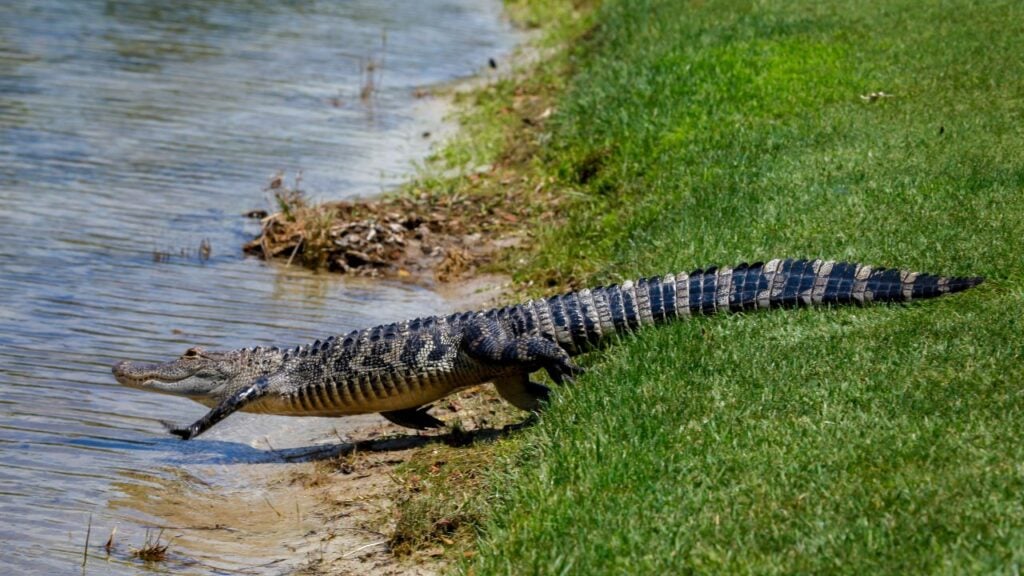
Every Florida transplant has a first-week story about an animal, and it usually involves a scream.
What looks like an emergency to somebody fresh off I-95 is just a Tuesday to anyone raised on the peninsula.
9 Florida Creatures That Terrify Northerners but Locals Shrug Off
