
9 Florida Creatures That Terrify Northerners but Locals Shrug Off

Every Florida transplant has a first-week story about an animal.
Usually it involves a scream, a broom, and a neighbor who wandered over to laugh.
What looks like an emergency to somebody fresh off I-95 is just a Tuesday to anyone raised in Florida.
These are the creatures that rattle newcomers while Floridians shrug them off.
1. Alligators
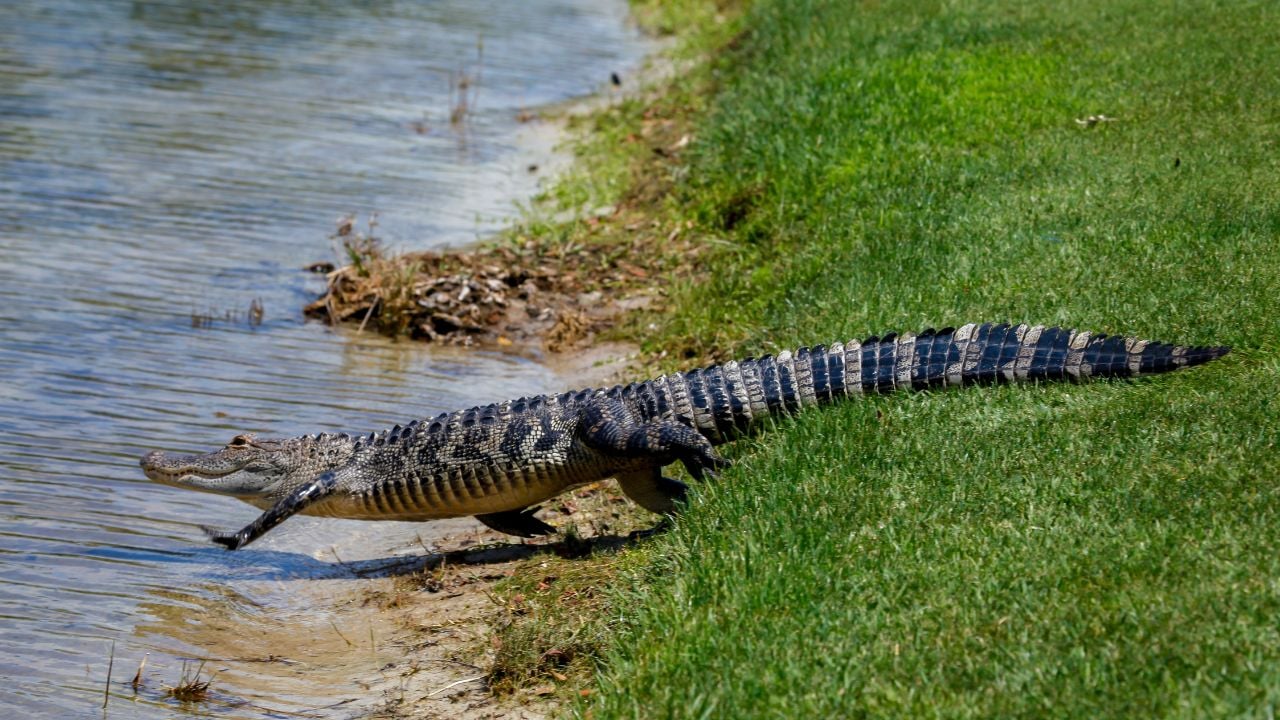
Few sights empty a northern tourist’s lungs faster than an alligator stretched across the bank of a golf course water hazard.
Florida holds an estimated 1.3 million alligators, and they turn up in canals, retention ponds, and now and then a backyard pool.
Barely a glance.
Deadly attacks stay rare even with that many gators sharing the neighborhood, and most alligators want nothing to do with a person.
The rule every Floridian follows is simple: give them room, keep dogs off the bank at dawn and dusk, and never toss one a snack.
Feed a gator, and it stops fearing people.
That’s when a calm animal near the ninth hole becomes a call to the nuisance trappers.
2. Palmetto Bugs
Palmetto bugs earn the loudest first-week scream of pretty much any Florida creature, and they earn it honestly.
The palmetto bug is an American cockroach, a glossy reddish-brown insect that can stretch past an inch and a half long.
Then it does the thing no transplant expects from a roach: it flies.
Straight toward the porch light. Straight toward your head.
Locals duck.
These roaches live outdoors in mulch beds, palm boots, and storm drains, so a spotless kitchen won’t keep every one out during an August downpour.
They don’t bite, and they’d rather flee than land on anybody.
Floridians keep a flip-flop by the door and get on with their evening.
3. Love Bugs
Twice a year, love bugs coat every windshield on I-4 and turn a clean bumper into a mess of little black splatters.
These flies swarm across Florida twice a year, once in spring and again in late summer, often stuck together in pairs.
Newcomers assume they bite.
They don’t.
Love bugs can’t bite or sting, and they’re harmless to people, though they’ll test your patience at a gas station off US-27.
The catch is your paint, because dried love bug guts can etch a finish if they bake in the sun too long.
Floridians rinse the car that same night and stash dryer sheets in the trunk for the windshield.
4. Banana Spiders
Banana spiders string webs the size of a doorway across shaded Florida trails, usually right at face height.
The golden silk orbweaver is native, gold-threaded, and big enough to make a hiker on a hammock trail freeze mid-step.
Deep breath.
Its venom is mild, and a bite, which almost never happens, stings less than a bee.
These spiders hunt mosquitoes and other flying pests, so a big one parked in the garden is doing you a favor.
She sits dead center in the web, waiting on lunch, not on you.
A local grabs a stick, waves it ahead on the path, and keeps hiking.
5. Lubber Grasshoppers
Eastern lubber grasshoppers look like somebody painted a small lobster yellow and set it loose in the flower bed.
They grow up to three inches long, and the adults can’t fly at all.
Slow and clumsy.
A lubber crossing the driveway strolls along at its own pace, which is why newcomers assume something’s wrong with it.
Nothing’s wrong.
A lubber’s loud colors are a warning that it tastes foul, and a cornered one will hiss and spray a stinky froth to prove the point.
They won’t hurt you, but they’ll shred an amaryllis bed, so gardeners around Central Florida pick them off by hand.
Psst! How much do you know about Florida’s wild side? Take our quiz and see how many you can get right.
Quiz
Florida Wild IQ
Answer these questions on Florida’s wild side. We bet you can’t get them all right. Prove us wrong?
Florida is the only place on Earth where two big reptiles live side by side in the wild. Which pair?
6. Black Racers
Southern black racers slip through Florida garages, flower beds, and garden sheds quicker than any other snake in the yard.
A newcomer sees a long black snake and pictures the worst.
It's harmless.
The black racer is nonvenomous, shy, and far more interested in escaping than in anything you're doing.
It eats lizards, frogs, and insects, and it'll vanish under the fence before you finish hollering for backup.
Corner one, and it might nip in a panic, though the bite is minor and carries no venom.
Floridians step back and let the racer go on its way.
7. No-See-Ums
No-see-ums ruin more Florida sunsets than any storm, and most people never spot the culprit.
These biting midges are so tiny they slip right through an ordinary window screen.
Nearly invisible.
The bite burns out of all proportion to the bug, and they swarm worst at dawn and dusk near the coast.
Beachgoers on the Gulf side know the drill.
They don't spread disease to people here, but the itch can outlast a sunburn.
Locals slap on repellent, cover up at dusk, and run a porch fan, since the weak little fliers can't handle a stiff breeze.
8. Muscovy Ducks
Muscovy ducks patrol Florida retention ponds and strip mall parking lots with red, warty faces that stop a newcomer cold.
They look part dinosaur, part gargoyle.
The Muscovy duck isn't native to Florida, and the state lets homeowners remove the birds and their eggs from private property.
They gather wherever somebody feeds them, which is most every pond in a subdivision.
Harmless, mostly.
A protective male can hiss and waddle after you during nesting season, but he's chasing your sandwich, not picking a fight.
Floridians quit feeding them, and the crowd at the pond thins out.
9. Anoles
Anoles skitter across every Florida porch railing, fence, and screen door, pausing to do little push-ups in the sun.
A newcomer flinches at the first lizard clinging to the doorframe.
Give it time.
The brown anole arrived from Cuba and the Bahamas, and it now outnumbers the native green anole across much of Florida.
Both kinds are harmless, both eat bugs all day, and the males flash a pink or red throat fan to show off.
A green anole can shift from bright green to brown in minutes, which is why newcomers swear they saw two different lizards on the same railing.
By month two, most transplants stop noticing the little acrobats and start bragging about them to relatives back north.
8 Signs a Florida Storm Is About to Wreck Your Afternoon
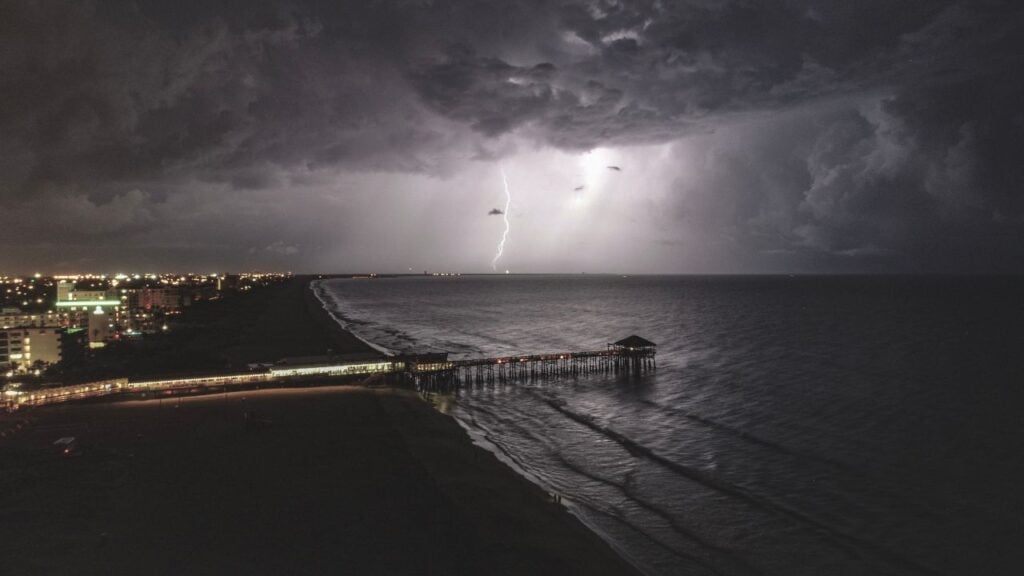
Floridians can read the afternoon sky the way other folks read a menu.
One glance over the pool fence tells them whether the cookout survives the next hour.
8 Signs a Florida Storm Is About to Wreck Your Afternoon Plans
10 Summer Myths Floridians Are Sick of Explaining
Every June, the questions from up north start rolling in again.
Are there alligators in your pool, and how do you stand the heat?
