
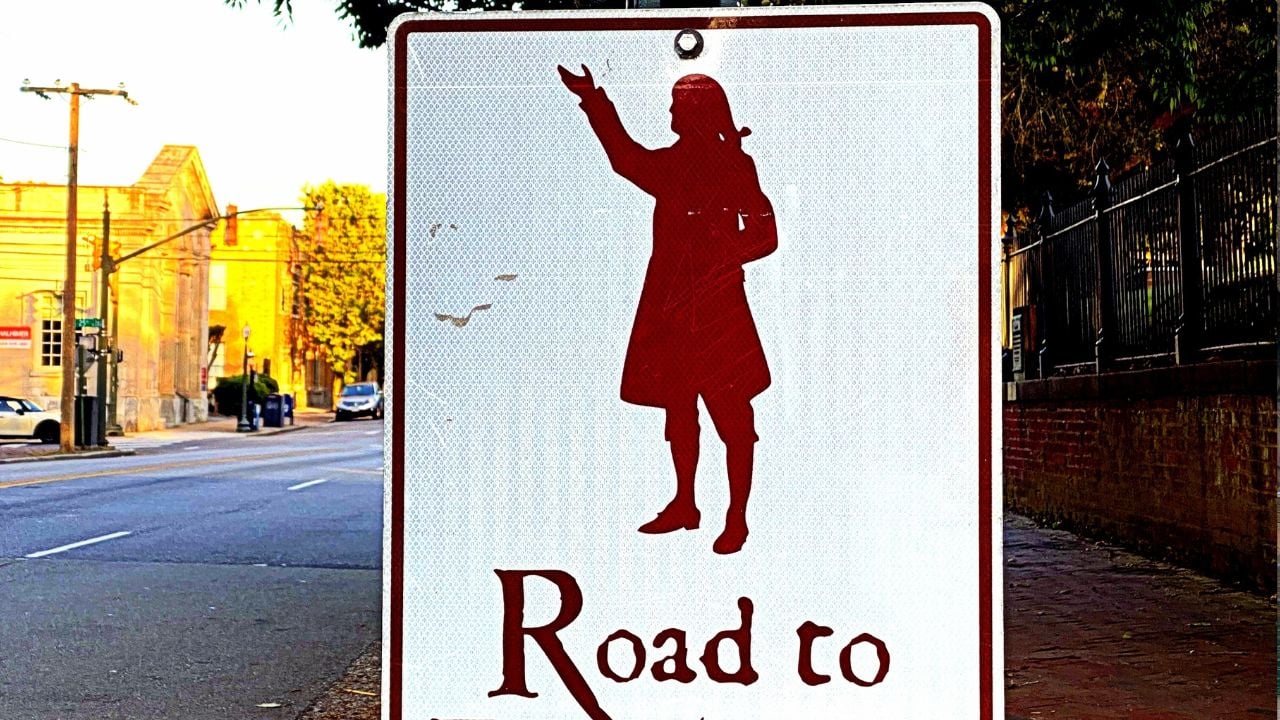
3 Virginia Historical Markers That Got History Wrong

A roadside marker outside Hampton stood for two decades before a Hampton History Museum researcher proved part of it wrong.
Nobody had flagged it before her.
It wasn’t until 2015 that the Department of Historic Resources swapped in a corrected marker.
These are the Virginia roadside markers the state had to rewrite to get its own history right.
1. Nat Turner’s Insurrection Marker
Virginia’s historical marker for Nat Turner’s Insurrection has stood in Southampton County since 1991, and it undercounted the story from the start.
The original sign put Turner’s band at about 70 men and placed the starting point seven miles from the marker.
Virginia rewrote the marker in 2021 through the Department of Historic Resources, moving the count closer to 60 men and the distance to five miles.
A bigger fix sat in what came after the revolt.
The 1991 marker closed on one blurry line: “some 30 blacks were hanged or expelled from Virginia.”
That single sentence covered two very different things.
Virginia’s courts convicted 31 Black Virginians in the revolt’s aftermath and hanged 19 of them after a trial.
Separately, white militias and residents killed Black Virginians across Southampton County and beyond, with no trial at all.
No court ever counted them.
The Nat Turner Marker’s Two Different Numbers
Virginia’s Nat Turner’s Insurrection marker gives one number for people who died after a trial.
Courts convicted 31 Black Virginians in the revolt’s aftermath and hanged 19 of them.
That number isn’t the same as the death toll from the weeks that followed.
White militias and mobs killed Black Virginians in Southampton County with no trial at all.
Historians estimate that toll reached as many as 120 people, many of whom had no part in the revolt.
2. Indian Attack Marker
Virginia’s marker for a deadly 1700 attack on Dogue Neck, in present-day Fairfax County, used to name one tribe as the killer.
That tribe denied it flatly.
The original Department of Historic Resources marker called the incident “Indian Massacre” and blamed the Piscataway Indians directly.
Piscataway leaders said they had no part in it.
They pointed instead to another group, the Wittowees.
By 1999, the state had a corrected marker in the ground, retitled “Indian Attack,” crediting the killings to “Certain Unknown Indians.”
The new wording covers the same June 1700 attack that killed eight people at Thomas Barton’s house on Dogue Neck, and it points to colonial land encroachment as the likely cause.
Lt. Col. George Mason, the militia officer who investigated it, called the killings “the Horrablest that ever was.”
Mason’s own report never named a tribe with any certainty.
The corrected marker stands today near Lorton, at the corner of Gunston Road and Old Colchester Road in Fairfax County.
One tribe’s name came off a Virginia marker because the state could never prove it belonged there.
3. First Africans in Virginia Marker
Virginia’s marker for the first documented Africans in the colony stood outside Hampton from 1994 to 2015 with the wrong ship on it.
The original text said a “Dutch man-of-war” delivered the captives and that Dutch traders had seized them from Spanish enslavers.
Neither claim held up.
Hampton History Museum historian Beth Austin dug through the records.
She found that the White Lion sailed English, working under a Dutch privateering license out of the Netherlands.
Its captives came off a Portuguese slave ship, not a Spanish vessel.
The Department of Historic Resources put up a corrected marker in 2015 naming the White Lion as English and the seized ship as Portuguese.
It also fixed the closing line, changing “the United States abolished slavery in 1863” to the accurate 1865, the year the Thirteenth Amendment ended it nationwide.
Two nationalities and a date, all wrong on the same sign.
Psst! How much do you know about Virginia beyond its historical markers? Take our quiz and see if you can ace it.
Quiz
Virginia History IQ
Answer nine questions on Virginia firsts, symbols, and famous sites. We bet you can’t get them all right. Prove us wrong?
What month in 1619 did Virginia’s General Assembly hold its first meeting at Jamestown?
How Virginia Rewrites a Wrong Marker
Virginia's historical highway marker program is nearly a century old.
The General Assembly created it in 1926.
Virginia's Division of History and Archaeology put up the first signs under state historian Hamilton James Eckenrode.
By 1989, the Department of Historic Resources had taken over the whole program, and it still runs things today.
More than 2,000 markers stand across the commonwealth right now.
The state adds another 20 to 40 each year.
Every new marker's text goes through an editorial committee before the Board of Historic Resources votes on it.
That committee catches plenty.
It has also missed things, which is how a sign can stand at a Virginia roadside for two decades before anyone circles back to fix it.
What Virginia's Markers Still Leave Out
Virginia's roadside history has another kind of mistake beyond a wrong ship or a wrong tribe, the mistake of leaving people out entirely.
For decades, the state's marker program passed over Black Virginians almost completely.
That's changing now.
The Department of Historic Resources has approved dozens of markers in recent years for Black Virginians its earlier program skipped.
They run from Bristol-born sociologist Charles Spurgeon Johnson to a Danville motel that once sheltered Black travelers listed in the Green Book.
Botetourt County got a marker for Norvel Lee, Virginia's first Black Olympic gold medalist, in 2022.
Roanoke got a marker for civil rights attorney Oliver Hill Sr. in 2018.
Nobody can rewrite a marker that was never put up.
Adding a marker is a different fix than rewriting an old one.
Botetourt County's Norvel Lee marker and Roanoke's Oliver Hill marker are both newer than the corrected Nat Turner and First Africans signs.
A sign that goes up today carries a name and date the earlier program never put on a post.
12 Things Virginians Brag About That Confuse Everyone Else
Virginians have a whole list of things they love to correct outsiders on, starting with how to say Staunton out loud.
Locals say Stan-ten, and getting it wrong marks a visitor before they finish the word.
12 Things Virginians Brag About That Confuse Everyone Else
12 Home Repairs Virginians Are Told They Need That Rarely Matter
A hairline crack in a Lynchburg basement wall can turn into three competing repair estimates by the weekend.
Two contractors call it structural before anyone measures anything, and the third says to just keep an eye on it.
12 Home Repairs Virginians Are Told They Need That Rarely Matter
