
11 Things People From California Miss After Moving Away

Moving away from California is one of those decisions that makes total sense on paper and then haunts you every time you’re staring at a sad January tomato.
People leave for real reasons: Lower housing costs, proximity to family, and a desire to stop paying $2,800 a month for 700 square feet.
And then they move out of state, and the avocados are different and In-N-Out doesn’t exist. Something quietly breaks inside them.
Here are 11 things people from California miss the most after moving away.
1. The Weather Is Actually That Good
Yes, it’s a cliché. It’s a cliché because it’s completely true, and nothing prepares you for losing it.
California’s Mediterranean climate means warm, dry summers and mild winters with actual sunshine, and people who grow up there lose all ability to gauge how unusual this is.
Then they move to, say, Cleveland, and they experience their first February, and they start Googling “moving back to California” by March.
Former Californians become obsessed with weather apps in a way they never needed to back home.
2. The Mexican Food Can’t Be Replicated
California-style Mexican food is its own tradition.
The Mission-style burrito, the fish taco, and the street taco from a food truck are things that exist in their truest form only on the West Coast.
People who grew up eating from roadside taquerias and then relocated to a state where Chipotle counts as Mexican food go through a grief process.
The tortillas are wrong. The salsa is wrong. The carnitas taste like they were made by someone who looked up “carnitas” on the internet.
Nothing fills this void. Former Californians have to learn to live with it or move back home.
3. In-N-Out Burger
In-N-Out has no locations east of the Rockies in any meaningful sense. The chain also doesn’t franchise, doesn’t rush expansion, and doesn’t care that the rest of the country is suffering.
Former Californians who move to the East Coast, the Midwest, or the South develop a relationship with In-N-Out nostalgia that is completely disproportionate to what is, technically, a burger.
The animal-style fries. The double-double. The paper hat. The fact that it’s always the same and always somehow exactly right.
Once you know, you can’t un-crave it.
People plan California trips around an In-N-Out run.
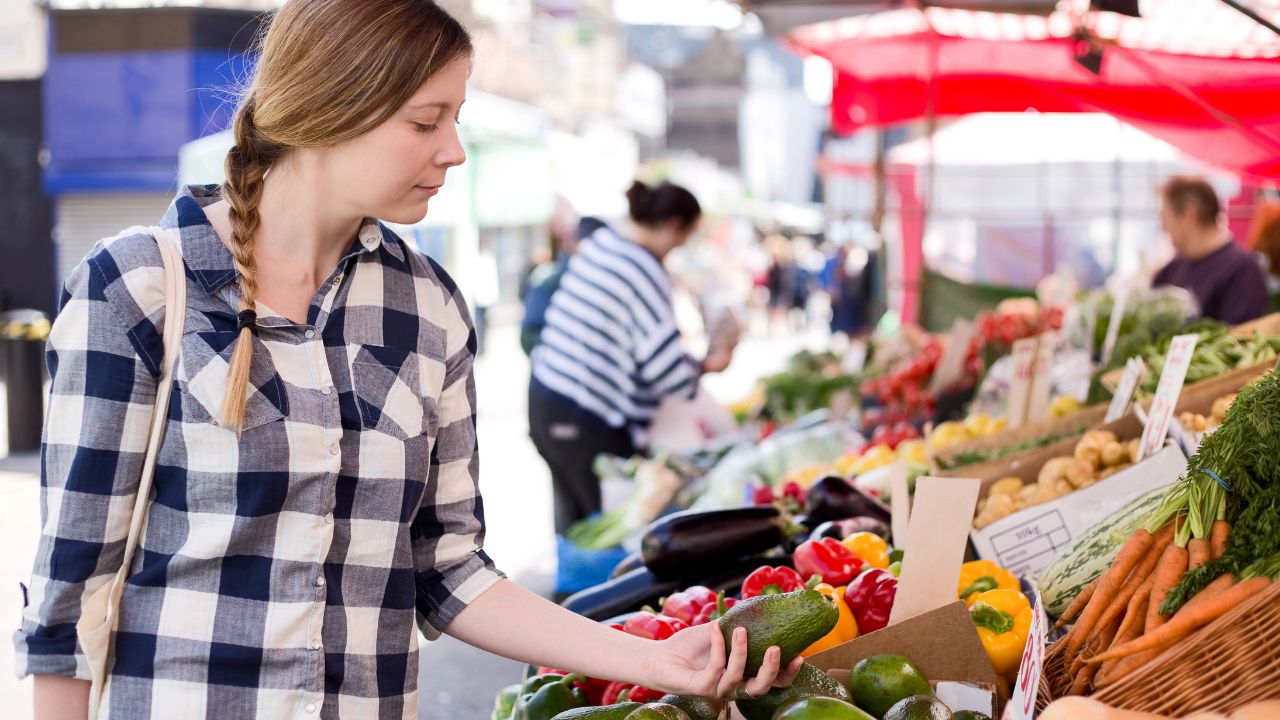
4. Farmers Markets in December
California’s agricultural output is staggering.
The state produces the majority of the country’s almonds, strawberries, and dozens of other crops, and that abundance reaches farmers markets year-round, including in the winter.
Former Californians who experience their first seasonal farmers market closure, usually sometime in October in most of the country, don’t usually handle it well.
The market just closes. For months.
And the grocery store produce in February might as well be a different product from a different universe.
Being able to buy local strawberries in December is a thing former Californians didn’t know they took for granted until it’s gone.
5. Surfing and Skiing in the Same Day
Yes, you can actually do this. Los Angeles to the mountains is a few hours. Surf in the morning, be on a slope by afternoon.
Most Californians don’t do it every week. They don’t even do it every year.
But the fact that it was possible, that the Pacific and the Sierra Nevada coexisted in the same weekend, shapes how they think about where they live.
Moving somewhere landlocked, or somewhere with no accessible mountains, or just somewhere without either, makes this loss surprisingly concrete.
Not being able to do something you never actually did still stings.
6. The Produce Section at Any Grocery Store
Living near the source of the country’s produce supply changes your baseline expectations in ways you don’t notice until you’re somewhere else.
The avocados ripen correctly. The tomatoes taste like tomatoes. The citrus is cheap and abundant because it was grown 50 miles away.
Former Californians in other states develop a running, low-grade frustration with grocery store produce that never fully resolves.
The avocados are always either rock-hard or overripe with no in-between.
The strawberries taste like slightly pink water.
It sounds like food snobbery, but it’s really just homesickness.
7. The Ocean Being a Realistic Option
Californians who live on the coast can go to the beach in January. Californians inland can get to the coast in a few hours.
The option is there.
It shapes weekends, mental health, and the way people decompress.
Moving to a landlocked state removes not just the beach but the psychological access to it.
Some people who lived 90 minutes from the Pacific and barely went still mourn this loss most of all.
The beach you never visited turns out to have mattered a lot.
8. The Food Diversity Is Exceptional
California’s culinary culture is shaped by its agriculture, its massive Asian and Latino communities, and decades of food innovation running from San Francisco’s restaurant scene to LA’s taco trucks.
It’s one of the best food states in the country by almost any measure.
Former Californians in less diverse food markets spend a lot of time researching the best approximation of what they used to eat casually on a Tuesday night.
The Vietnamese place. The Korean BBQ spot. The specific taqueria with the specific salsa verde.
Food is how a lot of former Californians stay emotionally connected to where they came from.
9. Trader Joe’s Is Everywhere, but It Hits Different
Trader Joe’s is technically a national chain.
But it started in California, and Californians have a specific relationship with it that predates the rest of the country’s enthusiasm.
Knowing which Trader Joe’s just got the new seasonal item, having opinions about the frozen orange chicken versus the fresh options, and treating a Trader Joe’s bag as a personality signifier are real things.
These are California behaviors that feel native there and slightly performative everywhere else.
Moving away doesn’t end the Trader Joe’s relationship. It just changes the context.
10. The National Parks Are Right There
Yosemite. Death Valley. Joshua Tree. Big Sur. Sequoia. Point Reyes.
California stacks more accessible, extraordinary natural wonders per square mile than almost anywhere else in the country.
Californians don’t all go every year. Many don’t all go often at all.
But they still miss knowing it was an option.
Moving somewhere without that density of accessible wilderness makes the casual Yosemite trip that never happened feel like a missed opportunity that now can’t easily be corrected.
11. Late Night on the 405 Freeway
This is hyper-specific, and every former Angeleno will know exactly what this means.
The 405 at 2am is a completely different road from the 405 at 5pm.
At 5pm it’s ten lanes of gridlock that makes you question every choice you’ve made. At 2am it’s wide open, lit up, and quietly cinematic in a way that makes Los Angeles feel like it’s actually worth it.
Late-night freeway driving in LA is its own experience that doesn’t exist anywhere else and can’t be replicated.
The 405 is an awful road. Somehow it’s also missed.
24 Items That Have Alarmingly High Levels of Microplastics

You can’t see, smell, or taste microplastics. But research reveals they’re showing up in our everyday lives.
Here are 24 common items where microplastics hide and why you need to pay attention.
24 Items That Have Alarmingly High Levels of Microplastics
11 Mistakes People Make When Buying Food at Costco

Even in the wonderland of Costco savings, customers commonly make mistakes that can (often unknowingly) spoil the fun. Here are some tips on what errors to avoid so that every Costco run you make turns out to be a win.
