
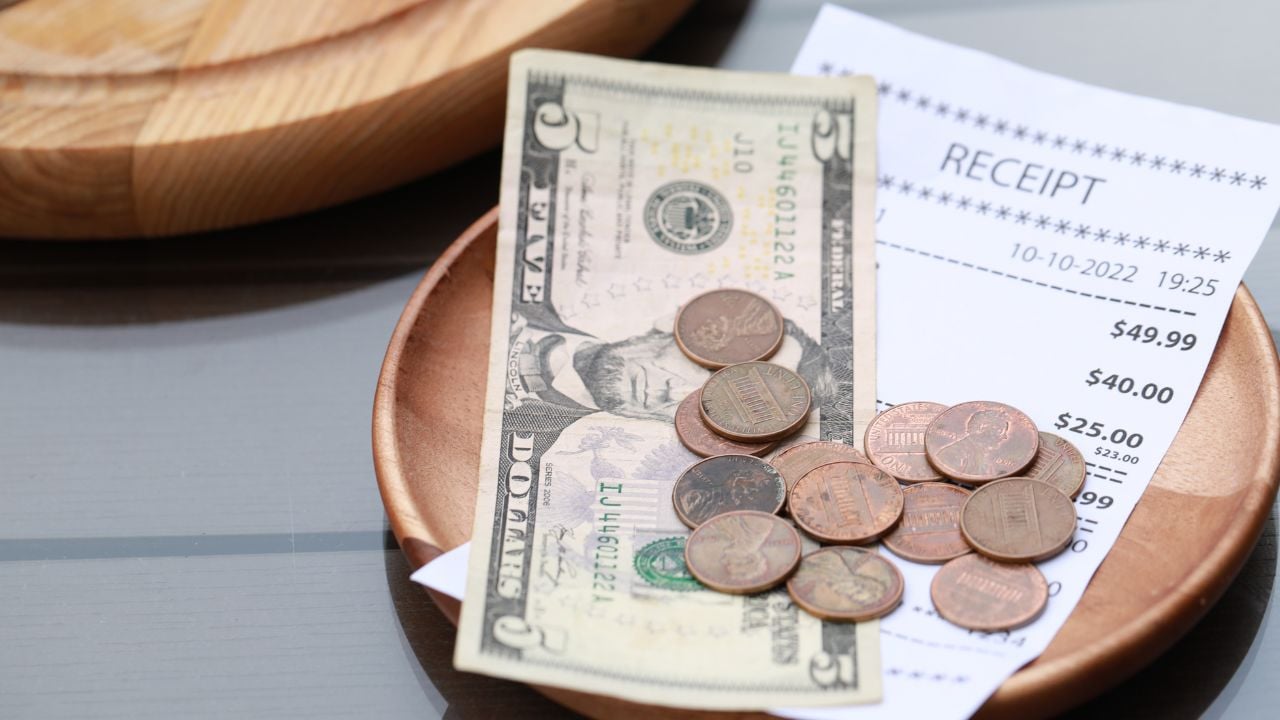
11 Tipping Situations That Leave New Yorkers Completely Confused

New York City officials say changes to delivery-app tip screens cost couriers more than $550 million between December 2023 and January 2026.
If a screen designed to simplify tipping can create that much confusion, imagine what happens when there’s no prompt, posted rate, or clear rule at all.
These are the tipping situations that leave New Yorkers completely confused.
1. Holiday Tips for Doormen
New York City apartment buildings turn December into a math problem because tenants have to figure out who on staff gets what.
A building’s super or resident manager often takes the largest holiday tip, $150 to $300, while a doorman typically lands closer to $75 to $200.
There’s no posted rate card.
Porters and garage attendants round out the list, often around $50 to $75.
Every building runs a little differently, so newer tenants typically ask the co-op board what’s customary.
2. Delivery App Tip Prompts
Delivery apps in New York City must now show a mandatory tip screen with at least a 10% option, under a city law that took effect January 26, 2026.
That number reads like the answer, but it isn’t.
Tipping guides still put New York City’s standard delivery tip at 15% to 20%, treating the app’s mandatory 10% as a legal floor rather than a fair one.
The screen doesn’t spell out that difference.
A customer who taps past the default without a second thought has met the legal minimum, not necessarily what the driver was counting on.
3. Restaurant Service Charges
Restaurants across New York now routinely add a service charge to the bill before a diner ever reaches for a pen.
A city rule that took effect in April 2026 forces restaurants to disclose that charge clearly on the menu and again at checkout.
Whether you still tip on top is a different question.
That part stays unclear.
New York City’s rulemaking file leaves the tip-on-top question unresolved.
Servers and diners are left to work it out at the table.
4. Tipping a Casino Dealer
New York’s commercial and tribal casinos, from Turning Stone to Resorts World Catskills, all deal blackjack, craps, and roulette with a live dealer at the table.
General casino-etiquette guides say a blackjack dealer usually gets a bet placed on their behalf.
A craps dealer, on the other hand, more often gets cash handed over directly when a player leaves the table.
No sign at the table explains which.
The same guides suggest 3% to 10% of a big win as a rough range.
Treat it as a reward for good company at the table, not an obligation.
5. Rideshare Tip Prompts
Uber and Lyft riders in New York City see a tip prompt right after they rate the driver, not before.
Uber’s help page doesn’t mention a suggested amount, leaving riders to guess a fair number on their own.
That blank screen isn’t the end of it, either.
Uber gives riders a 30-day window after a ride ends to add or change that tip, whether from the app, the website, or the emailed receipt.
Few riders ever go back to do it.
6. Counter-Service Tip Screens
Coffee shops and bakeries across New York increasingly flip a tablet around before handing over a to-go cup.
The screen already has 20% highlighted.
A Pew Research Center survey found 40% of Americans oppose businesses suggesting a tip amount on the checkout screen, while only 24% are in favor.
The highlighted number does the persuading.
The same survey found only about a third of Americans feel confident they know how much, or whether, to tip in that kind of moment.
Psst! How tip-savvy are you across New York? Run through this checklist and see where you stand.
7. Tipping Your Ski Instructor
New York’s ski season sends many first-time skiers to lessons at resorts like Hunter Mountain, Windham, and Whiteface.
Almost nobody knows the going rate for the instructor by the end of the day.
Ski-industry guides call 10% of the lesson price the standard tip.
Nobody checks the math.
A private lesson at a Catskills resort can run well over $100, so that 10% adds up fast.
8. Wine Tasting Room Tips
New York’s Finger Lakes wineries pour tastings all day long along Seneca Lake and Keuka Lake.
The tip jar by the register doesn’t come with instructions.
Nothing at the register spells out what’s standard, unlike a restaurant receipt that often prints a suggested percentage.
You’re left to guess the number.
A pourer who walks a visitor through five wines and answers every question has earned more than a pourer who rushes the flight.
Let the service decide the number.
9. Tipping Your Movers
Movers in New York haul couches up walk-up stairwells many other states don’t have.
The tipping math gets just as complicated.
One well-known moving guide recommends $20 to $80 per mover depending on the job’s length.
Another recommends 15% to 20% of the total bill instead.
Those totals rarely match.
A four-person crew working a full day could land anywhere from a few hundred dollars in flat tips to a few hundred more under the percentage method.
Nobody tells a New Yorker which method the crew expects.
10. Hotel Housekeeping Tips
Hotel guests across New York rarely see the person who cleans their room.
That’s exactly why guests skip housekeeping tips more than almost any other kind.
A 2014 Marriott and American Hotel & Lodging Association campaign recommended $1 to $5 a night.
The campaign said to leave it daily on the pillow or nightstand, not as one lump sum at checkout.
Guests often do the opposite instead.
Leaving the whole tip on the last morning means every housekeeper who cleaned the room earlier in the stay gets nothing.
A hotel usually rotates which staff member covers which room from night to night.
11. Paying a “Free” Tour Guide
New York City runs on “free” walking tours through neighborhoods like the Financial District and Greenwich Village.
The word “free” is doing a lot of work in that sentence.
One of the city’s free-tour companies explains it plainly on its FAQ page: The tip isn’t a bonus.
It’s the guide’s entire paycheck, since nobody else pays them a cent.
That detail catches many first-timers off guard.
People usually leave between $20 and $25 a person, by the company’s count.
That’s still a fraction of the $80 to $120 a traditional paid walking tour can run.
Tipping Your Mail Carrier
Letter carriers across New York can legally accept a holiday gift, but federal rules draw a hard line on what that gift can be.
The Postal Service caps a single gift at $20 and bans cash or any cash-equivalent app like Venmo or Zelle outright.
Cash is off the table entirely.
Carriers can accept a nonperishable gift instead, such as cookies or a gift card under that $20 line.
One household still can’t send more than $50 worth across the whole year.
United Parcel Service and FedEx drivers answer to a different rulebook than a Postal Service carrier.
FedEx’s conduct policy bans cash or cash-equivalent gifts, the same line the Postal Service draws.
A driver can still keep up to $100 in non-cash gifts from the same person each year.
United Parcel Service has no published tipping policy, unlike FedEx or the Postal Service.
A $10 to $20 gift card still covers all three drivers without breaking any of their rules.
8 New York City Trash Rules That Sound Fake but Aren’t
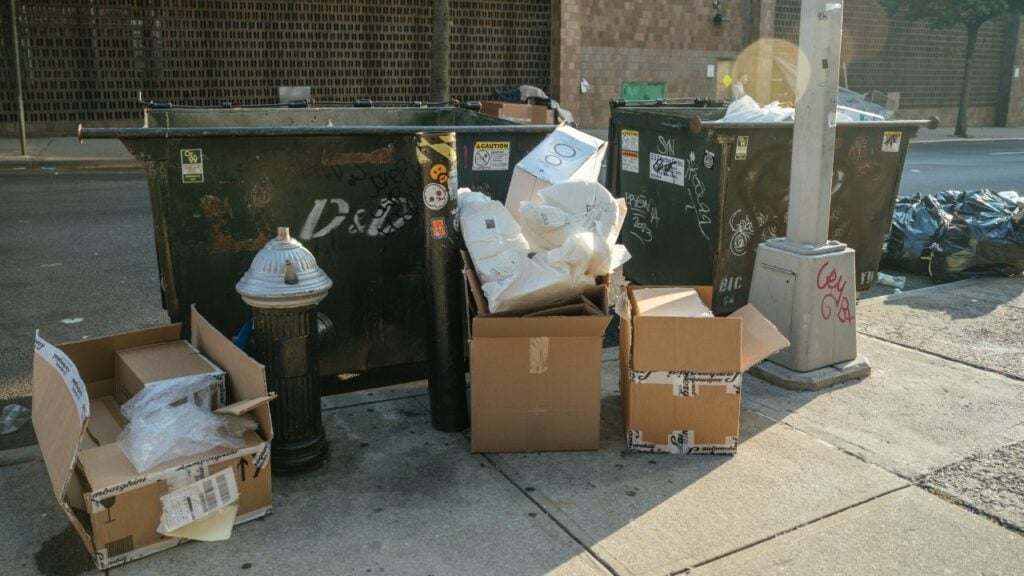
New York City sells an official trash can, and it’s rat-resistant by design.
These are the sanitation rules that sound made up until New York City’s Department of Sanitation (DSNY) confirms every one of them.
8 New York City Trash Rules That Sound Fake but Aren’t
7 New York State Park Rules Visitors Break Every Weekend

A $250 fine waits at Watkins Glen State Park for anyone who slips into the waterfall pool.
Someone decides that trade is worth it almost every weekend.
