
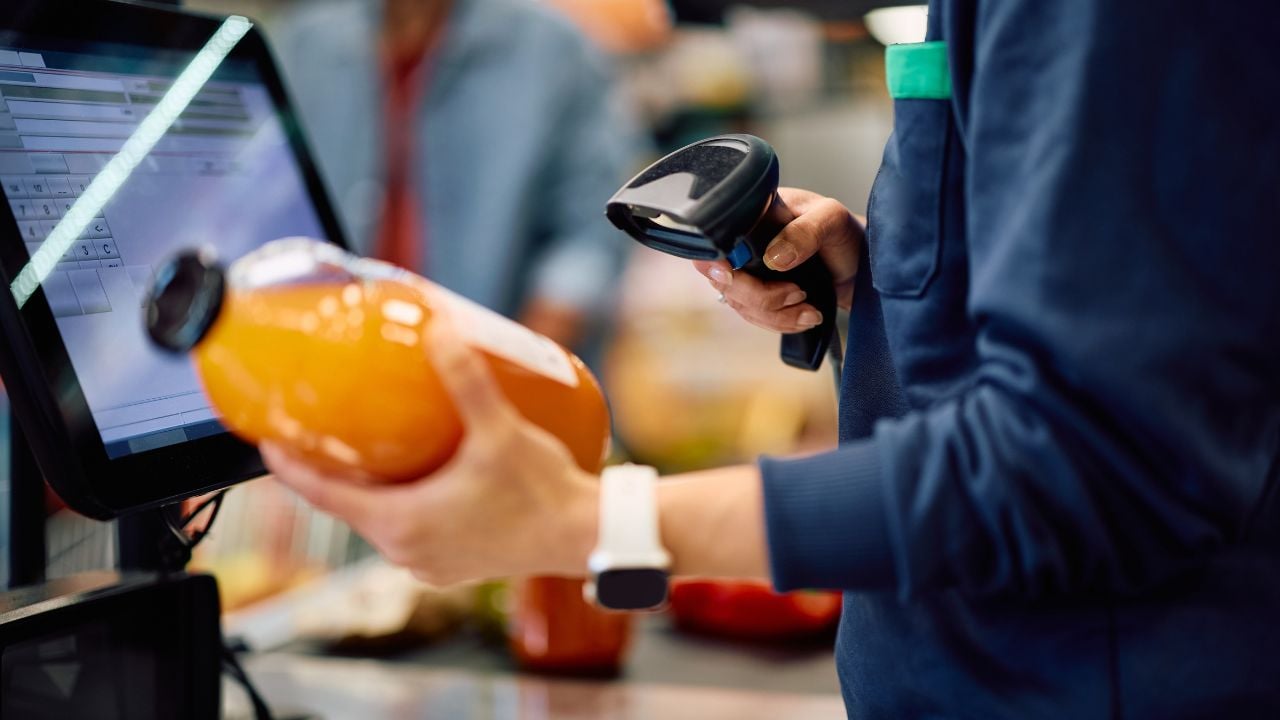
12 Customer Habits That Make an Ohio Grocery Cashier’s Shift Harder

Most Ohioans aren’t trying to make a cashier’s job difficult.
But some of the things they do at the register create extra work without them realizing it.
These are the customer habits that make an Ohio grocery cashier’s shift harder.
1. Skipping the Order Divider
For an Ohio grocery cashier, a thin plastic bar on the belt is the only thing that marks where one order ends and the next begins.
Skip it, and a full cart runs straight into the next customer’s groceries with no gap at all.
Mixed orders need a fix.
The cashier stops the line and asks both shoppers what belongs to whom.
Anything that scanned to the wrong pile gets re-rung by hand, whether the register is a Marc’s in Cleveland or a Kroger in Columbus.
2. Crowding the Belt Too Soon
Pile a full cart onto the belt while the shopper ahead is still bagging, and an Ohio grocery cashier has nowhere left to scan anything.
Whether the lane belongs to a Kroger, a Giant Eagle, or a Meijer, that belt only holds so much before space runs out.
Space runs out fast.
Once the belt jams, the cashier has to stop scanning and start juggling bags instead.
3. Bringing Loose Produce With No Price Code
An Ohio grocery cashier has no way to ring up a piece of produce that’s missing its price code.
Ohio Proud stickers mark food that’s grown or processed in Ohio, a label the state’s Department of Agriculture runs.
Those bins often sit right next to imported produce that looks nearly the same, and each one carries a different code.
Grab a tomato or a bag of apples without checking which sticker belongs to it, and the scan comes up empty.
No code, no price.
The cashier has to stop and identify the item by sight or by asking.
Keying in the correct number by hand comes next, and sometimes that means calling for a price check while the line waits.
4. Challenging Every Price at the Register
Kroger cashiers across Ohio field a price challenge any time a shelf tag and the register disagree.
A 2025 investigation from Consumer Reports found Kroger-owned stores nationwide charging shoppers the higher, undiscounted price on more than 150 items, some of them months past the sale date.
Kroger has said publicly it will make it right at the register when that happens, an assurance widely known as its Scan Right Guarantee.
That’s not instant.
The cashier still has to stop, verify the shelf tag, and process the adjustment before the next customer can start.
What Kroger’s Pricing Guarantee Is Reported to Cover
An Ohio grocery cashier only applies Kroger’s pricing guarantee when a shelf tag and the register price disagree.
A sale flyer or a digital coupon that fails to apply doesn’t count.
Cashiers and shoppers widely describe the same shape to the payout.
An item under five dollars comes off free, and anything five dollars or higher gets a flat five-dollar discount instead of a full refund.
Kroger hasn’t published those exact figures itself, so treat the numbers as commonly reported rather than official.
5. Trying Rotisserie Chicken on EBT
An Ohio grocery cashier keeps hearing the same request.
Ring the hot rotisserie chicken from the deli case on an Electronic Benefit Transfer (EBT) card, along with the rest of the cart.
Federal guidance blocks anything hot at the point of sale from the Ohio Direction Card, the state’s name for its Supplemental Nutrition Assistance Program (SNAP) benefits card.
That includes meals meant to be eaten right there in the store.
The card gets declined on that one item, not the rest of the order.
Every single time.
Some regulars ask the cashier to try it anyway.
Others come back the next week with the same chicken and the same card, treating the one-time decline as a fluke instead of a rule that never changes.
Each time it happens, the cashier pulls the hot item, splits the sale into two transactions, and walks the same customer through the same explanation again.
6. Handing Over an Expired Coupon
An Ohio grocery cashier’s register flags a coupon’s expiration date before the shopper even notices.
The Coupon Information Center, the retail industry’s coupon-fraud watchdog, tells stores plainly that expired coupons don’t get accepted.
The discount doesn’t apply once the date has passed.
No exceptions at the register.
That leaves the cashier at a Kroger, Marc’s, or Giant Eagle register to explain the decline out loud while the shopper digs for a replacement.
The line behind them grows the whole time.
Psst! How easy are you on the cashier ringing you up? Check off what’s true and find out.
7. Bringing the Wrong WIC Size
One exact list controls what an Ohio grocery cashier can ring up under the Women, Infants, and Children (WIC) program, not a whole food category.
The state’s approved list names the milk, cereal, and juice brands allowed at the register, right down to carton size.
One wrong size fails.
The cashier has to catch the mismatch, pull the item, and either find the right size on a shelf run or remove it from the order.
8. Asking for a Void After the Scan
A scanned item can’t be removed from an Ohio grocery cashier’s register with a tap of a button.
Grocery loss-prevention practice requires manager approval on every line void, a control meant to stop theft at the register, and it holds across chains rather than being one store’s rule.
That takes time.
The moment a shopper changes their mind after an item’s already scanned, the cashier has to stop and call for a manager.
Someone then has to walk over and key in the override before the line can move again.
9. A Rewards Discount With No Card
A Kroger Plus Card or a Giant Eagle Advantage Card is what unlocks the sale price at an Ohio grocery cashier’s register.
The terminal needs a card, an app scan, or a phone number to find the account behind it.
An Ohio grocery cashier can’t apply the discount without pulling up the right one.
No account, no sale price.
A shopper who shows up without any of the three has the cashier keying in name spellings or trying old phone numbers by hand.
Sometimes that means calling over a manager to open a generic account instead, while the register and the line both wait.
10. Doubling up on One Coupon
An Ohio grocery cashier’s register caps a manufacturer’s coupon at one per item, no matter how many a shopper hands over.
The same coupon-fraud watchdog’s guidance for retailers backs that up.
The number of manufacturer coupons redeemed can’t exceed the number of items in the transaction.
Try to stack two coupons on a single jar of coffee, and the second one gets rejected.
One coupon, one item.
The cashier explains the limit, hands back the extra coupon, and defends a policy they didn’t write while the next shopper checks the time.
11. Skipping the ID for Alcohol
Ohio law puts the legal burden on the cashier, not the shopper, to catch a fake or mismatched ID at the register.
State law bars selling beer, wine, or liquor to anyone under 21, and a cashier who sells to a minor risks the store’s liquor permit along with their job.
No ID, no sale.
A shopper who left a wallet in the car, or hands over an ID that doesn’t match, puts the cashier on the spot.
Ohio law gives that cashier good-faith protection for checking carefully, but only if they check carefully in the first place.
12. Returning an Item With No Receipt
Kroger’s return policy hands an Ohio grocery cashier a different process for a no-receipt shopper than for a normal checkout.
That process often means store credit instead of cash once the return passes a certain value.
One extra step.
A cashier walking a no-receipt return through that process is doing a different job than ringing up a normal sale.
Everyone else in line just wants to check out.
Where the Checkout Rules Started
Ohio grocery cashiers work for a company that opened its first store in Cincinnati back in 1883.
In 1883, a shopper handed a clerk a list and waited at the counter while every item was pulled by hand, since self-service grocery aisles hadn’t been invented yet.
It started as one store.
The company still runs its headquarters out of that same city.
A Kroger cashier working a Cincinnati register today rings up groceries for the same company that first opened its doors more than 140 years ago.
Cincinnati remains the one city where a Kroger cashier can trace the whole company back to a single storefront.
12 Products From 2016 That Are Suddenly Cool Again Among Ohioans in 2026

A shopper digging through the racks at a Cleveland-area consignment shop stops on a pair of leggings with a purple paisley print, the LuLaRoe tag still on the waistband.
She pays five dollars for pants that cost three times that when they were new a decade ago, and Ohio’s resale racks keep turning up more of the same.
12 Products From 2016 That Are Suddenly Cool Again Among Ohioans in 2026
9 Things That Change the Second You Cross From Ohio Into Kentucky
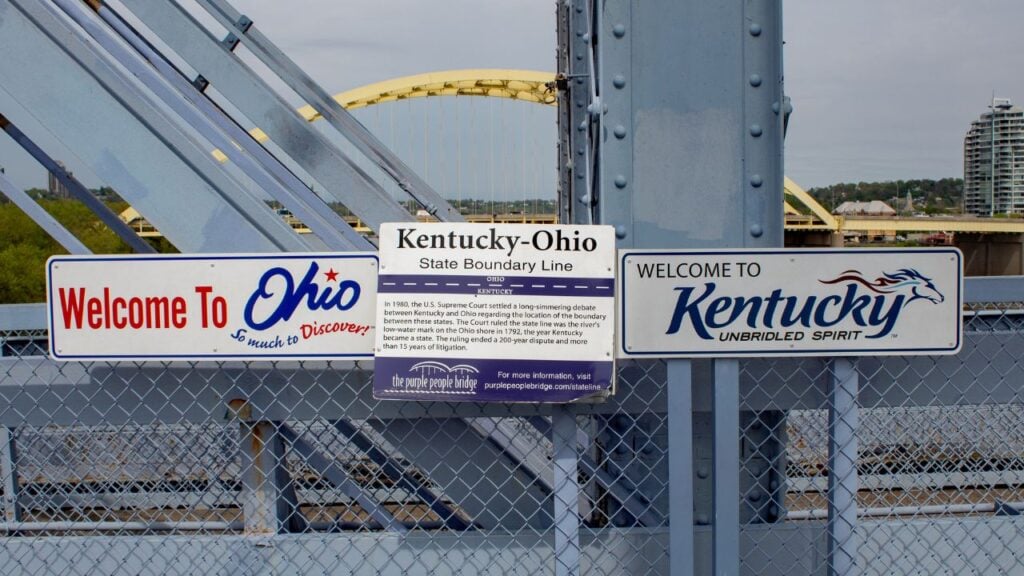
Drive across the Roebling Suspension Bridge from Cincinnati and Covington, Kentucky appears on the other side, a crossing that opened in 1867 as the longest suspension bridge on Earth.
Nothing about the bridge looks any different, but the tax on the receipt and the price at the pump change the second the tires cross into Kentucky.
9 Things That Change the Second You Cross From Ohio Into Kentucky
