
12 Home Maintenance Jobs Georgians Forget About Until Something Breaks

University of Georgia Extension entomologists say most yards in Georgia already hold an active termite colony.
The state sits inside what they call the termite belt.
That’s the kind of thing a homeowner learns about after the fact, and it isn’t the only job on the list that turns into a five-figure repair when nobody’s watching.
These are the home maintenance jobs Georgians forget about until something breaks.
1. Flushing Your Water Heater
In a Georgia closet or garage, a water heater can run for years without anyone opening the drain valve.
Minerals in the water settle into a layer of sediment at the bottom of the tank.
That layer sits between the burner and the water, so the heater works longer and harder to reach the same temperature.
That means higher bills.
A cracked or leaking tank sometimes follows a few years later.
Plumbers recommend draining a few gallons from the tank once a year to flush out the sediment before it causes damage.
2. Clearing Your Condensate Drain
An air conditioner in Georgia runs most months of the year, pulling gallons of moisture out of the air every day.
That water drips down a thin plastic condensate line to a drain outside.
Algae and mold grow easily inside that dark, damp tube, and the buildup eventually blocks it.
The clog backs up.
A clogged line can cause water damage inside the house and throw off indoor humidity, according to Energy Star’s home maintenance checklist.
Some systems shut themselves off with a float switch the moment the drain pan starts filling.
That’s safer than a soaked ceiling, but it leaves a Georgia home without air conditioning in July.
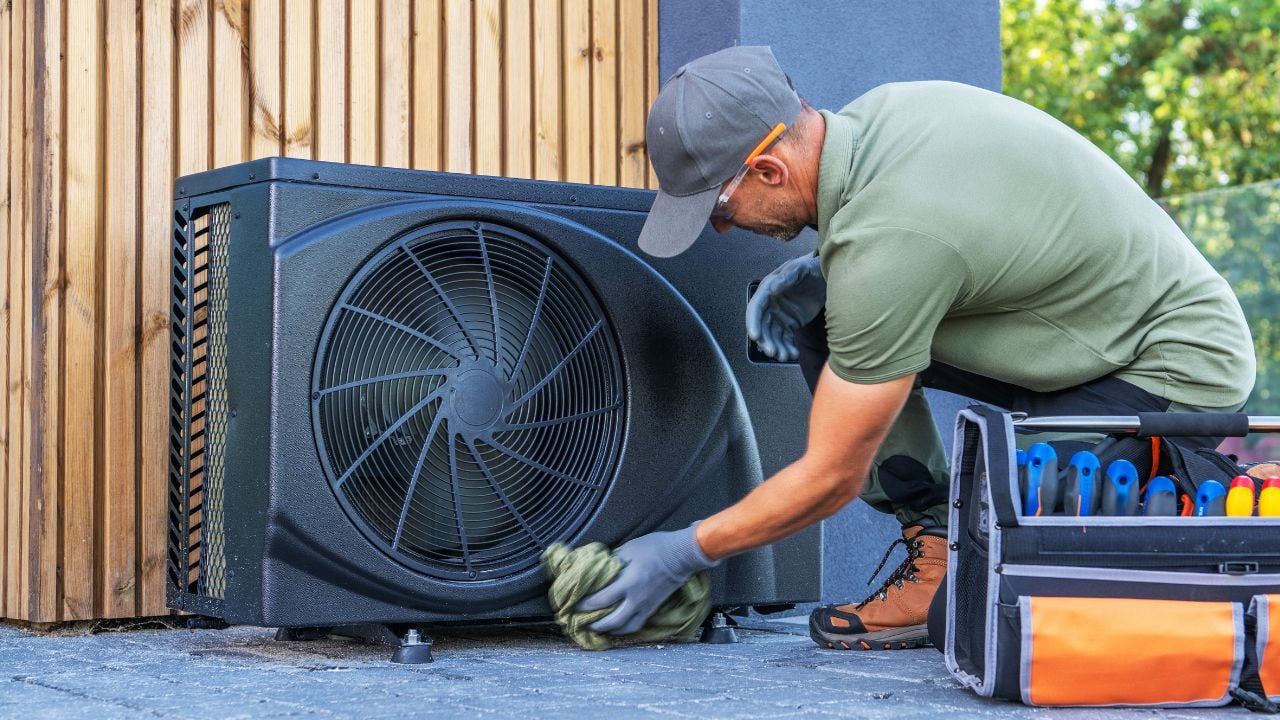
3. Cleaning Your Outdoor Air Conditioning Unit
Every Georgia homeowner learns to swap the heating, ventilation, and air conditioning (HVAC) filter, but the condenser sitting outside in the yard rarely gets a second look.
Pine pollen coats it every spring, and grass clippings blow into the fins with every mow.
Those fins hold the coils that release heat from the refrigerant, and a layer of grime keeps that heat from escaping.
Energy Star’s maintenance checklist lists dirty evaporator and condenser coils among the top drags on a cooling system.
The buildup forces the unit to run longer and shortens its life, the checklist warns.
The system works harder for the same cooling, and the power bill rises before anyone traces it back to the unit outside.
Nobody hoses it off.
A yearly rinse with a garden hose, done with the power off, clears the buildup without harming the coils.
4. Booking Your HVAC Tune-Up
Across Georgia, an HVAC system is lucky to get a single tune-up a year, and plenty go years without one at all.
Energy Star recommends a professional check-up twice a year, the cooling system in spring and the heating system in fall.
A technician tightens electrical connections, checks refrigerant levels, and inspects the condensate drain and the burner or heat exchanger.
That checkup earns its keep.
Skip it long enough, and a loose wire or a slow refrigerant leak turns into a breakdown on the hottest weekend of summer.
Worn parts fail slowly for months before they fail all at once.
Nobody budgets for it, so the breakdown turns into an emergency call instead of a scheduled repair.
5. Renewing Your Termite Bond
Georgia sits inside what entomologists call the termite belt, where University of Georgia Extension experts say most yards in the state already hold an active colony.
Subterranean termites are the most common kind found in Georgia, and they swarm most often between February and April.
A termite bond pairs a home with a licensed pest control company, and many bonds are serviced with a yearly inspection.
Let the bond lapse, and an infestation can chew through structural wood for months before anyone notices.
Nobody sees a single swarmer.
Georgia’s Department of Agriculture keeps an official Wood Infestation Inspection Report that many lenders require before a home sale closes, proof of how seriously the state treats the problem.
6. Clearing Your Gutters
A Georgia homeowner looks up at a full gutter and figures it can wait until the leaves finish falling.
Pine trees drop needles most of the year, and oak leaves pile on top every fall.
A Georgia gutter clogs faster than a gutter up north.
University of Georgia Extension lists clogged gutters among the top sources of moisture around a house.
Water pools against the foundation instead of draining away.
Mold moves in next.
Extension guidance calls for downspouts that carry water at least six to ten feet from the foundation.
Anything closer, and the water just seeps back in.
Gutter guards cut down on the climbing, but they still need a rinse once pollen season cakes them shut each spring.
Psst! How much do you know about Georgia beyond your to-do list? Take our quiz and see how many you can get right.
Quiz
Georgia Homeowner IQ
Answer these questions on Georgia’s history, symbols, and housing. We bet you can’t get them all right. Prove us wrong?
Georgia calls itself “The Peach State,” but which state grows more peaches in a typical year?
7. Checking Your Crawl Space Vapor Barrier
A crawl space instead of a basement sits under many Georgia homes, relying on a thin plastic barrier to stay dry.
Georgia's red clay soil holds rainwater long after a storm passes, then dries out and cracks in a dry spell.
A torn or missing vapor barrier lets that ground moisture rise straight into the crawl space.
University of Georgia Extension guidance calls for at least a 6-8 mil plastic barrier covering the soil, sealed at the seams.
Skip the check, and musty air starts creeping up through the floor vents.
Soft floors follow.
A sagging floor joist costs far more to fix than a fresh roll of plastic sheeting.
8. Cleaning Your Dryer Vent
Humid Georgia summers push dryers into overtime, since clothes won't dry on a line outside.
Lint builds up inside the vent tube with every load, and a clogged vent traps heat instead of releasing it outside.
Federal fire data blames failure to clean as the leading cause of home dryer fires, responsible for 31% of them between 2018 and 2020.
That's not a fluke.
With nowhere for that heat to go, the fire risk grows with every load.
A once-a-year cleaning, done ahead of the busiest laundry stretch of the year, clears that risk out before it builds.
9. Testing Your Smoke and Carbon Monoxide Alarms
Smoke alarms in a Georgia home carry the job of buying the first few minutes of a house fire.
A dead battery erases that head start.
The U.S. Fire Administration, a branch of the Federal Emergency Management Agency (FEMA), says an alarm with a dead or missing battery is the same as having no smoke alarm at all.
The agency recommends testing every alarm monthly and replacing the battery at least once a year.
A hardwired alarm still needs that same yearly battery swap for its backup power.
The whole unit needs replacing after ten years.
That rule never bends.
Carbon monoxide alarms deserve that same monthly test, especially in a home with a gas furnace or an attached garage.
10. Resealing Your Window and Door Caulk
Between summer humidity and the occasional overnight freeze, Georgia's weather works old caulk loose around every window and door.
Cracked caulk lets conditioned air leak straight outside.
The EPA's Energy Star program says sealing air leaks and adding insulation can cut heating and cooling costs by an average of 15 percent.
That works out to about 11 percent off the total energy bill.
A drafty window costs money every month, not just on the coldest or hottest day of the year.
Failed caulk lets water in too.
That moisture works into the window frame and starts rot nobody notices until the trim crumbles.
Rot costs more than caulk.
11. Pumping Your Septic Tank
More than a third of Georgia homes run on a septic tank instead of city sewer, according to a 2014 University of Georgia study.
The Georgia Department of Public Health has named Gwinnett County one of the greatest concentrations of septic systems in the country.
An estimated 30 percent of the county's households rely on a septic system.
A septic tank holds solid waste while the liquid drains out to a buried drainfield, and skipping maintenance lets those solids pile up.
The U.S. Environmental Protection Agency (EPA) says a household tank typically needs pumping every three to five years, sooner with a garbage disposal running food scraps into the line.
Put it off long enough, and solids push into the drainfield.
That's the expensive failure.
How Georgia Septic Companies Decide It's Time to Pump
A Georgia septic tank rarely gives a homeowner a clear signal that it's full.
The EPA tells service technicians to schedule pumping once the scum layer sits within six inches of the tank's outlet, or the sludge layer climbs within twelve inches of it.
Once solids make up more than a quarter of the tank's liquid depth, the same rule applies.
12. Washing Your Roof and Siding
Humidity across Georgia gives algae exactly what it needs to spread across a roof or a stretch of siding.
Gloeocapsa magma, the blue-green algae behind those dark streaks, has stained Southern rooflines gray and black for decades.
The Asphalt Roofing Manufacturers Association warns against ever aiming a power washer or a scrub brush at the roof.
Both risk loosening the granules that shield the shingles from the sun.
That's the costly mistake.
Algae keeps spreading through the winter too.
The trade group's fix is a bleach-and-water solution, sprayed on and rinsed off gently after no more than 20 minutes.
Siding gets a different treatment than the roof, and mildew works into the surface just as fast in Georgia's humidity.
A pressure washer works fine on siding at a low setting, but the roof still needs that gentler bleach rinse to keep both looking new and lasting longer.
9 Things That Happen to a Georgia Couple's Home When Neither of Them Leaves a Will

Just under a quarter of Americans currently have a will, and Georgia couples are no exception to that trend.
Skip the paperwork, and Georgia's intestate succession rules decide who ends up with the house instead.
9 Things That Happen to a Georgia Couple's Home When Neither of Them Leaves a Will
7 Farmers Market Mistakes That Cost Georgians Money Every Saturday
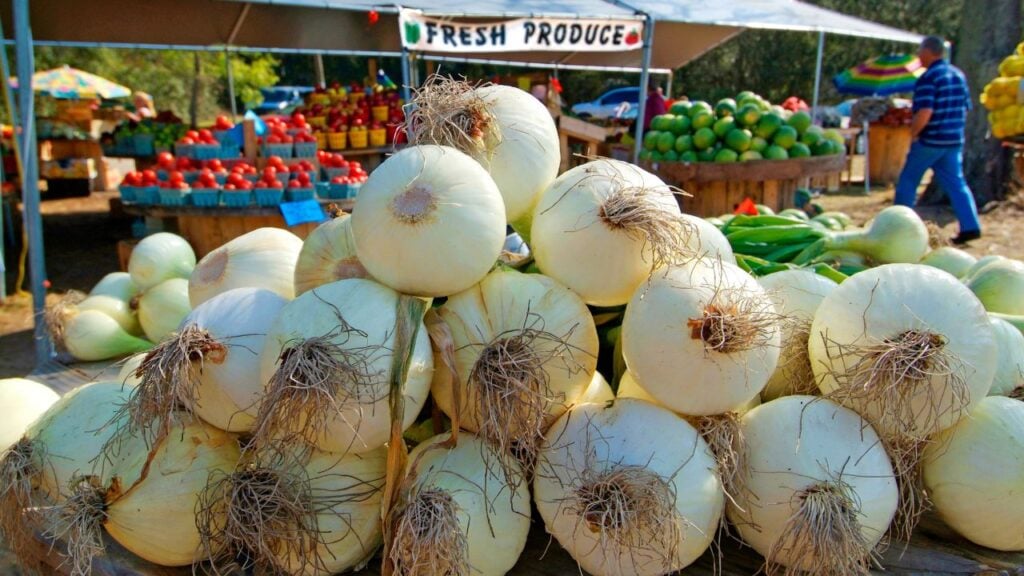
Farmers markets promise fresher produce and better prices than the grocery store down the road.
For many shoppers, one sign at the table undoes both promises before the first tomato lands in the bag.
7 Farmers Market Mistakes That Cost Georgians Money Every Saturday
