
12 Things in Pennsylvania’s Woods That Are More Dangerous Than You Think

Ask most folks what’s dangerous in Pennsylvania’s woodsy areas, and they’ll say bears or rattlesnakes.
They’re not wrong. They’re also missing most of the list.
The threats that send people to the ER tend to be small, common, and easy to walk past.
These are the hazards in Pennsylvania’s woods that are more dangerous than you think.
Note: This article is general information, not medical advice. In an emergency, call 911, and for a suspected poisoning, call Poison Control at 1-800-222-1222.
Blacklegged Ticks
The tiny blacklegged tick is one of the most dangerous creatures in Pennsylvania.
Not the most frightening. The most dangerous.
Pennsylvania has ranked at or near the top of the country for Lyme disease for years.
Infected ticks live in all 67 counties.
The nymphs are the size of a poppy seed. You might not feel the bite.
Here’s what catches people off guard: Most exposure doesn’t happen in the deep forest.
It happens in backyards and along brushy edges.
One bite from the blacklegged tick can pass on Lyme, anaplasmosis, and other illnesses.
So, give your body a quick check after every walk, including your scalp, armpits, and waistline.
Giant Hogweed
Some plants give you a rash. This one gives you chemical burns.
Giant hogweed sap reacts with sunlight on your skin.
The result is blistering, oozing burns that surface a day or two after contact.
The scars can last for years. Sap in your eyes can even cause blindness.
Pennsylvania lists it as a noxious weed, with sightings across more than a dozen counties.
It looks like an oversized Queen Anne’s lace, sometimes 15 feet tall, with purple-blotched stems.
Brush against it, wash with soap and water, and stay out of the sun.
Whatever you do, don’t weed-whack it. That sprays the sap across your skin and clothes.
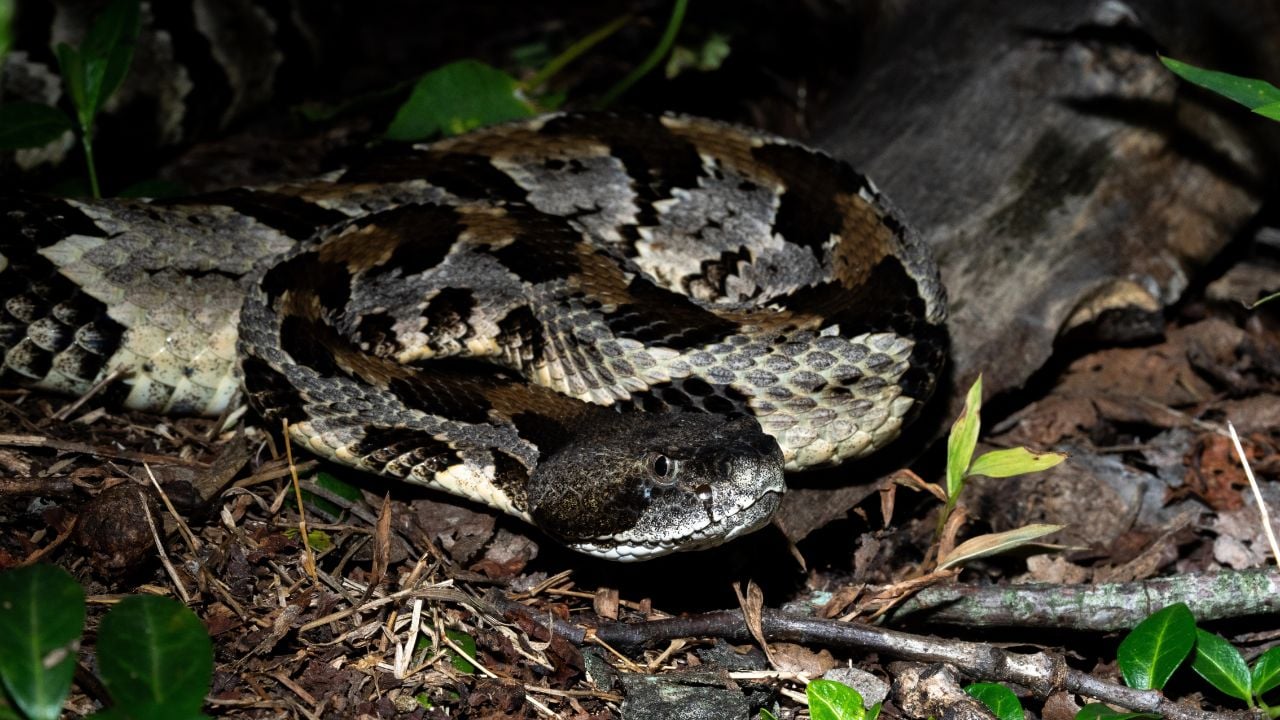
Timber Rattlesnakes
Most people assume a rattlesnake warns you before it strikes.
But the buzz you expect might not come.
The timber rattlesnake is one of three venomous snakes native to Pennsylvania, and the largest, at more than four feet.
It tends to hold its ground when cornered, not flee.
Step within range, and a strike can land with no sound at all.
These snakes favor rocky ridges, log piles, and sunny outcrops.
They’re not aggressive. They’d rather avoid you.
So the danger is the surprise, when you reach into rocks or cross a log without looking, and they’re not expecting you.
Copperheads
The copperhead is a snake you’re apt to meet in Pennsylvania.
It’s the most widespread of the state’s venomous species, and its copper-and-tan banding matches a pile of dead leaves.
That camouflage is the whole problem.
People step on what they didn’t see.
A copperhead bite carries a hemotoxic venom that attacks the bloodstream.
Bites hurt, and they can damage tissue. But fast care keeps them off the fatal list.
If a copperhead bites you, stay calm, keep your limb still, and get to a hospital.
Old Mine Shafts
Pennsylvania’s woods are hollow in spots.
The state holds more abandoned coal mines than anywhere in the country.
That legacy left behind open shafts and portals, unstable highwalls, and ground prone to subsidence.
Some shafts hide under brush and leaves, with a drop and no warning.
Others vent bad air or sit above slow-burning underground fires.
A forgotten shaft in the forest is a real fall hazard, so hike old coal country on marked trails.
Also, keep kids and dogs close when you’re near any fenced or posted mine land.
Black Bears
Pennsylvania is bear country, and the population keeps climbing.
The state holds around 19,000 black bears, up from fewer than 5,000 in the 1970s.
Their range covers most of the state, towns included.
Most bears want nothing to do with you and leave once they catch your scent.
The trouble starts with food. A bear that learns to raid coolers or trash loses its fear of people.
A sow with cubs earns the most caution.
Make noise on the trail to avoid coming into contact with bears, and don’t get between a mother and her cubs.
White-Tailed Deer
One of the deadliest animals in Pennsylvania’s woods isn’t a predator.
It’s the white-tailed deer, and the risk is on the road, not the trail.
Pennsylvania leads the nation in animal-collision claims, with around 147,000 in a single year.
Your odds of hitting a deer sit at around 1 in 62.
Autumn is the worst stretch, when the rut sends bucks across roads at dusk.
A startled buck doesn’t think. It bolts.
Slow your speed at dawn and dusk on wooded roads.
If you see a deer cross, watch for the next. They often travel together.
Wild Parsnip
Hogweed grabs the headlines. But its smaller cousin does plenty of damage too.
Wild parsnip lines roadsides, fields, and trail edges across Pennsylvania.
Its sap turns your skin against the sun, a reaction called phytophotodermatitis.
The burns can be worse than poison ivy, with blisters and brown streaks that linger for months.
You tend to get it in lines, where a cut stem brushed your leg.
The plant resembles Queen Anne’s lace with yellow flowers.
If you get sap on your skin, wash it off and cover up before the sun hits it.
Poison Sumac
Everyone knows poison ivy. Few watch for its meaner relative.
Poison sumac grows in the wet woods, bogs, and swampy edges that Pennsylvania has in spades.
It can reach 25 feet high and is more of a small tree than a weed, with rows of paired leaflets.
It carries the same urushiol oil as poison ivy, and many people get a harsher reaction.
The oil clings to clothes, tools, and pet fur. So, a rash can happen with no plant in sight.
Don’t burn it. The smoke can inflame your lungs and airways.
In a swampy patch, leave unfamiliar shrub alone.
The All-White Mushroom
Foraging is having a moment. So is accidental mushroom poisoning.
The destroying angel mushroom and its cousin, the death cap, are all-white, common, and lethal.
They hold amatoxins that shut down the liver and kidneys.
The cruel part is the clock. Symptoms can hold off for six hours, then ease, and convince you you’re fine.
Cooking the mushrooms doesn’t help, as the heat doesn’t remove the toxin.
Yellowjackets
Ask which woodland creature kills many Americans, and most people miss it.
It’s not bears or snakes. It’s stinging insects.
Hornets, wasps, and bees cause around 72 deaths a year, compared to the five or six from snakebites.
Yellowjackets top the list in Pennsylvania’s woods.
They nest in the ground, in stumps, and inside logs. You usually don’t spot the nest until you’ve stepped on it.
A disturbed nest throws up dozens of stingers at once.
For anyone with an allergy, that’s an emergency.
Rabid Bats
Rabies is common in Pennsylvania.
The state takes care of several hundred rabid animals a year, and raccoons make up around half.
But bats are the danger you don’t notice.
Their teeth are so small that you might not feel or see the bite.
Folks have woken to a bat in the room and assumed no contact, which is the wrong call.
But any wild animal that acts tame, turns aggressive, or roams in daylight earns wide distance, for they could have rabies.
Never handle a downed bat or wild animal with your bare hands.
18 Disturbing Facts You’ll Wish You Never Learned

The facts we’re about to share will make you set your coffee down and stare at the wall for a second.
Warning: You can’t unread these.
18 Disturbing Facts You’ll Wish You Never Learned
8 States Where Squatters Have the Upper Hand

You bought a property, paid your taxes, and kept your insurance current.
Then someone moved in while you weren’t looking, and the law somehow sided with them.
These are the states where that’s most likely to happen.
