
12 Things Longtime Floridians Keep Ready for a Multi-Day Power Outage

Three storms reached Category 5 strength last hurricane season without a single Florida landfall.
It was the first year that’s happened since 2015, according to Florida’s Division of Emergency Management.
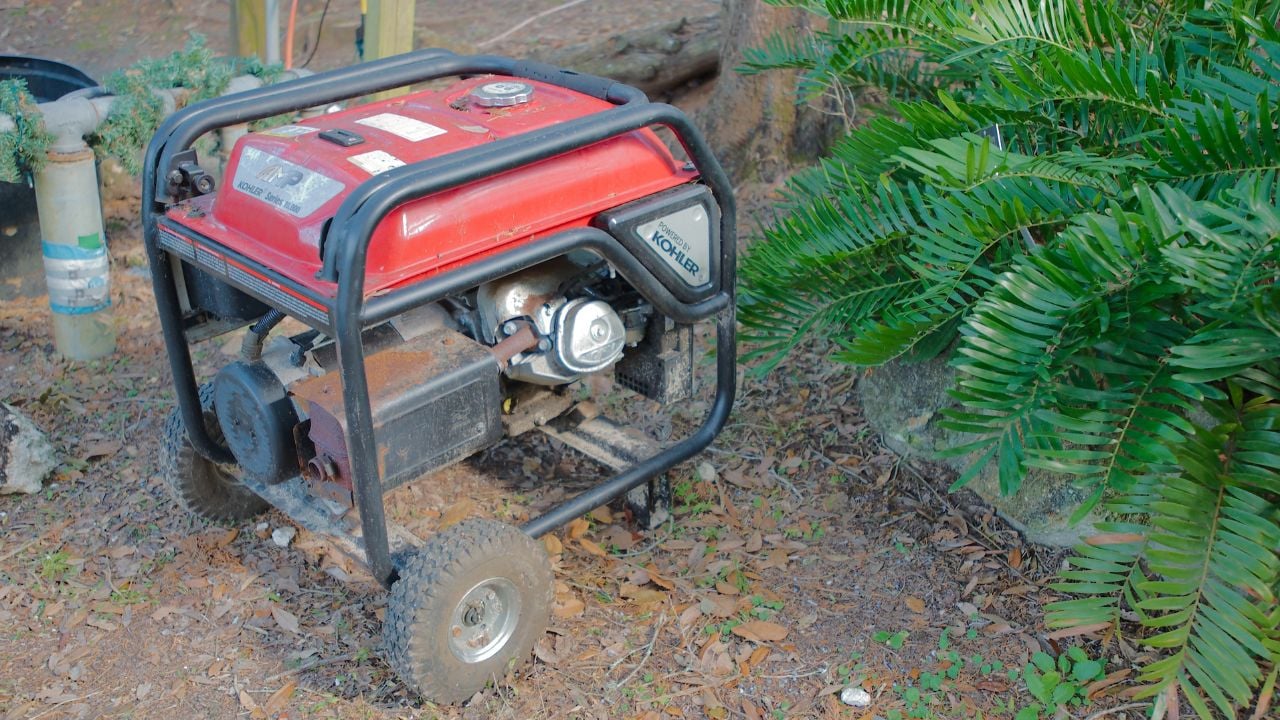
That’s not a streak worth planning around.
These are the things longtime Floridians keep ready for a multi-day power outage.
1. Seven Days of Water
Longtime Floridians keep a full week of water in the house before a storm even has a name.
Florida’s Division of Emergency Management calls for enough water and food on hand to last seven days straight, guidance the state reissued this year as hurricane season opened.
The agency reissued it after a season that spared Florida entirely.
Luck like that doesn’t repeat on a schedule.
The federal government’s hurricane kit guidance puts a number on the water itself: one gallon per person, per day.
A family of four needs four gallons a day to hit that mark.
That’s twenty-eight gallons by the end of the week.
Many people buy a case for the ride home from the grocery store, not a week’s worth stacked against the garage wall.
Not enough.
Longtime Floridians fill the jugs long before a storm ever gets a name.
Hurricane season runs from June through the end of November, and nobody wants to be doing math at the store the night before landfall.
2. Food That Skips the Stove
Longtime Florida households pack a week of food that never touches a stove or a microwave.
The same state guidance behind the water figure pairs it with seven days of shelf-stable food.
A multi-day outage usually takes the stove and the microwave down along with everything else.
Canned chili, peanut butter, crackers, and fruit cups all work.
So does a jar of Skippy and a sleeve of saltines, as long as a can opener sits in the same box.
A single shelf of snack food gets a household through an afternoon.
Not five days.
It doesn’t get a family through five days without power and without a working grill.
Longtime Floridians stock enough that the fourth day of no electricity looks the same as the first.
3. Generator Sized for the Essentials
Floridians who’ve done this before size a generator for the whole house’s essentials, not just a fan and a phone charger.
A small inverter unit keeps a phone charged and a lamp lit, and that’s about it.
Running a refrigerator, a freezer, and a window air conditioning unit for days at a stretch takes a bigger machine.
It’s the kind households in Florida shop for every year at Lowe’s and Home Depot from brands like Generac, Champion, and Honda.
Federal safety guidance governs where it runs, not just what it powers.
The Consumer Product Safety Commission (CPSC) tells anyone running one this hurricane season to keep it at least 20 feet from the house.
The exhaust needs to point away from every window, door, and vent, not toward any of them.
That distance matters more on day three of an outage than it does on day one.
By then, the generator’s been running for hours on end instead of just a few.
Every extra hour is another chance for someone to nudge it a foot closer while reaching for a phone charger.
That’s how mistakes happen.
4. Transfer Switch, Not an Extension Cord
Longtime Floridians pair that generator with a transfer switch, never a cord run straight through a cracked window.
Plug a generator directly into a home’s outlets or its main panel, and the power can travel backward out onto the lines.
A neighborhood transformer can step that low household voltage up into thousands of volts on the other end, energizing a line a lineworker believes is dead.
That’s backfeeding, and it barely matters for a one-night outage, since the power’s usually back before anyone reaches for a cord.
A multi-day outage changes the math.
Crews work a damaged grid line by line after a major storm, not the whole county at once.
A stretch of road can stay on their list for days rather than hours.
Every one of those days is another chance for a tired homeowner to grab the nearest cord instead of waiting on an electrician.
Electric cooperatives across Florida push a transfer switch or an interlock kit before storm season, not after the first outage.
An electrician installs it once.
Longtime Floridians treat that visit as part of owning the generator, not an optional upgrade for later.
The Generator Mistake That Still Kills Floridians
Florida households running a portable generator often think “outdoors” means anywhere outside four walls, including a garage with the door rolled up.
Federal safety officials say that assumption is exactly what kills people.
The CPSC’s hurricane guidance states that opening the doors and windows of a garage, porch, or carport doesn’t provide enough ventilation.
It doesn’t stop a lethal buildup of carbon monoxide.
The CPSC estimates portable generators cause roughly 85 deaths a year in the United States from carbon monoxide, an average the agency calculated from 2017 through 2019 data.
The gas can turn fatal in minutes once it starts collecting in a partly enclosed space.
5. Carbon Monoxide Alarms on Every Floor
Experienced Florida homeowners treat a carbon monoxide alarm as part of the generator, not an accessory bought later.
The CPSC calls portable generators one of the leading causes of carbon monoxide deaths after a storm.
It recommends a battery-powered alarm on every level of the house and outside every sleeping area.
The agency also says to test each one monthly, hurricane season or not.
A one-night outage rarely tests that alarm at all.
Run a generator every evening for five or six nights straight, and the odds of a mistake creeping in rise with every extra night on the schedule.
More nights, more risk.
Longtime Floridians keep the alarm’s batteries as fresh as the generator’s fuel, restocked from the same big-box aisle every spring.
6. Cooler Already Packed With Ice
Longtime Floridians keep a cooler packed and ready before the refrigerator’s clock even starts running.
A closed refrigerator only holds a safe temperature for about four hours once the power cuts out, according to federal food safety guidance.
That four-hour window is the same whether the lights come back by dinner or stay off for a week.
What changes on a multi-day outage is everything that happens to the cooler after that.
A single bag of ice melts down within a day, sometimes less in July heat.
The cooler that saved dinner on night one is just cold water by night two.
Ice melts fast.
Longtime Floridians plan on refilling it, not filling it once and walking away.
The Department of Agriculture (USDA) recommends keeping ice, freezer packs, and a few frozen water bottles in the freezer at all times for exactly that kind of refill.
Milk, eggs, and last night’s leftovers move into the cooler together.
Grouped food stays colder longer than food spread thin, which is the same reason a full freezer outlasts a half-empty one.
Pack it tight, and plan on doing it again before day three, since the cooler is the bridge, not the whole answer, to the days the dry ice below covers.
Psst! How power-outage-ready is your Florida home? Run through this checklist and see where you stand.
7. Fifty Pounds of Dry Ice on Call
Florida households that have outlasted a storm before know where to buy dry ice before the shelves empty out.
A full freezer holds a safe temperature for about 48 hours on its own, but a multi-day outage blows straight through that window.
The USDA says fifty pounds of dry ice will keep a fully stocked, 18-cubic-foot freezer cold for two more days once that clock runs out.
Two extra days.
That’s the difference between tossing a freezer full of shrimp and venison and eating through it once the lights come back.
Longtime Floridians know which gas station or ice house nearby sells it, and they know to ask before the storm, not during it.
8. Radio That Skips the Cell Towers
Longtime Floridians keep a radio that runs on batteries, not on a cell signal that can go down with the rest of the grid.
The National Weather Service lists a battery or hand-crank radio among the essentials for an outage.
The agency says that kind of outage can leave a home without electricity and water for days at a stretch, not hours.
Midland and similar brands sell hand-crank models built for National Oceanic and Atmospheric Administration (NOAA) weather-band broadcasts, the kind Florida hardware stores restock every May and June.
A phone dies within a day of heavy use once the wall charger stops working.
This radio doesn’t.
9. Spot on the Special Needs Registry
Floridians who depend on powered medical equipment put their name on the state’s Special Needs Registry well before June.
The Florida Department of Health runs the registry with county emergency management offices.
It exists so local officials already know which households run a continuous positive airway pressure (CPAP) machine, an oxygen concentrator, or dialysis-adjacent equipment off household power.
A brief outage rarely puts that equipment at risk.
A multi-day outage does.
An outage running past a couple of days is a different situation entirely, and it’s exactly the scenario the registry plans around.
Longtime Floridians who manage a chronic condition treat that registration like renewing a driver’s license, something to handle once a year and forget about until it matters.
10. Cash the Card Reader Can’t Touch
Longtime Floridians keep small bills in the house.
One trip to a cash-only gas station is easy enough to cover with whatever’s already in a wallet.
A multi-day outage turns that into five or six trips: Gas for the generator, ice for the cooler, dry ice for the freezer, food once the pantry runs thin.
A dead register won’t run anyone’s card, no matter their credit.
No power, no swipe.
Federal emergency guidance is blunt about it. ATMs and card readers don’t work without power, so cash on hand is the only way to pay once the network goes down.
Banks and ATMs run on the same grid as everything else.
The cash sitting in a wallet at hour one has to stretch across every one of those trips, with no way to restock it.
Twenties and singles matter more than fifties once change becomes a small crisis.
Keep enough for the whole stretch, not just the first trip.
11. Few Extra Days of Medication
Experienced Florida households keep a few extra days of medication with the rest of the kit, not just in the weekly pill organizer.
The National Weather Service sets a baseline for a readiness kit, a minimum of three days of food, water, and medicine, separate from the state’s seven-day figure.
Longtime Floridians plan past that federal minimum for medicine the same way they plan past it for water and food.
A Publix or Walgreens pharmacy running on backup power still needs the road clear to reach it.
Roads don’t always clear on day one.
Plan for that.
Longtime Floridians ask their pharmacist about an early refill before the season starts, not after the storm’s already named.
12. Power Bank That Outlasts One Charge
Longtime Floridians pack a power bank rated for more than a single charge, not the small power bank that came free with a phone case.
Government hurricane-supply guidance lists a portable charger right next to the battery radio and the flashlight, for the same reason.
A phone stops being useful the moment it dies, and a multi-day outage outlasts a single charge by a wide margin.
A bank rated for four or five full phone charges buys several days of texting family, checking the county’s alerts, and reaching a utility’s outage line.
A one-charge bank buys an afternoon.
It won’t stretch a week.
Longtime Floridians keep theirs topped off all summer, right alongside the flashlights nobody forgets and the water nobody remembers until the shelves are already bare.
They plug it in the night a watch turns into a warning, not the morning after the power’s already gone.
By the third day of no power, that habit is the difference between a household still texting relatives and one that’s gone dark along with the block.
8 Things New Florida Retirees Wish They Had Planned for Besides Money

Many Florida retirees spend years lining up the math before they leave the office for good, planning out property tax bills, Medicare premiums, and a 401(k) withdrawal plan.
Fewer plan for the Tuesday morning with nothing on the calendar, the kind that shows up long after the moving boxes are gone.
8 Things New Florida Retirees Wish They Had Planned for Besides Money
9 Florida Flea Market Mistakes That Mark You as a First-Timer
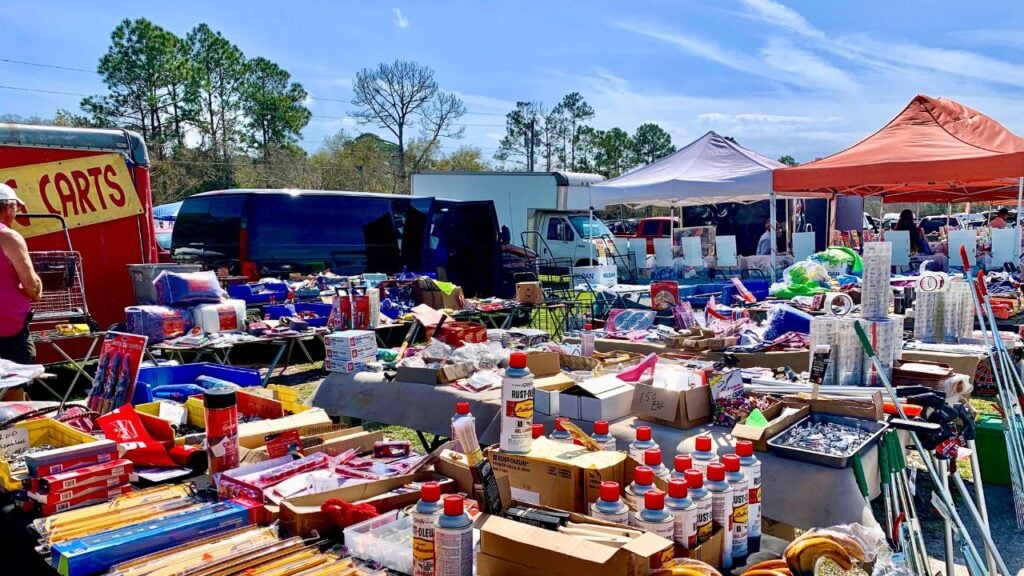
Florida’s largest weekly flea market packs an entire week’s worth of business into one morning.
Show up on the wrong day, and a first-timer ends up circling an empty gravel lot at Webster, phone out, looking for a market that isn’t there.
9 Florida Flea Market Mistakes That Mark You as a First-Timer
