

8 Things New Florida Retirees Wish They Had Planned for Besides Money

Many Florida retirees spent years lining up the math before they left the office for good, planning out property tax bills, Medicare premiums, and their 401(k) withdrawal plan.
But many of them didn’t plan for the Tuesday morning with nothing on the calendar.
Roughly a third of American retirees say they struggle to find a sense of purpose once they stop working, according to national retirement research.
These are the things recently retired Floridians wish they’d planned for besides the money.
1. Your Daily Structure Disappears
Many new retirees hit the same wall a few months into the calendar: No clock to punch, no meeting to run to, no natural stop time to the day.
Researchers have tracked this shift since the 1970s, and even AARP, the nonprofit advocacy group for Americans 50 and older, describes an early honeymoon stage that gives way to what one writer calls “shock and awe” once the freedom stops feeling new.
The high wears off.
A full calendar becomes a blank one, and nobody hands a new retiree a replacement schedule.
Blocking out a loose daily rhythm before the move, even a rough one, eases that drop.
What Retirement’s Honeymoon Phase Means
Retirement’s honeymoon phase is the excited, high-energy stretch right after the last day of work, when travel, hobbies, and a wide-open calendar feel like a reward.
It typically runs for a matter of months, not years, before the newness fades.
That drop has its own name too: Disenchantment, the point when the retirement someone imagined and the version now unfolding start to look like two different things.
2. Purpose Needs a New Plan
A Florida retiree’s job ends on a set date, but the need for a sense of purpose doesn’t end with it.
Roughly a third of retirees say they struggle to find a sense of purpose once work ends, according to a national study from Age Wave and Edward Jones.
The same research found only about a quarter of retirees have ever volunteered, even though nearly 9 in 10 say their communities need more ways for retirees to help.
That gap between wanting to help and doing it takes a deliberate step to close.
Not automatically.
New Florida transplants feel it harder, since they’ve also lost the church, the block, and the coworkers who used to hand them a reason to show up.
3. Your Marriage Adapts to Togetherness
Marriage in Florida looks different once two separate schedules become a single, wide-open calendar.
The divorce rate for adults 50 and older, known as “gray divorce,” doubled between 1990 and 2010, and people 50 and older now make up nearly 40% of all U.S. divorces, according to Bowling Green State University’s National Center for Family & Marriage Research.
Two people used to seeing each other for a few hours a day suddenly share every hour together.
The shift lands hardest on couples who spent years as snowbirds first, one partner working up north for months before retirement turned that part-time arrangement into a full-time, side-by-side life in Florida.
Space still matters.
That adjustment catches a lot of couples off guard.
Setting expectations early, about space, chores, and separate hobbies, heads off friction before it builds.
4. Work Friendships Don’t Follow You Home
Even a work friendship that lasted a decade in the same office rarely survives the move to Florida.
Retirement research published in the Journals of Gerontology found that contact with former coworkers often rises right after someone retires, then fades over time as the daily reason to talk disappears.
No hallway, no lunch break, no shared deadline to complain about.
Retirees who moved to Florida from the Northeast or the Midwest feel it hardest, a full day’s drive or more from the office they used to walk into every morning.
That takes effort.
Somebody has to invent a reason to call.
A standing monthly call with an old coworker is enough to keep the friendship going long after the last commute.
Psst! How ready are you for retirement’s first year, beyond the money? Run through this checklist and see where you stand.
5. Loneliness Can Creep in Fast
Loneliness catches a lot of new Florida retirees off guard, especially in the first year.
Four in 10 U.S. adults 45 and older say they’re lonely, up from about a third just a few years earlier, according to AARP’s newest research.
A new state resets the whole map: A new grocery store, new neighbors, no book club yet.
It happens fast.
One weekly commitment, a class, a walking group, a standing coffee date, is usually enough to keep that gap from opening all the way.
6. Finding a New Doctor Takes Legwork
Florida makes new retirees hunt for their own doctor, and nobody hands over a list on move-in day.
The state runs a free program built for exactly this gap, Serving Health Insurance Needs of Elders (SHINE), which offers free one-on-one counseling to help new residents sort out Medicare and untangle paperwork that looks nothing like it did up north.
Many new arrivals have never heard of it.
That’s the problem.
Transferring medical records, picking a pharmacy, and landing on a new doctor’s patient list all take time, so starting the search the week the moving truck arrives beats waiting for a reason to need it.
7. Florida’s Heat Rewrites the Daily Clock
Florida’s heat forces new retirees to rebuild their whole daily schedule, not just their wardrobe.
Miami’s heat index topped 100 degrees for 37 straight days in 2023, its most extreme stretch on record, according to a University of Miami researcher’s tracking.
A walk that used to happen after dinner now has to happen before 9 a.m.
Timing becomes everything.
Yard work waits for the weekend’s coolest morning.
New arrivals from cooler states often plan their move around hurricane season and skip this part entirely, the daily grind of building a routine around the heat instead of the calendar.
8. Building a Circle Takes Effort
Building a social circle in Florida takes deliberate effort, even inside a community built entirely around retirees.
The Villages, the country’s largest active retirement community, runs thousands of resident-led clubs, and not one of them shows up on a new resident’s calendar automatically.
Someone has to walk in the door first.
Nobody does it for you.
That’s true everywhere in Florida, not just inside a planned community with a golf cart parked out front.
Treating the first few months like a part-time job, showing up, signing up, trying the class that sounds a little silly, builds a circle faster than waiting around for an invitation.
Florida’s Revolving Door
Florida’s revolving door for retirees shows up clearly in the moving data.
Florida drew 45,696 people 65 and older in 2025, the most of any state, while 44,881 moved out, leaving a net gain of just 815, per an analysis of nearly 15 million U.S. moves that year.
The math looks close.
Naples, The Villages, Miami, and Fort Lauderdale all rank among the top destination cities for retirement-age movers nationwide, proof the pull to Florida hasn’t faded.
Florida’s exit numbers run almost as high as its entry numbers, though, and headlines usually blame the property tax bill or the insurance premium.
South Carolina posted a net gain of 5,427 retirement-age residents in 2025, more than six times Florida’s net gain of 815, according to the same analysis.
California lost a net 12,963 residents 65 and older that year, and New York lost 8,648, both steeper single-state losses than Florida’s entire net gain.
9 Things Nobody Warns New Florida Residents About Hurricane Season
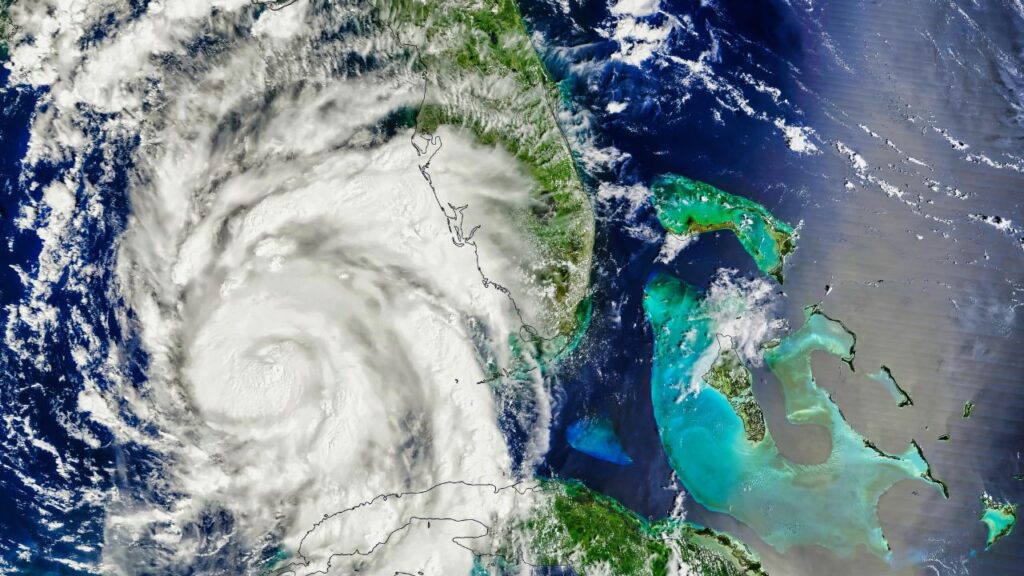
A hurricane doesn’t have to touch Florida to empty a Home Depot two counties away.
New residents rarely see the plywood run coming until the shelves are already bare.
9 Things Nobody Warns New Florida Residents About Hurricane Season
9 Things That Instantly Mark You as a Florida Newcomer

By late August, a Florida newcomer’s front bumper wears a gray crust they can’t scrub off, and they have no idea what it is.
Locals know on sight, and it’s only the start of what nobody mentions before the move.
