
12 Things North Carolinians Assume Every State Has Until They Leave

Many North Carolinians pick out the same kind of Christmas tree every year without a second thought.
In a lot of other states, that tree isn’t nearly as easy to find.
Here are the things many North Carolinians assume every state has until they leave.
1. State-Maintained Roads
State-maintained roads are the rule in North Carolina, one of only eight states with no roads owned at the county level.
WUNC News reports that towns and cities own and maintain some roads inside their boundaries, but counties aren’t allowed to.
If you live in a town or city, the street in front of your house may belong to it rather than the state.
Texas and North Carolina each maintain just over 80,000 miles of highway, but Texas has nearly triple the public roads once you count the roads towns and counties own.
2. Biltmore House
You’ll find 250 rooms in Biltmore House in Asheville.
EBSCO’s research summary calls it the largest privately owned residential home ever constructed in the United States.
If you tour it, you’re walking through a house that George Vanderbilt commissioned, architect Richard Morris Hunt designed and builders finished in 1895.
3. Pepsi-Cola’s Birthplace
Pepsi-Cola got its name in New Bern, North Carolina, in 1898.
Pharmacist Caleb Bradham served the drink at the soda fountain in his pharmacy, at the corner of Pollock and Middle Streets.
If you’ve ever ordered a Pepsi, you’ve ordered a drink that got its name in New Bern.
Bradham incorporated the Pepsi-Cola Company under North Carolina law in 1902.
4. ABC Stores
Alcoholic Beverage Control (ABC) stores sell liquor in North Carolina, where neither individuals nor private entities may open liquor stores.
The state’s ABC website lists about 453 stores as of October 2026, and says grocery stores can’t sell liquor.
North Carolina is one of 17 states where the government manages the wholesale, and often the retail, sale of liquor.
If you’re moving from one of the other 33, the way you buy a bottle may change.
Virginia ABC, the state agency next door, had 401 retail stores at the end of fiscal year 2025, while North Carolina’s stores belong to local boards.
If you’re hosting, add an ABC store to your list.
Who Runs ABC Stores
A local ABC board owns and operates the ABC stores within its jurisdiction.
A board has three or five members, depending on its size.
The town, city or county’s governing authority appoints them.
The state ABC website says two counties, Graham and Madison, have no ABC stores.
5. Lance Crackers
The Lance company began with a rejected order in Charlotte in 1913.
Coffee salesman Philip L. Lance had purchased 500 pounds of Virginia peanuts for a customer who decided he couldn’t use them.
Lance started making crackers in 1938 and became Lance, Inc. the next year.
NCpedia credits the company with creating the first commercially sold peanut butter cracker.
If you grew up on Lance crackers, they trace back to a peanut order a customer turned down.
6. Mt. Olive Pickles
On its history page, Mt. Olive Pickles calls itself the largest privately-held pickle company in the nation.
The company was officially founded in Mount Olive, North Carolina, in 1926.
The company behind any jar you buy began as a cucumber surplus.
In the early 1920s, a Lebanese immigrant bought cucumbers from local farmers, planning to brine them for other pickle companies.
No buyer turned up.
So he and a pickle plant worker decided to pack and sell pickles themselves.
Psst! How much do you know about North Carolina? Take our quiz and see if you can ace it.
Quiz
North Carolina Pop Quiz
Answer nine questions on North Carolina’s foods, firsts, and landmarks. We bet you can’t get them all right. Prove us wrong?
Before it was Pepsi-Cola in 1898, Caleb Bradham’s New Bern soda went by what name?
7. Headache Powders
B.C. and Goody's headache powders both began in North Carolina.
If you've only ever taken pills, these are pain relievers sold as a loose powder instead.
Commodore Thomas Council founded B.C. Powders in 1906 while working in Germain Bernard's Durham drugstore.
Goody's followed in 1932, when A. Thad Lewallen, a tobacco and candy wholesaler, bought Winston-Salem pharmacist Martin C. Goodman's pain formula.
NCpedia says pharmacists often sold the medicine as a powder because pills were harder and more expensive to make.
NCpedia adds that headache powders are extremely popular in North Carolina and other southern states.
Production of both later moved to Memphis, Tennessee.
8. State-Run Ferries
The North Carolina Department of Transportation's Ferry Division runs what it calls the second largest state-run ferry system in the United States.
Washington State Ferries, which says it operates the largest ferry fleet in the country, has 21 ferries on Puget Sound.
North Carolina's fleet is more than 20 ferries, and about 800,000 vehicles and 1.8 million passengers ride them each year.
The routes cross the Currituck and Pamlico sounds and the Cape Fear, Neuse and Pamlico rivers.
If you drive the Hatteras-Ocracoke or Ocracoke-Cedar Island route, you're on part of the Outer Banks National Scenic Byway.
An emergency route also runs between Stumpy Point and Rodanthe when N.C. 12 is damaged.
9. Biscuitville
Biscuitville has had its corporate headquarters in Greensboro since 2007.
The chain began in North Carolina in 1966.
That's when Maurice Jennings opened Mountainbrook Fresh Bread and Milk stores.
Biscuitville says it has over 85 restaurants in North Carolina, southern Virginia and South Carolina.
If you're counting on a Biscuitville in another state, that list names only those three.
10. Fraser Fir Christmas Trees
Fraser fir makes up more than 98% of the Christmas trees grown and sold in North Carolina.
Oregon and North Carolina grew more than half of the Christmas trees cut in 2022, according to the U.S. Department of Agriculture's Economic Research Service.
If you're picking out a tree this season, the Fraser fir is the variety the state's growers raise almost exclusively.
11. Seagrove Pottery
If you're shopping for handmade pottery, Seagrove, North Carolina, has more than 100 resident craftspeople, and VisitNC calls it the largest pottery community in the U.S.
Colonial potters began making earthenware in the area in the late 1700s.
VisitNC's history of the area says pottery had almost vanished by about 1900.
Raleigh's Juliana Busbee helped revive the art form in 1920.
Spectrum News reported that the Seagrove Pottery Festival ran the weekend before Thanksgiving in 2025, in its 43rd year.
12. Food Lion
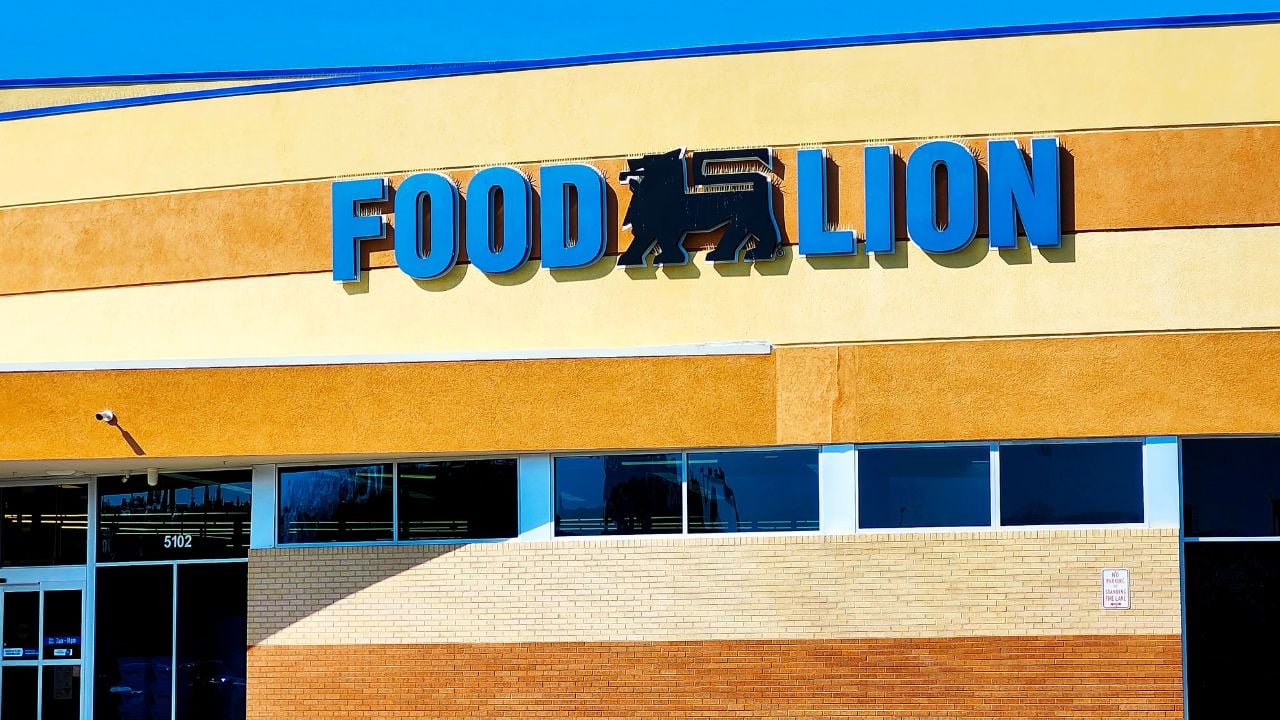
Food Lion has been based in Salisbury, North Carolina, since the grocery chain was founded in 1957, according to the company.
It has more than 1,100 stores in 10 states in the Southeast and Mid-Atlantic.
Many North Carolinians shop at a Food Lion and assume the banner is waiting in other states too.
If you move beyond Food Lion's 10-state footprint, you'll need a new go-to grocery store.
12 North Carolina Weather Records That Still Stand Today
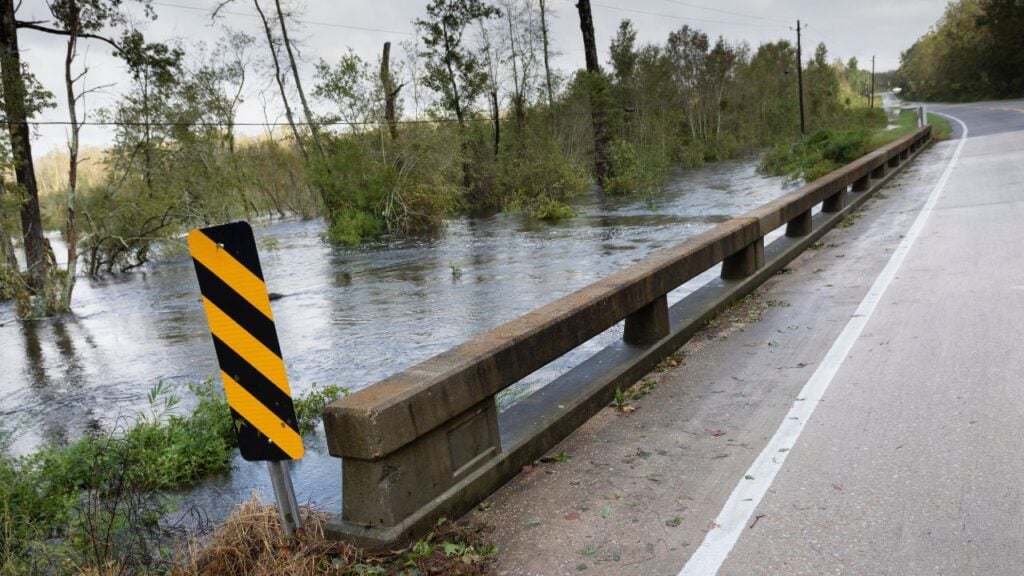
Some weather records get broken every few years.
These are the weather extremes North Carolinians haven't seen topped yet.
12 North Carolina Weather Records That Still Stand Today
8 Things North Carolina Small Towns Still Do That the Rest of the Country Gave Up On
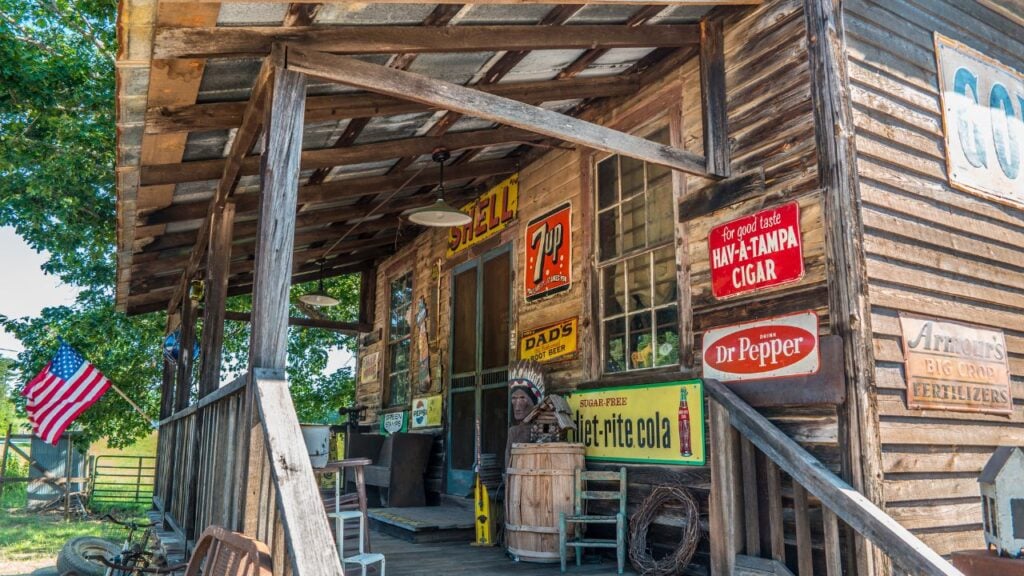
A bull named Old Buck crashes a village dance on Hatteras Island each January.
These are some of the things small towns in North Carolina still do.
8 Things North Carolina Small Towns Still Do That the Rest of the Country Gave Up On
