

12 Things That Annoy Tennesseans the Older They Get

You used to hear an older relative complain and think, “It’s really not that bad.”
Now you’re making a suspiciously similar argument.
You haven’t adopted every opinion they had. But a few everyday aggravations are starting to make their case for them.
These are the things that annoy Tennesseans and Americans across the country the older they get.
1. Loud Restaurants Bury the Conversation
Age-related hearing loss doesn’t erase sound so much as it erases the sharp consonants that carry speech apart from background noise.
A table that once felt lively now sounds like one continuous blur of clattering plates and other people’s conversations.
Restaurant noise levels have been rising for years on their own, long before anyone’s hearing changed.
Stack a naturally louder room on top of ears that need more clarity to keep up, and the same dinner reservation gets harder every year.
A corner table away from the kitchen stops being a preference and starts being a requirement.
2. Fine Print Keeps Shrinking
Presbyopia sets in for most adults in their early-to-mid 40s, as the lens inside the eye gradually loses the flexibility it needs to focus up close.
A menu printed in a trendy thin font, a pill bottle’s dosage line, a rental agreement’s fourth page of terms: None of it changed size.
Holding a phone at arm’s length to read a text message becomes routine long before anyone admits they need reading glasses.
Small print never used to be an obstacle.
3. Oncoming Headlights Turn Blinding
Aging eyes scatter incoming light more than younger ones do, which makes any bright point in an otherwise dark field harder for older drivers to look past.
New vehicles keep shipping with brighter, bluer light-emitting diode (LED) headlights than the yellowish halogen bulbs of a couple decades ago.
The American Automobile Association’s (AAA) research arm, the AAA Foundation for Traffic Safety, has tracked driver complaints about that added glare rising as a result.
A two-lane back road at night used to be relaxing.
Now it means squinting through an afterimage every time a truck passes going the other way.
4. Long Lines Wear on the Joints
Diagnosed arthritis rises sharply with age, from 3.6% of adults 18 to 34 up to 53.9% of adults 75 and older, per the Centers for Disease Control and Prevention’s (CDC) most recent count.
Fifteen minutes at the Department of Motor Vehicles or the grocery checkout used to pass without a second thought.
Now a knee or a hip starts announcing itself well before the line moves anywhere.
Shifting weight from foot to foot only buys a few extra minutes.
What the Arthritis Numbers Show
The CDC’s age breakdown puts diagnosed arthritis at 3.6% for adults 18 to 34.
That figure rises to 53.9% for adults 75 and older, roughly fifteen times higher.
A joint that handled a full day on its feet decades ago can turn a single long line into the sorest part of the week.
5. Low Chairs Get Harder to Leave
Sarcopenia, the gradual loss of muscle mass that comes with getting older, chips away at exactly the leg strength a low couch or a deep armchair demands.
Sinking into a soft cushion used to be the comfortable choice.
Pushing back out of it is the part nobody warns you about.
A dining chair with arms to press against starts to matter more than how the room looks.
6. Cold Weather Cuts Deeper
Older skin loses subcutaneous fat, and the blood vessels that once constricted quickly to conserve heat respond slower than they did at thirty.
A crisp 45-degree morning that once called for a light jacket now reaches straight through it.
Hands go cold first and stay that way longest.
The thermostat war with everyone else in the house only gets more one-sided from here.
7. Being Talked to Like a Child
Gerontology researchers have a name for the slow, sing-song, overly simple way some younger people default to around older adults: Elderspeak.
A pharmacist, a bank teller, or a stranger in a parking lot can slip into it without meaning any harm at all.
It still lands the same way.
Nobody enjoys being spoken to like they’ve suddenly forgotten how English works.
8. Redesigned Apps Erase What You Knew
Learning a new layout from scratch takes older users longer with each passing decade, the same way any unfamiliar routine does.
A banking app moves its transfer button, and suddenly a task that took ten seconds takes ten minutes of hunting through menus.
Muscle memory built up over years disappears the moment a company decides its old design needed a refresh nobody asked for.
Starting over gets old fast.
Psst! How much do you know about Tennessee? Take our quiz and see how many you can get right.
Quiz
How Much Do You Know About Tennessee?
Eight questions on the state’s parks, history, and hidden trivia.
Which Tennessee national park is the most-visited national park in the entire country?
9. Early Yard Work Ends Your Sleep
Sleep grows lighter and more easily interrupted as people get older, according to the National Institute on Aging.
Waking up happens more often, and less of the deep sleep that used to carry a person through the night sticks around.
A mower two yards over at 7 a.m. used to be background noise a person could sleep straight through.
Now it's the reason the whole day starts an hour early, whether anyone wanted it to or not.
Falling back asleep afterward almost never works.
10. Waiting on Hold Wastes More Time
Stanford psychologist Laura Carstensen's research on aging and time perception found that people place a higher value on however much time they believe they have left.
That shift changes how costly wasted time feels.
Twenty minutes of hold music for a billing question used to be a mild inconvenience.
It reads differently now, less like a delay and more like an actual loss.
Hanging up and calling back rarely helps either.
11. Fast Talkers Leave You Behind
The auditory system's processing speed slows with age even when hearing itself tests fine, according to researchers who study how older adults follow rapid speech.
A rushed call-center script read at double speed used to be easy enough to follow along with.
Now the sentence is already three words further along by the time the last one registers.
Asking someone to slow down feels awkward, but it works.
12. Bright Phone Screens Feel Harsher
The same light-scattering changes in an older eye that make oncoming headlights so much harder to tolerate reach a phone screen too.
A phone glowing in an otherwise dark room ends up feeling sharper than it should.
A quick scroll through a group text in bed used to be nothing.
Now it leaves a bright afterimage hanging in the dark for a full minute after the phone goes down.
Turning the brightness all the way down stopped being optional a while ago.
8 Things Tennesseans Get Wrong About Driving Across Their State
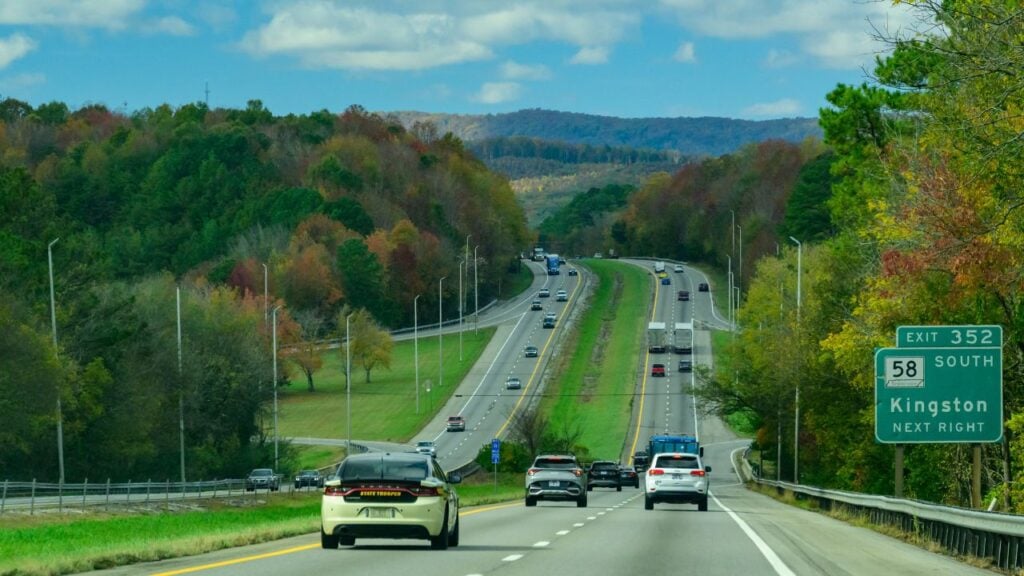
A fight over a 342-acre Memphis park reached the U.S. Supreme Court in 1971, and Interstate 40 still carries the result today.
Nobody expected the park to win.
8 Things Tennesseans Get Wrong About Driving Across Their State
6 Things Tennesseans Buy at Roadside Produce Stands in September

A hand-lettered sign leans against a fence post on a two-lane road in East Tennessee every September, with a coffee can cut for cash sitting underneath it.
The trust system is in full effect.
6 Things Tennesseans Buy at Roadside Produce Stands in September
