
6 Things Tennesseans Buy at Roadside Produce Stands in September

A hand-lettered sign leans against a fence post on a two-lane road in East Tennessee every September.
A coffee can with a slit cut in the lid sits underneath it for cash.
The trust system is in full effect.
These are the things Tennesseans buy at roadside produce stands in September.
1. Grainger County Tomatoes
Grainger County, Tennessee, grows tomatoes across more than 650 greenhouses and 500 acres, according to the University of Tennessee Extension office that serves the county.
Farms along Highway 11W and Highway 92 work that dirt every fall, Cabbage Patch Farms and Red Barn Produce among the county’s stands, many open May through October.
A table piled with tomatoes in mid-September sits in the middle of Tennessee’s tomato season, not at the tail end of it.
2. Bell and Banana Peppers
Tennessee peppers hold on the vine long after tomatoes start to slow down, and September is when bell and banana peppers finish coloring up.
Green turns to red, yellow, and orange right on the plant.
Growers leave a share of the crop out there on purpose, since a fully colored pepper sells for more at a stand table than a green one, and you get more flavor for the same handful.
The same plant keeps producing right up until frost, so growers make repeat trips down the same rows all September.
Peppers keep coming from June into November, per pickyourown.org’s Tennessee harvest calendar, closer to half the year than the two-week window a stand’s rotating table might suggest.
3. Muscadine Grapes
Tennessee stands turn to muscadine grapes as summer winds down, and University of Tennessee researchers put the ripening window at September and October.
They don’t look like grocery-store grapes.
Thick-skinned, bronze or deep purple, and sold by the half-peck or the gallon bag, muscadines carry a flavor closer to wine than table fruit.
Growers sell some straight off the vine and cook the rest down into jelly before the season’s over.
Buy muscadines early in the run, since the best bags go first.
Psst! How much do you know about Tennessee’s farming history? Take our quiz and see how many you can get right.
Quiz
Tennessee Farm Trivia
Answer these questions on Tennessee’s farms, fairs, and food history. We bet you can’t get them all right. Prove us wrong?
Tennessee designated which food its official state fruit in 2003?
4. Fresh-Cut Okra
Tennessee okra keeps coming out of the garden into September, especially at farms that cut the plants back midseason to push out a second flush of pods, per the University of Tennessee's Institute of Agriculture.
Pick the pods at two to four inches long.
Any longer, and they turn woody, which is exactly why the good stands sell it loose by the pound instead of pre-bagged, so you can see what you're getting before you pay for it.
Not every "Tennessee Grown" sign tells the whole story, though.
How to Know a Tennessee Stand Grew It
A hand-lettered sign doesn't guarantee the okra, tomatoes, or peppers on a Tennessee stand's table came off the farm behind it.
Check the calendar first.
Produce running ahead of Tennessee's own growing season, like a ripe strawberry in September, is one clear sign a stand filled its table from somewhere else.
The produce itself is the second clue.
Whatever came off a nearby vine within a day or two still carries a little field dirt and an uneven size here and there, while a truckload from a regional distributor tends to look suspiciously uniform.
A grower who picked the crop themselves can usually say exactly when, without stopping to think about it.
5. Purple Hull and Crowder Peas
Tennessee's field peas, the purple hull and crowder types Southern cooks shell by the bushel, keep coming through summer and into early fall, per the University of Tennessee Extension's home garden calendar.
They show up shelled and loose, or still in the pod for anyone who wants the job of shelling them at home.
A five-gallon bucket of pods yields far less than it looks like it should, though the payoff is worth the work.
Shoppers buy in bulk because field peas freeze well, so today's bushel turns into meals well past October.
Ask anyone who's shelled a bushel on a porch swing how long it takes.
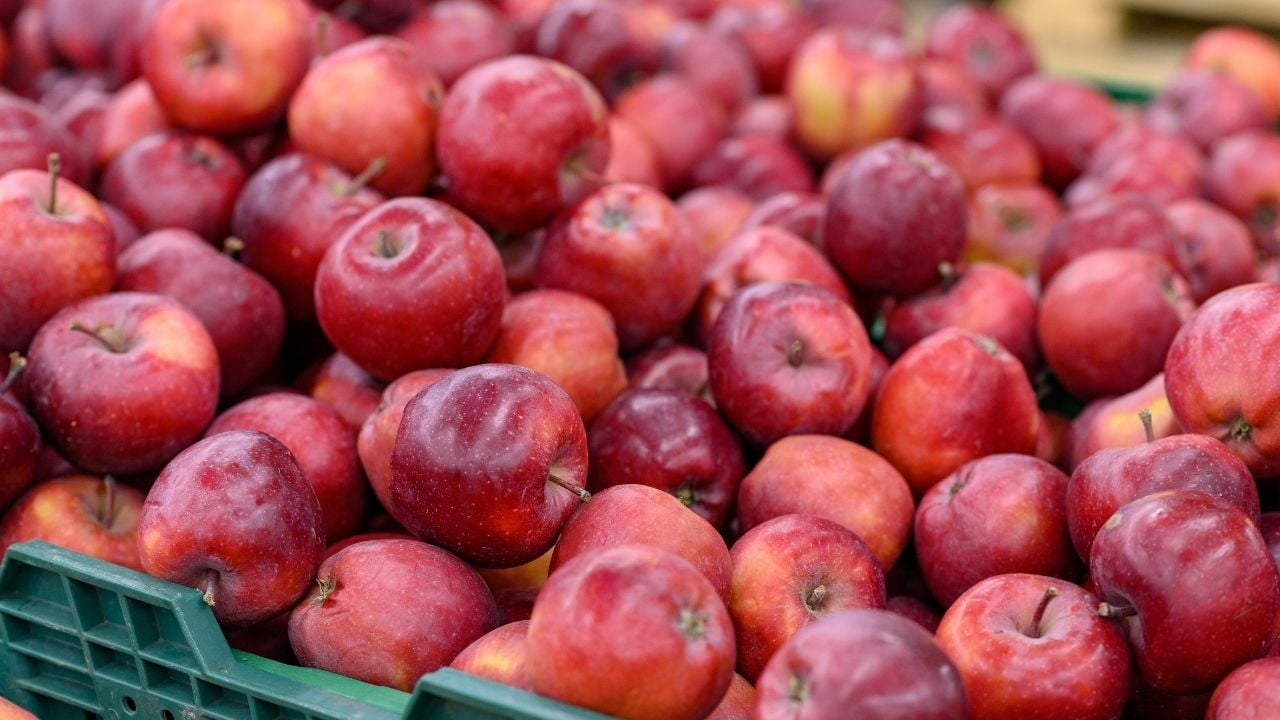
6. First-of-Season Apples
Tennessee's apple season is already weeks along by the time September starts, and Gala, one of the earliest varieties, typically ripens by mid-August, according to the University of Tennessee Extension's Selecting Quality Apples guide.
September belongs to the next wave: Red Delicious, Golden Delicious, and Jonagold typically ripen early to mid-September, with Mutsu close behind at mid-to-late month.
Buy them early.
More varieties keep arriving as fall goes on, with Arkansas Black, Fuji, and Granny Smith not ripening until late October, weeks after regulars have already worked through the September lineup.
Some Tennessee orchards turn the extra apples into cider, apple butter, and fried pies once the harvest gets rolling.
The Apple Barn and Cider Mill in Sevierville presses fresh cider on site and sells apple butter alongside fried pies and dumplings, according to its own menu.
Grainger County's Tomato Claim to Fame
Grainger County, Tennessee, backs up its tomato reputation with an actual festival, not just bragging rights.
The county's tomato festival hit its 31st year in 2024, running two days every July in Rutledge, weeks before September's stands even reach their fullest.
The Rogersville Review counted it among the largest festivals in Tennessee, drawing crowds well beyond the county's own population for those two July days.
By the time September arrives and the festival tents are long packed up, the same farms that hosted it are back to weighing tomatoes on a folding table.
6 Medical Bills Tennessee Patients Can Negotiate Down but Almost Never Do

Tennessee gives a hospital just 30 days to produce a complete, line-by-line bill once a patient asks for one in writing.
Few people ever ask, and the charges that show up on that bill usually come with some kind of lever a patient can pull to bring the total down.
6 Medical Bills Tennessee Patients Can Negotiate Down but Almost Never Do
3 Ways Tennessee Shoppers Over 60 Are Losing Out at Save A Lot
Save A Lot has closed roughly 100 stores nationwide over the past 16 months, yet the Crossville, Tennessee location has stayed open through all of it.
It keeps grocery bills low in small Tennessee towns that don't have another full grocery store nearby, but some senior shoppers are leaving money on the table without realizing it.
3 Ways Tennessee Shoppers Over 60 Are Losing Out at Save A Lot
