
12 Things Virginia Home Inspectors Notice Before Buyers Even Walk Inside

Home inspectors don’t need to step inside before a property starts raising questions.
What looks ordinary during the walk to the front door can tell a trained eye something very different.
These are the things Virginia home inspectors notice before buyers even walk inside.
Note: This is general information, not legal advice. Home inspection standards and licensing rules are subject to change, so confirm current requirements with the Virginia Department of Professional and Occupational Regulation.
1. Roofline
Virginia’s home inspectors have followed the same licensing rules since 2017, and the walk-around always starts outside, at the roof.
They read it from the ground or the eaves.
That reading follows the Standards of Practice published by the International Association of Certified Home Inspectors, known as InterNACHI, a widely used industry benchmark.
Curled, cracked or missing shingles all show up from the driveway.
A sagging ridge line reads the same way.
No ladder is required.
2. Gutter Condition
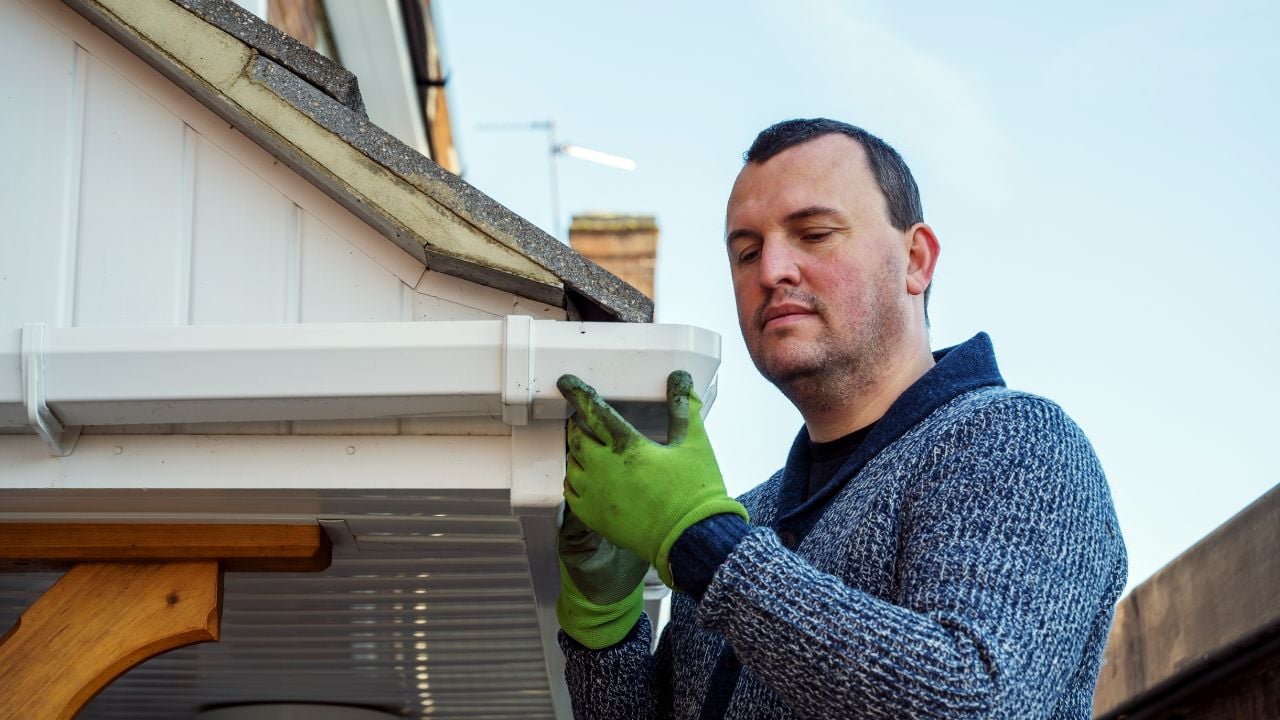
Every gutter run gets a close look from Virginia’s home inspectors before anyone answers the door, since a sagging or separated section shows up in plain daylight.
Rust streaks below a seam usually mean water found a gap months earlier.
A gutter pulling away from the fascia board is a common find on older homes with wood trim.
Small gap, big tell.
3. Downspout Exit Points
Before stepping onto the porch, a Virginia home inspector has already traced every downspout to its exit point.
Downspouts are named separately from the gutters they hang off, under that same inspection standard.
A downspout dumping straight onto the ground next to the foundation undoes weeks of dry weather in one storm.
That’s an easy fix.
Many sellers never make time for it.
4. Chimney
The chimney is one of the first things a Virginia home inspector studies from below, checking the crown, the flashing and the cap before anyone reaches for a house key.
A cracked crown lets water into the brick with every winter freeze.
The mortar fails next.
A leaning cap or a stained chimney chase are both visible from the yard.
5. Siding Touching the Ground
Siding touching bare soil rarely escapes a Virginia home inspector’s notice, since ground-level moisture leaves a mark fast, well before anyone steps onto the stoop.
Wood or engineered siding sitting flush against soil is a standing invitation for rot.
Rot spreads fast.
Cracked or buckled panels usually trace back to moisture already trapped inside the wall.
6. Yard Slope
A yard’s slope is often the earliest clue a Virginia home inspector reads, well before anything else about the house.
Virginia’s building code calls for the ground to drop at least six inches over the first ten feet moving away from the foundation.
A yard sloping the wrong way sends every rainstorm straight at the house instead.
It won’t self-correct.
Virginia’s state geologists have flagged expansive soils in parts of Chesterfield County and a belt running through Culpeper, Farmville, Danville and Richmond.
That kind of ground punishes bad grading twice as hard.
7. Foundation Cracks From the Yard
A Virginia home inspector walks the full perimeter of the foundation before ever touching the door.
Stair-step cracks in brick or block, bowing walls and gaps around window trim all show up on that walk.
A hairline crack is usually cosmetic.
Not every crack matters.
A wider crack, especially one running on the diagonal, earns a harder look.
8. Driveway and Walkway Cracking
Cracks in the driveway and every walkway get the same scrutiny Virginia’s home inspectors give the house.
They note heaved slabs, wide gaps at the joints and standing puddles before anyone reaches the porch steps.
A driveway pitched toward the garage instead of away from it usually means water has been finding its way in for years.
Cracks and staining follow.
What Virginia’s Rules Call “Adjacent”
Virginia’s regulations for home inspectors draw a line at exactly three feet.
Anything within three feet of the house counts as adjacent under the state’s definition.
That distance puts it inside the inspection.
A shed, detached garage or fence sitting more than three feet away doesn’t meet that definition.
It simply isn’t part of the required inspection.
A buyer who assumes that back building comes with the inspection is often wrong.
9. Deck’s Ledger Board
A deck or porch attached to a Virginia house gets a dedicated line in that inspection standard, and the ledger board is the part inspectors look at hardest.
The ledger board is the piece that bolts the deck to the house.
That’s the weak point.
The North American Deck and Railing Association traces an estimated nine in ten deck collapses back to a failed ledger connection.
Nail heads with no bolts or lag screws in sight are an easy giveaway, visible without climbing a single step.
10. Electrical Service Line
Virginia’s home inspectors check the electric meter, the mast and the overhead line before they ever flip a light switch inside.
The wire running from the pole to the house, the point where it enters at the weatherhead and the meter base are each named separately in that same inspection standard.
A cracked meter base or a service line sagging too close to the roof both earn a note on sight.
All of it sits outside.
11. Outdoor Condenser Unit
The outdoor condenser draws a Virginia home inspector’s attention before anyone checks what the thermostat controls.
A unit sitting crooked on a cracked pad, or boxed in by shrubs on every side, struggles to move air the way a clear one does.
Airflow suffers first.
Bent coil fins choke it further.
A wobble or a rust stain on the cabinet tells the same story a running unit would take longer to reveal.
Psst! A Virginia home inspector’s exterior walk-around is only half the picture. See how many of these follow-up moves you’d make.
12. Trees and Vegetation Against the House
Virginia’s home inspectors flag vegetation that can hurt the structure through moisture, under that same inspection standard.
A limb resting on the roof wears through shingles with every gust of wind.
Wind does the rest.
Ivy or shrubs pressed against siding trap moisture against the wall around the clock.
A gap of just a few inches between the plant and the wall solves the problem.
9 Rules for Renting Out a Room That Virginia Homeowners Get Wrong

A Virginia homeowner now has to wait 14 days, not five, before taking a roommate who’s stopped paying rent to court.
Many people renting out a spare room have no idea that notice period just doubled.
9 Rules for Renting Out a Room That Virginia Homeowners Get Wrong
6 Car Tax Mistakes That Turn Into Penalties and Interest for Virginians

Ignore a Virginia car tax bill long enough, and the locality pulls the state’s Department of Motor Vehicles into the mess.
A registration hold freezes every vehicle in a Virginian’s name until the debt clears, plus a separate fee just to lift it.
6 Car Tax Mistakes That Turn Into Penalties and Interest for Virginians
