
13 Things You Only Understand After Living in Pennsylvania a Few Years

A bill for one weekend drive on the Pennsylvania Turnpike shows up in a new resident’s mailbox weeks later, itemized trip by trip.
The driver never stopped at a toll booth.
That toll went up again on January 4, 2026, the latest in a string of yearly increases the Pennsylvania Turnpike Commission has made under a 2007 state law.
These are the things you only understand after living in Pennsylvania a few years.
Note: This is general information, not legal, tax, or financial advice. Pennsylvania’s tax rates, inspection rules, and other regulations are subject to change.
1. Two Tax Returns, Not One
Pennsylvania taxes income twice: Once through the state return, and again through a local earned income tax.
That local tax has nothing to do with the Internal Revenue Service or the state’s Department of Revenue.
Two returns, every year.
That second bill used to run through about 560 separate local tax collectors statewide.
A 2008 law regrouped collection into countywide districts, each run by a collector like Berkheimer or Keystone Collections rather than a state office.
Each municipality and school district still sets its share of the rate, and employers withhold the combined amount.
For a transplant from a state with no local income tax, this second return is easy to miss.
Withholding Isn’t Filing
Pennsylvania still requires that local earned income tax return even when an employer withheld the correct amount all year.
The return is due April 15, the same day as the state and federal deadlines.
If you skip it, the local collector can start sending delinquent notices.
2. Judges on the Ballot
Pennsylvania elects its Supreme, Superior, and Commonwealth Court judges, something many states settle through a governor’s appointment instead.
A candidate runs as a member of a political party for a first 10-year term.
After that, the judge’s name comes back on the November ballot alone.
Voters then answer yes or no on whether to keep them for another decade in a retention vote.
No opponent, no party label.
A newcomer’s first look at one of those ballots, often in an odd-numbered year with nothing else recognizable on it, is usually the moment this system clicks.
3. Toll Bills in the Mail
The Pennsylvania Turnpike runs under a separate commission rather than PennDOT, though the state transportation secretary sits on its board.
A 2007 law requires the Turnpike to help fund roads and transit statewide, and the commission has raised tolls every year for well over a decade.
The most recent hike, 4% as of January 4, 2026, was the smallest increase since 2014.
A driver without an E-ZPass doesn’t pay at a booth anymore, either.
No booth. Just a bill.
A camera photographs the license plate, and an invoice follows by mail about 40 days later, priced well above the E-ZPass rate for the exact same drive.
4. Beer, Wine, Liquor, Separate Stops
State law still won’t let one store sell wine, liquor, and beer under the same roof.
Spirits to take home come from a state-run Fine Wine & Good Spirits store or a licensed distillery.
Wine was the state store’s alone, too, until a 2016 law let licensed grocery stores and restaurants sell it to go.
Beer comes from a separate distributor, or from a grocery store or deli with the right license.
Even there, a single transaction tops out at 192 ounces, about a 12-pack of tall cans.
One list. Two stops, minimum.
Stocking one gathering with all three still means at least two stops, and a longtime resident has the route memorized.
5. Sticker Month, Not January
Every passenger vehicle has to pass a safety inspection once a year.
The sticker that comes with it expires on the month of the inspection, not on January 1 or on the registration renewal date.
Not January. The inspection month.
Drivers in 42 counties skip emissions testing, while the other 25, including the Philadelphia and Pittsburgh areas, add that check on top.
A transplant from a state with no inspection program at all has one more date to track every year.
6. Neighboring Districts, Unequal Funding
A Commonwealth Court judge ruled in February 2023 that the way Pennsylvania funds its schools is unconstitutional.
No one appealed, and the ruling became final that summer.
The system leans hard on local property tax, so two districts a few miles apart can run on budgets that barely resemble each other.
The gap didn’t close overnight.
Many residents only notice how wide that gap runs once they start comparing school budgets across a district line, often while house hunting.
7. Different Rules, Next Door
Pennsylvania runs itself through more than 2,500 municipalities, a mix of cities, boroughs, and townships that each write their zoning, trash, and policing rules.
Cross into the next one, and the rules can change on the spot.
Same state. Different rules.
Policing is where it shows up plainest: 1,325 of those municipalities rely on Pennsylvania State Police for full-time coverage.
The township next door might fund a patrol car.
A resident learns which kind of town they live in the first time they need a police response and wait for a trooper instead of a local cruiser.
Psst! How much do you know about Pennsylvania? Take our quiz and see how many you can get right.
8. Sales Tax Along the Line
Pennsylvania charges a flat 6% sales tax almost everywhere in the state.
Cross into Allegheny County and it rises to 7%.
Cross into Philadelphia and it’s 8%, the two counties allowed to add a local share on top of the state rate.
Same receipt. Different total.
A longtime resident builds the extra percentage point into their math without thinking about it.
A visitor from three counties over does the receipt math twice.
9. Extra Cost at Closing
Pennsylvania charges a 1 percent state tax on most real estate sales, just for the deed changing hands.
Local governments add a share on top.
The deed alone triggers it.
That local piece typically splits between the municipality and the school district, so closing costs carry a transfer tax some states don’t charge at all.
A first-time buyer sees the full amount on the closing statement.
10. Fireworks Any Night
Pennsylvania let residents buy the same aerial fireworks that used to be reserved for out-of-state customers starting in 2017.
Anyone 18 or older can walk into a fireworks store and load up on Roman candles and bottle rockets.
Rules added in 2022 keep the show at least 150 feet from any building or vehicle and end it by 10 p.m. on ordinary nights.
July 2, 3, and 4 and New Year’s Eve run until 1 a.m.
None of that stops a random Tuesday from sounding like the Fourth of July.
A transplant from a state where this is flatly illegal notices fast, and then keeps noticing it for years.
11. No Cars Sold on Sunday
Dealerships still can’t legally sell a car on Sunday.
The ban is a leftover blue law from an era when a long list of Sunday commerce was restricted statewide, and many of those other restrictions faded years ago.
This one hasn’t.
A Bucks County lawmaker revived the push to repeal it in 2025.
A newcomer who saves a free Sunday for car shopping finds the sales floor closed.
12. Deer Season Moves to Saturday
Rifle deer season opened on the Monday after Thanksgiving for decades, and many schools once closed for it.
The state moved the opener to Saturday in 2019.
A 2021 survey found 60% of hunters backed the Saturday start, while 27% opposed it.
Opposition runs strongest in the traditional mountain hunting areas, where local businesses and fire companies counted on hunters spending the weekend getting camp ready.
13. Voting in Odd Years
The state holds a general election every single year, not just in presidential and midterm cycles.
Odd years are set aside for county and local officials, plus judges and magisterial district judges.
Turnout drops hard.
A transplant from a state that only shows up at the polls in even years has to unlearn that habit.
An odd-year primary is the easiest one to overlook.
Each county posts a sample ballot showing the local races ahead of time.
That sample ballot usually appears on the county website or in the local paper, if a resident thinks to look for it.
8 Things That Change at a Pennsylvania Farmers Market Once the Summer Crops End
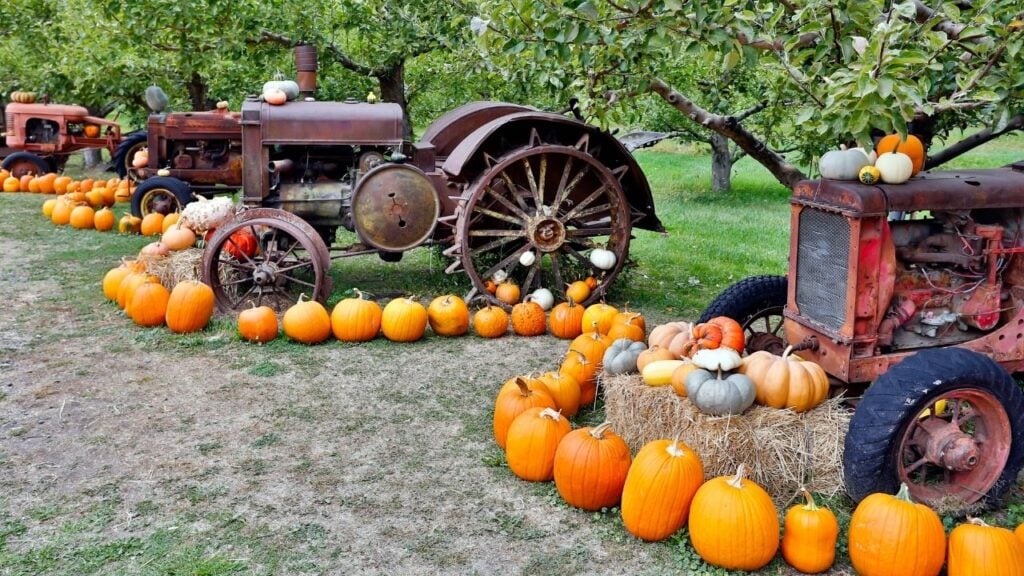
Every fall, a Pennsylvania farmers market swaps one crop for another whether shoppers notice or not.
The tomatoes disappear first, and pumpkins fill the tables where corn sat all summer.
8 Things That Change at a Pennsylvania Farmers Market Once the Summer Crops End
8 Places That Won’t Let a Pennsylvania Grandparent Sign for a Grandchild

A grandparent can spend an entire afternoon shuttling a grandchild around town and still hit a door where their signature isn’t enough.
A 2018 state law was supposed to close that gap, and many places still don’t accept it.
8 Places That Won’t Let a Pennsylvania Grandparent Sign for a Grandchild
