

14 Things Pennsylvania Boomers Say Without Realizing They’re Offensive Nowadays

A Pennsylvania grandmother calls the flight attendant on her daughter’s trip a “stewardess” and means it as a compliment.
A grandfather still says a neighbor “gypped” him on a used mower and would be startled to learn where that word comes from.
Neither of them is trying to offend anyone.
These words were the ordinary vocabulary of an entire generation. They showed up on the evening news, in schoolbooks, and in polite company without anyone blinking.
The shift happened gradually, then all at once.
Advocacy groups spoke up, style guides changed, and federal law itself moved on some of these terms years before everyday conversation caught up.
These are the things Pennsylvania boomers innocently say that come across as offensive nowadays.
1. Oriental for Asian People
For most of the 20th century, “Oriental” was the standard American word for people, food, and goods from Asia, no different in tone from saying “European.”
It showed up in newspaper headlines and on government forms alike.
Asian American advocacy groups spent decades arguing the word treats an entire continent as one distant, exotic “other” instead of dozens of separate countries and cultures.
Congress agreed.
A 2016 law signed by President Obama struck “Oriental” from federal statutes, replacing it with “Asian American” in the U.S. code.
It’s fine for describing a rug. It stopped being fine for describing a person a while ago.
That’s the whole shift.
2. Eskimo for Native Neighbors
“Eskimo” was the catch-all word boomer-era American textbooks used for the Indigenous peoples of Alaska and the Arctic for generations.
It’s a boomer’s default term because it’s the only one the school system ever taught them.
The word lumps together distinct peoples, mainly Inuit and Yupik, who don’t share one language or culture.
Alaska Native organizations, including the Inuit Circumpolar Council, have pushed for decades to retire it in favor of each nation’s name, or “Inuit” where that fits.
One word standing in for dozens of nations was never going to hold up.
One term, too many nations.
3. Indian Giver as an Insult
Calling someone an “Indian giver” for taking back a gift was a boomer playground staple well into the 1980s. It’s the kind of phrase a boomer learned before age ten and never had a reason to question.
The phrase inverts its history.
Early European colonists misread Native gift-exchange customs, which expected reciprocity, as a broken promise, and pinned the insult on the wrong side of the exchange.
Native American advocacy organizations have flagged it as one of the more casually accepted anti-Native slurs still in circulation.
The person who broke the deal wasn’t the one it got named after.
History, reversed.
4. Gypped Instead of Cheated
“Gypped” for getting cheated is so baked into casual American English that many boomers who say it have never once connected it to an ethnic group.
It comes directly from “Gypsy,” a term for the Romani people that carries a long history as a slur, built on the stereotype that Romani people were swindlers and thieves.
Roma advocacy groups have pushed style guides and dictionaries to flag both words for years.
“Cheated” says exactly the same thing without the history attached.
One swap fixes it.
5. The R-Word for Slow
“Retard” or “retarded” used as a casual put-down for anything clumsy or slow was everywhere in the American slang boomers used through the 1990s, Pennsylvania included.
The word started as clinical language before it curdled into an insult aimed at people with intellectual disabilities.
The Special Olympics’ “Spread the Word to End the Word” campaign, running since 2009, has built its entire public message around retiring the casual use of the term.
What Rosa’s Law Changed
In 2010, Congress passed Rosa’s Law, named for a Maryland girl with Down syndrome, striking “mental retardation” and “mentally retarded” from federal health, education, and labor statutes and replacing them with “intellectual disability.”
6. Midget for Short Stature
“Midget” described anyone with dwarfism in ordinary American conversation for most of the 20th century, including in carnival and circus advertising that treated the word as a selling point.
That carnival-sideshow history is exactly why Little People of America issued a formal 2015 statement.
The leading advocacy organization for people with dwarfism asked the public and media to stop using the word.
The statement calls the word a term rooted in exhibiting people for entertainment.
“Little person,” “person of short stature,” or the exact diagnosis are what the organization asks for instead.
The people it describes asked for the change themselves.
Their word, their call.
7. Colored Instead of Black
“Colored” was the accepted, formal term for Black Americans well into the 1960s. It’s the word in the name of the National Association for the Advancement of Colored People (NAACP) itself, founded in 1909.
The Civil Rights era moved the accepted term to “Black,” leaving “colored” behind as a relic of segregation-era signage.
Someone who still reaches for it, usually without any bad intent, is often surprised how dated it now sounds.
The organization kept its name for history.
But everyday conversation moved on decades ago.
8. Crippled Instead of Disabled
“Crippled” was the plain, everyday word for a physical disability for most of American history, no more loaded, to a boomer’s ear, than “injured.”
Disability advocates spent the back half of the 20th century pushing “crippled” out in favor of “disabled” or person-first phrasing.
Their argument: The older word defines someone by what their body can’t do.
The shift shows up clearly in how federal agencies write about disability today compared to fifty years ago.
Disabled carries the same meaning, without the flinch.
No flinch required.
Quiz
How Much Do You Know About Pennsylvania?
Eight questions on the state’s landmarks, history, and hidden trivia.
The Liberty Bell, on display in Philadelphia, is best known today for what feature?
9. Handicapped as the Default
"Handicapped" was the polite, official word boomers learned for disability for so long that it's still stamped on parking signs and door buttons across Pennsylvania today.
Disability rights advocates now favor "disabled" or "person with a disability" for the same person-first reasoning that retired "crippled."
They treat "handicapped" as an older, more polite-sounding euphemism rather than a slur.
It hasn't vanished from signage, but it's fallen out of the language people use to describe each other.
The parking sign hasn't caught up.
Conversation already has.
Old word, same meaning.
10. Hysterical for an Upset Woman
Calling an upset woman "hysterical" sounds like an ordinary complaint to a lot of boomers.
It's medical language left over from a diagnosis.
Hysteria was an official psychiatric diagnosis applied almost exclusively to women, rooted in an ancient Greek theory blaming a "wandering womb" for female emotion.
It stayed in mainstream American medicine into the 20th century.
Historians of medicine point to it as a textbook case of pathologizing normal female emotion as illness.
"Upset" or "angry" describes the same moment without the diagnosis attached.
Just say upset.
11. Stewardess for Flight Attendant
"Stewardess" was the only word American air travelers used for decades, and airlines themselves enforced strict rules requiring the job to be filled by young, unmarried women.
The job title changed to the gender-neutral "flight attendant" as those hiring rules were challenged and struck down through sex-discrimination lawsuits in the 1960s and 1970s.
Men also started taking the job around the same time.
The Smithsonian's National Air and Space Museum traces the title change directly to that shift.
The job stopped being just a woman's job.
The title caught up.
It just took longer.
12. Policeman, Fireman, and Mailman
Many boomers still default to "policeman," "fireman," and "mailman," the words they grew up with, without meaning to write anyone out of the job.
All three professions formally opened to women decades ago, and the job titles moved with them, to "police officer," "firefighter," and "mail carrier."
Government agencies, unions, and style guides adopted the gender-neutral versions because the old titles describe a job that isn't only done by men anymore.
The uniform changed who wears it. The title took a while to follow.
Titles caught up too.
13. Illegal Immigrant as a Label
"Illegal immigrant" was standard, unremarkable news language for describing someone in the country without legal status for most of a Pennsylvania boomer's adult life.
The Associated Press, whose stylebook sets the language standard for many American newsrooms, dropped the phrase in 2013, arguing that "illegal" should describe an action, not brand a person.
The AP switched to describing someone's immigration status directly instead, and major outlets followed its lead within the same year.
The newsroom that set the old standard is the one that retired it.
Status, not a label.
14. Spaz for Clumsy
"Spaz" for tripping over something or acting clumsy has been common American slang for generations, boomers included, usually said with zero awareness of where it came from.
The word is short for "spastic," a medical term for the muscle spasms that come with cerebral palsy.
Disability advocates have long objected to it being used as a punchline for clumsiness.
Not just slang.
The word's staying power as a slur made news again in 2022, when both Lizzo and Beyoncé re-recorded lyrics to remove it after disability advocates raised the issue publicly.
Two of the biggest pop stars in the world cut it from finished albums. That's not a small signal.
8 Things a Pennsylvania Diner Will Do That a Chain Restaurant Won't
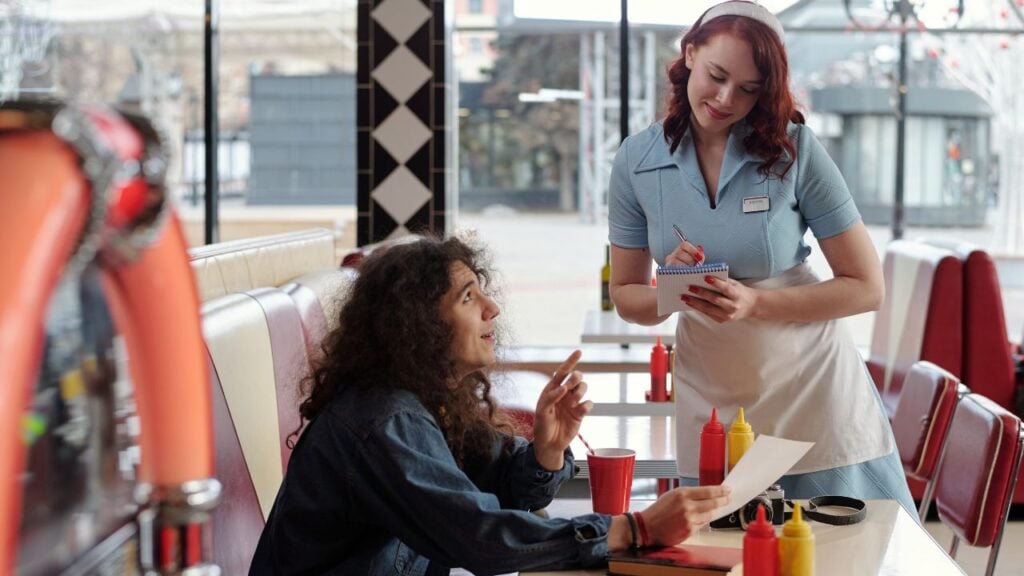
Order breakfast at a landmark spot near Erie, and the sign out front spells the word D-I-N-O-R. That's not a typo.
The handwritten ticket is only the start of it.
8 Things a Pennsylvania Diner Will Do That a Chain Restaurant Won't
8 Things That Change at a Pennsylvania Farmers Market Once the Summer Crops End
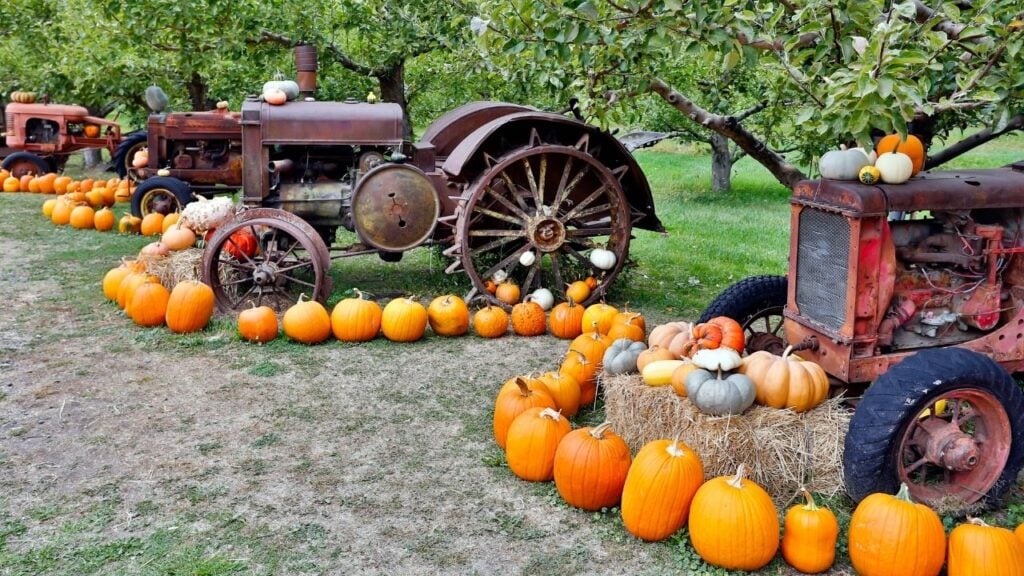
There's a moment every fall when a Pennsylvania farmers market stops looking like summer. The last tomatoes disappear, and pumpkins start crowding the tables.
Sweet corn is the first thing to go.
8 Things That Change at a Pennsylvania Farmers Market Once the Summer Crops End
