
8 Things a Pennsylvania Diner Will Do That a Chain Restaurant Won’t

Order breakfast at a landmark spot near Erie, and the sign out front spells the word D-I-N-O-R.
That’s not a typo.
These are the things a Pennsylvania diner will do that a chain restaurant hardly ever does.
1. The Handwritten Ticket
Most Pennsylvania diners run on a handwritten ticket.
The cook changes that order however a customer needs it changed.
Ask the cook to swap the home fries for scrapple, hold the toast, or turn a side salad into the whole meal, and the answer is almost always yes.
Scrapple itself is a Pennsylvania Dutch invention, a way German settlers in southeastern Pennsylvania stretched pork scraps into breakfast.
It’s no fuss.
A short-order cook working a flat-top can rebuild a plate on the fly because the diner buys its eggs and bread from whoever’s closest and cheapest that week.
A Denny’s franchisee doesn’t have that kind of room.
Every Denny’s location signs a purchasing agreement with the chain’s Supply Chain Oversight Committee, which negotiates volume contracts every franchisee has to buy through.
Swap in something that isn’t already on that contract, and the request has nowhere to go.
2. Your Order, Memorized
Regulars are the whole business model at a Pennsylvania diner, memorized rather than logged into a database.
At Ritter’s Diner in Pittsburgh’s Bloomfield neighborhood, the Velisaris family has run the counter since 1966, long enough that regulars know each other by name.
A server who’s poured coffee at the same counter for decades spots a familiar face at the door and starts the order before anyone says a word.
The order comes back the same way every time: Rye toast, over easy, coffee black.
That kind of memory takes years at the same counter to build.
It doesn’t happen overnight.
A national chain’s staff turns over constantly.
Managers hand a new hire a scripted greeting, not a mental list of every regular’s usual.
Nobody at a corporate counter has been there long enough to know your order cold.
3. No Host Stand
No host stand blocks the path from the door to the counter at a Pennsylvania diner.
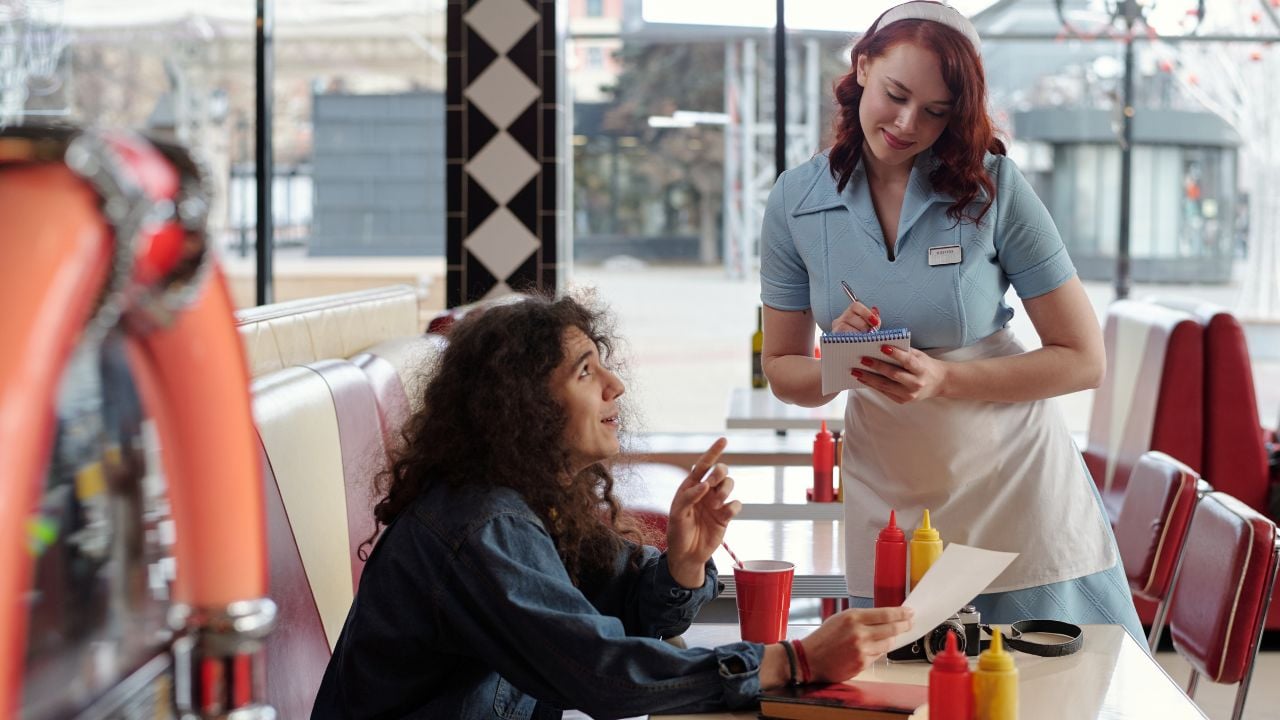
Walk in alone, and there’s an open stool with your name on it, no clipboard, no buzzer.
Sit down.
A chain like Denny’s or IHOP runs parties through a host stand and a table-management system built for turning tables efficiently across hundreds of locations.
That system needs a party of one to wait in line behind a party of six because the software doesn’t know the counter has an open seat.
4. A Greek Family’s Recipes
Pennsylvania diners in the Philadelphia area carry a Greek menu alongside the American one.
Greek immigrant families who arrived after World War II owned several of the region’s diners.
Michael Petrogiannis arrived in Philadelphia from Greece as a teenager looking for restaurant work.
He washed dishes first.
By 1980, he’d landed a job at the newly opened Tiffany Diner, working every job in the place over the next seven years.
Since 2002, he’s bought the Tiffany and Country Club diners himself, then added the Broad Street Diner in 2011.
By 2012, his group had grown to 10 diners across the city.
That’s the kind of history that lands spanakopita, rice pudding, and a Greek salad on many Pennsylvania diner menus, right next to a cheesesteak or a meatloaf platter.
A chain’s menu comes from a test kitchen hundreds of miles from any of its dining rooms.
A recipe like that never goes through a corporate vote.
5. Settling Up Later
A Pennsylvania diner is usually owned by the person standing behind the register.
That ownership comes with room to make a judgment call.
A regular who’s short on cash that morning can still walk out the door, owing nothing but a promise to pay next time.
The owner remembers who’s good for it.
Try that at a chain.
A server there can’t wave off a bill on their say-so.
Every check runs through a point-of-sale system that answers to a franchise office, not to the person holding the coffee pot.
Why a Pennsylvania Server Needs That Tip
Pennsylvania still lets a restaurant pay a tipped server as little as $2.83 an hour in cash wages.
The employer only has to make up the rest if tips don’t bring that hour up to the state’s $7.25 minimum wage.
That math only works for the restaurant if the server earns at least $135 in tips a month.
A generous regular isn’t just a nice gesture at that counter.
6. Comped Coffee Without an App
Dick’s Diner, a Pennsylvania diner in Murrysville, has served breakfast since 1946.
Its newest owner, who bought the diner in 2023, kept the original name and the same menu.
That kind of continuity is common at a Pennsylvania diner.
It’s what lets the person behind the register comp a coffee or knock a charge off a check without asking anyone else’s permission.
There’s no sign-up, no scan, no login.
Nothing needs tracking.
A corporate chain routes that same generosity through a loyalty program instead.
IHOP Rewards tracks every purchase as PanCoins, one of them for every five dollars spent, tied to a phone number or an account.
Rack up enough coins, and a member can trade them for a reward in the app’s Stack Market.
Nobody at the counter gets to skip that math for you.
7. A Factory-Built Dining Car
Many Pennsylvania diners are factory-built dining cars, not a chain’s copy-and-paste design.
Manufacturers including Fodero, Mountain View, and Silk City built them in New Jersey and delivered them to Pennsylvania fully assembled, stainless steel and barrel roofs included.
A chain never ships that.
Some of those dining cars have moved more than once since they arrived, hauled to a new lot when a road shifted or a business changed hands.
A chain repeats a single corporate blueprint at every location, from Erie to Philadelphia to Tulsa.
Psst! How much do you know about tipping and splitting a check? Run the numbers below and see how close your gut math gets.
8. Rice Pudding Made From Scratch That Morning
A Pennsylvania diner’s kitchen turns out the day’s soup or rice pudding from whatever’s fresh, not from a bag that arrived frozen.
Run short on rice pudding by two, and the cook makes more.
It’s as simple as that.
A chain’s kitchen doesn’t have that option because its ingredients arrive through a national supply contract that standardizes exactly what sits in every walk-in cooler.
Denny’s franchisees don’t shop around for a better price on eggs this week.
They buy through the volume agreements their oversight committee already locked in.
Erie’s “Dinor” Spelling
Since 1948, a Pennsylvania diner near Erie has spelled its name a different way.
The Lawrence Park Dinor earned a spot on the National Register of Historic Places on March 18, 2004.
The listing spells the building’s name the same way the sign out front does, “Dinor,” no E.
The spelling shows up on menus and storefronts across the Erie area, a local variant nobody bothered to standardize.
Order a hot dog at a diner there, and a server may ask if you want Greek sauce on it.
Greek sauce is a slow-simmered meat topping that Greek immigrant vendors brought to Erie generations ago.
It’s stuck around ever since.
Try either move at a chain three states away.
Nobody behind that counter will know what you mean.
New York Lunch, open in Erie since 1927, starts a batch of Greek sauce with about 80 pounds of ground meat a few times every week.
The batch simmers low for hours before it’s ready to ladle over a hot dog.
9 Pennsylvania Turnpike Habits That Give Away an Out-of-State Driver
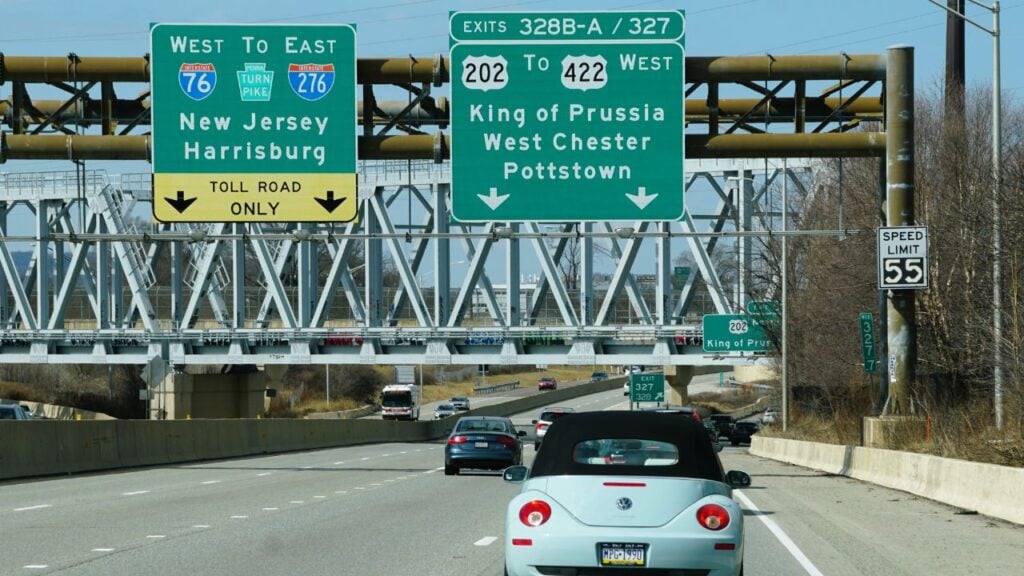
A driver with out-of-state plates eases up to the overhead sign on the Pennsylvania Turnpike and taps the brakes for a booth that isn’t there anymore.
Nobody’s behind them this time, so nothing happens.
9 Pennsylvania Turnpike Habits That Give Away an Out-of-State Driver
9 Pennsylvania Amish Country Stops Locals Recommend
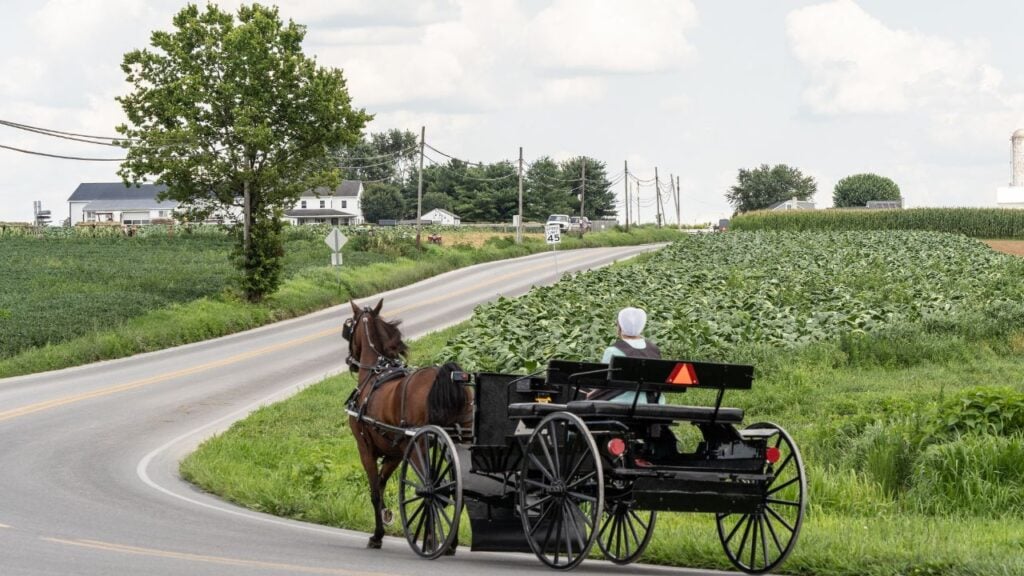
Thousands of horses changed hands last year at a sales barn outside New Holland.
Many of the people filling the bleachers were Amish or Mennonite farmers, not sightseers.
