

14 Things Upstate New Yorkers Are Sick of Explaining to Downstaters

Many downstaters treat upstate New York like one giant suburb of Manhattan.
But it has its own weather, its own food, and a six-million-acre park bigger than five national parks combined.
None of it runs on New York City’s clock.
These are the things upstate New Yorkers are sick of explaining to downstaters.
1. Where Upstate Begins
A coworker from Westchester calls herself “basically upstate,” and a native of Buffalo stares her down.
There’s no line on a map for it.
Geographers at Syracuse University and the University of Nebraska-Omaha put the real divide at the Northern Westchester and Rockland county border, and Gov. Kathy Hochul settled the debate herself by saying upstate starts north of Westchester.
Not Westchester.
Everything below that line is downstate, however many trees line the road.
2. Nobody’s Catching a Subway
Ask an upstate New Yorker how they get to work, and a downstate transplant expects to hear about a train line.
They drive.
Outside Buffalo, no city north of Westchester runs anything close to the subway that carries millions of New York City commuters every day.
Buffalo’s Metro Rail covers one line, and it’s the only rapid rail in the entire region.
Everywhere else, a car is the only way to get groceries, get to work, or get anywhere at all.
3. Snow Picks Sides
Upstate winters don’t hit every town the same way, and that’s the hardest part to explain to anyone who grew up watching one citywide forecast.
Lake-effect snow forms in narrow bands off Lake Ontario and Lake Erie, and a band can bury one town while the next town over stays nearly clear.
The Tug Hill Plateau catches the worst of it.
The hamlet of Hooker holds New York’s all-time record, with 466.9 inches of snow in the winter of 1976-77.
That’s almost 39 feet.
Drive twenty minutes east or west of a snow band, and a driver might not need a shovel at all.
4. Garbage Plate Is a Compliment
Say “garbage plate” to a first-time visitor from downstate, and they brace for something inedible.
It’s the opposite.
Rochester’s signature dish stacks hot dogs or a hamburger over mac salad and home fries, then buries the whole plate in meat sauce, onions, and mustard.
Nick Tahou Hots invented it under a different name back in 1918, and college students coined the current name decades later after ordering “one of those plates with all the garbage on it.”
Order a garbage plate at 2 a.m. after a night out, and Rochester natives will tell a visitor it’s the only thing that works.
5. Wings Never Say Buffalo
Order “buffalo wings” in Buffalo, and the bartender will just ask what sauce a customer wants.
Nobody there calls them that.
They’re wings, full stop, ever since Teressa Bellissimo fried up a late-night batch at the Anchor Bar in 1964 and tossed them in a cayenne butter sauce.
Order by heat level, mild through suicide, and a plate always comes with celery and blue cheese, never ranch.
Ask for ranch, and expect a look.
6. Salt Potatoes Aren’t a Typo
Salt potatoes sound like a menu mistake until someone from Syracuse explains them.
Small, unpeeled potatoes go into a pot of brine so salty it can float an egg, then boil until a thin crust forms outside a fluffy inside.
Irish salt miners invented the dish at the Onondaga salt works in the 1800s, boiling their lunch right in the brine vats they worked over all day.
Butter, never gravy.
Syracuse still serves them everywhere from the state fair to the ballpark, and a downstate friend usually asks why the potatoes taste like the ocean.
7. Spiedies Come on a Skewer
Binghamton’s spiedie isn’t a subway sandwich, whatever autocorrect insists.
It’s cubed meat, usually chicken or pork, marinated overnight and grilled on a skewer, then slid onto a plain slice of Italian bread.
Italian immigrants brought the idea to the Southern Tier in the 1920s, and the name comes from spiedini, the Italian word for skewers.
No bun.
Binghamton’s Spiedie Fest pulls tens of thousands of people into town every summer, and few of them ever have to explain what a spiedie is.
Psst! How much do you know about upstate New York’s history and geography? Take our quiz and see if you can ace it.
Quiz
Upstate New York IQ
Answer these questions on upstate New York’s history and geography. We bet you can’t get them all right. Prove us wrong?
The 1969 Woodstock festival is remembered by a town’s name, but the actual concert grounds sat in which New York town?
8. Riggies Don't Travel Far
Order chicken riggies outside the Mohawk Valley, and most servers will ask a customer to repeat themselves.
It stays close to home.
Utica-area cooks toss rigatoni and chicken in a spicy cream and tomato sauce loaded with hot cherry peppers, a combination nobody can fully credit to one restaurant.
The Chesterfield Restaurant gets much of the claim, putting the dish on its menu in 1989.
Drive an hour in any direction from Utica, and riggies mostly disappear from the menu.
9. Canal Still Moves Boats
"Erie Canal" sounds like a history lesson to most first-time visitors, not something still in daily use.
It's still working.
Lockport's Flight of Five locks lift boats sixty feet over the Niagara Escarpment, a stretch of canal engineering that's carried traffic since the 1820s.
Recreational boaters still lock through it every summer, and whole towns along the route, from Lockport to Rome, grew up around the water traffic.
The canal built upstate before the railroads ever showed up.
10. Park Has Towns Inside It
Tell a downstater that upstate has a park bigger than five national parks combined, and they picture an empty stretch of trees.
It's not empty.
The Adirondack Park covers six million acres, and unlike a national park, real towns, private homes, and working farms sit right inside its boundary alongside the protected forest.
Lake Placid, Old Forge, and Saranac Lake all sit inside the blue line, with their own mayors and school districts.
A visitor expecting a gate and an entrance fee usually just finds a Stewart's.
11. Lake Placid Did It Twice
Lake Placid's population barely tops 2,300, which surprises anyone who assumes an Olympic host has to be a big city.
It's hosted the Winter Games twice, in 1932 and 1980, the only American town to manage it.
No other town has come close.
The 1980 rink where the U.S. hockey team beat the Soviet Union still stands, and it's open to the public most days.
Locals walk past Olympic history on the way to the grocery store.
12. There's Only One City
Say "the city" in Buffalo, Rochester, or Plattsburgh, and everyone knows exactly what a speaker means, and it isn't their own downtown.
It's always New York City.
Upstate New Yorkers 400 miles from Manhattan will still call it "the city," while their own downtown gets its actual name, whether that's Syracuse or Albany.
Tell someone upstate you're headed to "the city" this weekend, and nobody asks which city.
13. Thruway Isn't Free
Downstate drivers expect a free interstate once the city's parkways end, and the tollbooth ahead catches them off guard.
Not upstate.
The New York State Thruway runs nearly 500 miles as a tolled route from Yonkers to the Pennsylvania line, carrying I-90 through Albany, Syracuse, and Buffalo.
E-ZPass or cash, the toll follows a driver the whole way across the state.
Locals just keep a transponder on the windshield and stop noticing it.
14. Closer to Canada Than Coney Island
New York looks small on a map next to Texas or California, and that fools a lot of first-time visitors from the five boroughs.
It isn't small.
Buffalo sits close enough to the border that Toronto is a shorter drive than New York City, and a Buffalo native can cross into Canada faster than a Manhattan commuter clears the Holland Tunnel at rush hour.
The drive from Buffalo to Coney Island runs the length of the entire state.
Ask a Buffalonian for directions to "the city," and they'll tell a visitor it's closer to go the other way, toward Niagara Falls and the border crossing.
9 New York City Habits That Follow Transplants Wherever They Move
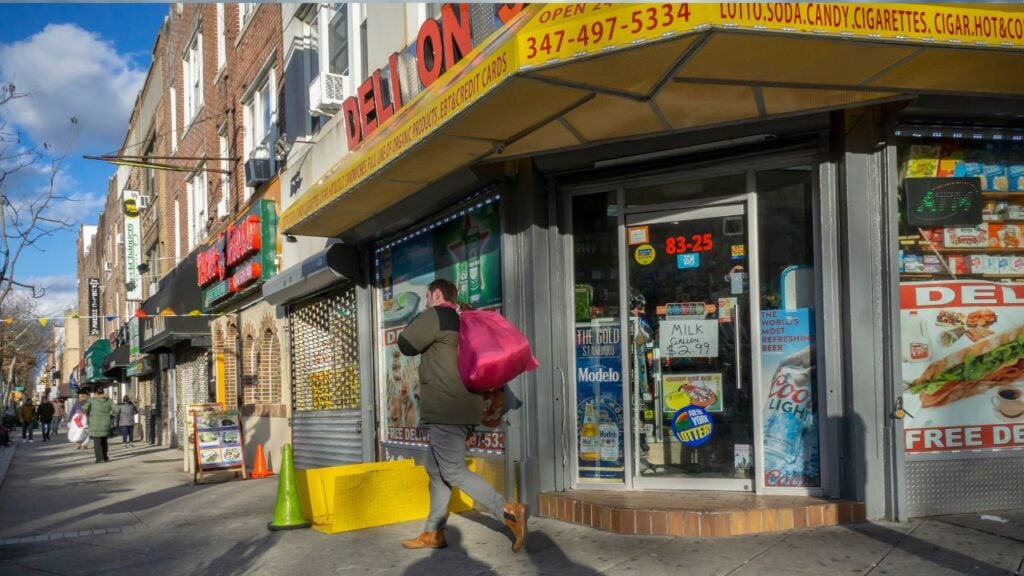
A New York City transplant orders a bagel in Phoenix and asks for it "toasted, scooped, cut in half," and the counter guy just stares.
New York City habits don't stay in New York City, and downstate transplants carry them into every new zip code they land in.
9 New York City Habits That Follow Transplants Wherever They Move
12 Questions About New York City That Make Residents Roll Their Eyes
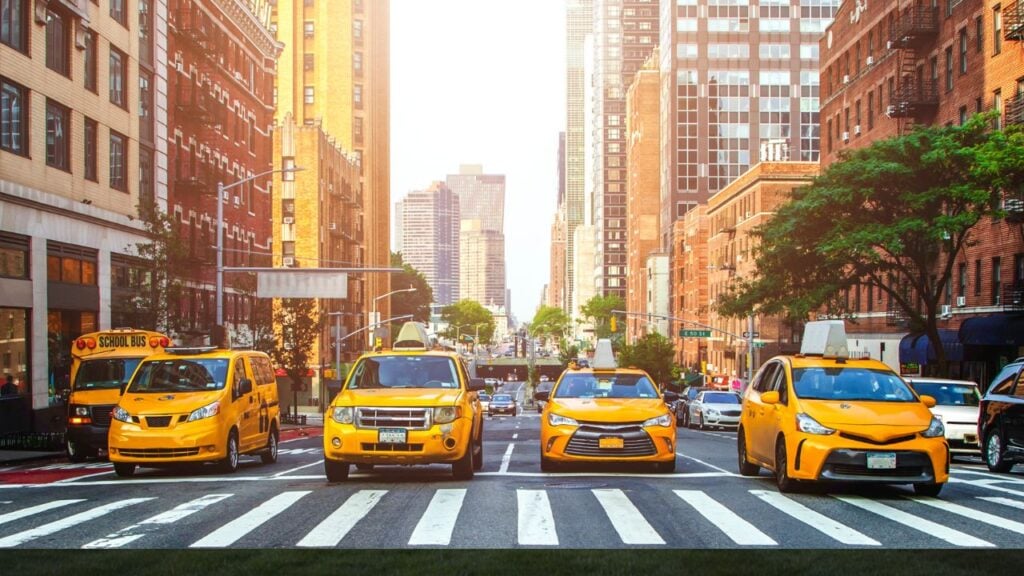
A tourist leans over a Midtown counter and asks the cashier if he knows anyone famous.
He's heard that question every day this week, and it's never once been about upstate.
12 Questions About New York City That Make Residents Roll Their Eyes
