
14 Words Ohioans Use That Out-of-Staters Don’t Understand

Ohio has words visitors never see coming.
Some of them even change from one end of the state to the other.
These are the words Ohioans use that out-of-staters don’t understand.
1. Calling Soda “Pop”
People call a can of soda “pop,” a term that puts the speaker in the Midwest’s dialect camp rather than the “soda” or “coke” camps.
One word, one region.
2. Parking on the Berm
Drivers call the edge of a road the “berm,” not the shoulder, a use dictionaries tie to Ohio, Indiana, Pennsylvania, and West Virginia.
The Ohio Revised Code uses the word too, writing berm or shoulder in its rules for off-highway vehicles.
Elsewhere, a berm is more likely to mean a mound of dirt.
3. Akron’s Devil Strip
People in Akron call the grassy strip between the sidewalk and the street the “devil strip.”
The name once turned up in cities like Buffalo and Toronto, but it stuck mainly in Akron.
The term is so tied to the city that linguist Roger Shuy used it to help police look for a kidnapping suspect from Akron.
An Akron magazine, The Devil Strip, took the name in 2014.
Akron owns this one.
4. Calling It the Tree Lawn
Outside Akron, many people call the same strip of grass the “tree lawn” instead.
Dictionaries date the term to the early 1890s.
Celeste Ng’s novel Little Fires Everywhere, set in Shaker Heights outside Cleveland, has its characters standing on a tree lawn.
Two names, zero agreement.
5. Running the Sweeper
Many people “run the sweeper” instead of vacuuming, a habit a Columbus TV station listed among the state’s signature phrases.
Same machine, different word.
6. Being a Buckeye
A “Buckeye” can mean a resident, an Ohio State fan, or a peanut butter candy shaped like the nut.
All three take the name from the buckeye, which state law made the official state tree.
Three meanings, one word.
7. Dodging a Chuckhole
Many people call a pothole a “chuckhole,” a word dictionaries label as Midland, the dialect band across the middle of the country.
Merriam-Webster traces the word back to 1836.
8. Ordering a Three-Way in Cincinnati
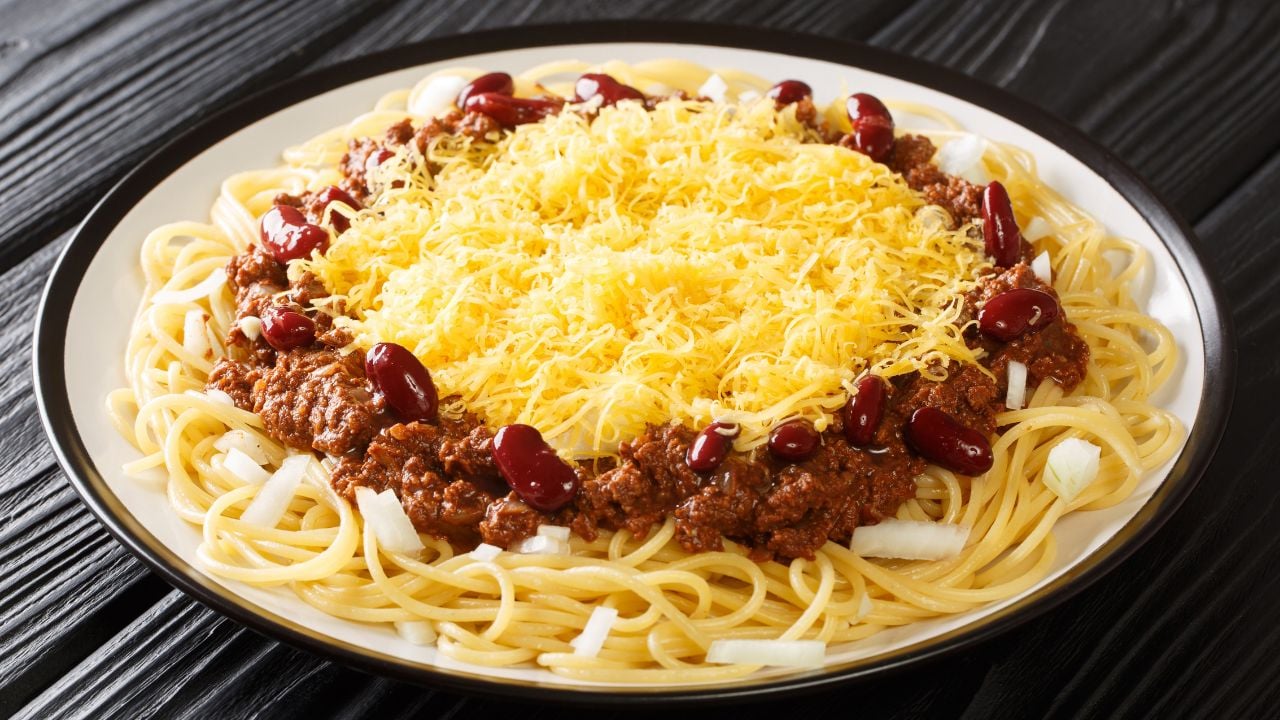
Diners in Cincinnati order chili by number, and a “three-way” means spaghetti topped with chili and shredded cheddar.
A “four-way” adds onions or beans. A “five-way” gets both.
Outside the Cincinnati area, the order makes no sense until the plate shows up.
Numbers, not descriptions.
9. Saying the Laundry Needs Washed
In Columbus, “needs washed” often stands in for “needs to be washed,” as in a laundry pile that needs washed.
Two words shorter, same chore.
Linguist David Durian, who studied the Columbus accent, found residents leaning toward the shorter form over the textbook version.
10. Answering With “Please?”
In Cincinnati, many people answer a question they didn’t catch with “Please?” instead of “Excuse me?”
The hosts of the public radio show A Way with Words trace it to German, where bitte does the same double duty.
The same carryover turns up in other places with German roots, including Wisconsin.
It’s a question, not a request.
11. Redding up the House
Near the Pennsylvania line, some households tell you to “redd up” the kitchen, meaning to tidy it.
The phrase centers on Pittsburgh, with some use spilling into Ohio and other neighboring states.
Where Words Like Redd Up Come From
The phrase “redd up” likely arrived with Scots-Irish settlers, the largest early group of English speakers in southwestern Pennsylvania.
Those settlers came in the late 1600s and 1700s, and many kept moving west along the Ohio River.
A PBS guide to Pittsburgh speech lists nebby, meaning nosy, and slippy among the other words they probably brought.
12. Eating Goetta
In Cincinnati, goetta means a sausage-like mix of meat and oats, served with eggs, on pizza, or even alongside spaghetti.
Glier’s Meats, across the river in Covington, Kentucky, is one company that makes it.
The city held a whole festival for it, Goettafest, as far back as 2002.
13. Ordering a Polish Boy
A Polish Boy is a Cleveland sandwich, not a person.
It stacks a smoked kielbasa in a bun with French fries, coleslaw, and barbecue sauce.
Ideastream Public Media credits the mix to Cleveland’s Black barbecue cooks and Polish neighborhoods, though the exact origin is unclear.
Whitmore’s Bar-B-Q in Warrensville Heights has served the sandwich since at least the 1970s.
Psst! How much do you know about the Buckeye State? Take our quiz and find out.
Quiz
Ohio IQ
See how much you know about the Buckeye State beyond the words. Take the challenge?
Ohio’s state flag has a shape no other U.S. state flag uses. What shape is it?
14. Running to the Pony Keg
In Cincinnati, a "pony keg" is a store you drive right into, where you point to a six-pack and someone sets it in your trunk.
Cincinnati Magazine was already writing about the stores in 1976.
Everywhere else, a pony keg is a small keg of beer.
The same magazine says nobody has pinned down where the store name came from.
9 Things That Change the Second You Cross From Ohio Into Kentucky
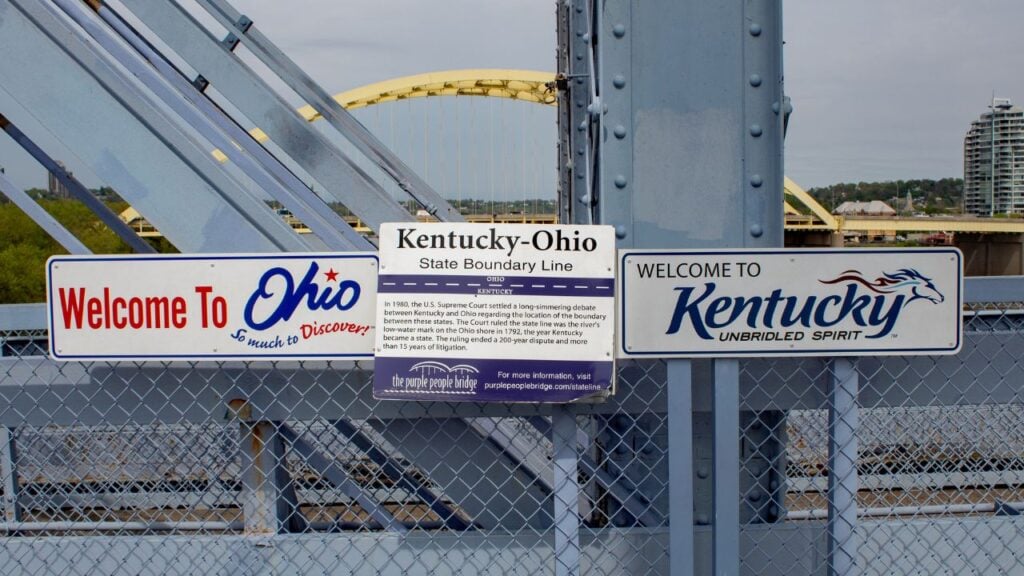
Drive across the Roebling Suspension Bridge from Cincinnati, Ohio, and Covington, Kentucky appears on the other side.
Nothing about the crossing looks unusual, but the tax on the receipt and the price at the pump both change before the bridge even ends.
9 Things That Change the Second You Cross From Ohio Into Kentucky
7 Ohio County Fair Foods Locals Chase Down After the Fair Packs Up
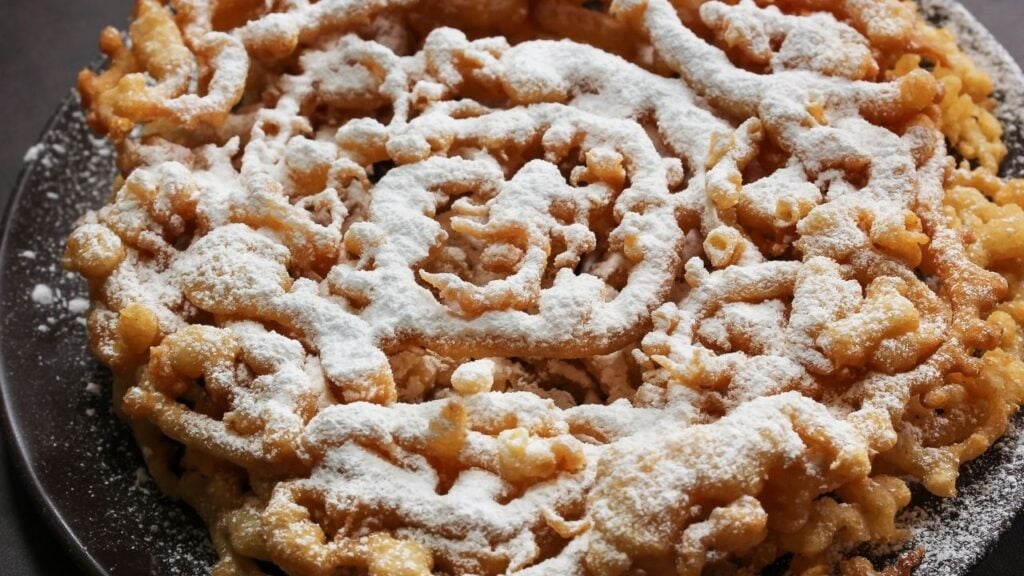
The Canfield Fair pulled down its midway in Mahoning County on Labor Day, closing out its 180th year as Ohio's largest county fair.
By the next morning, some of its best-known food trailers were already hitched up for a different county's fairgrounds.
7 Ohio County Fair Foods Locals Chase Down After the Fair Packs Up
