
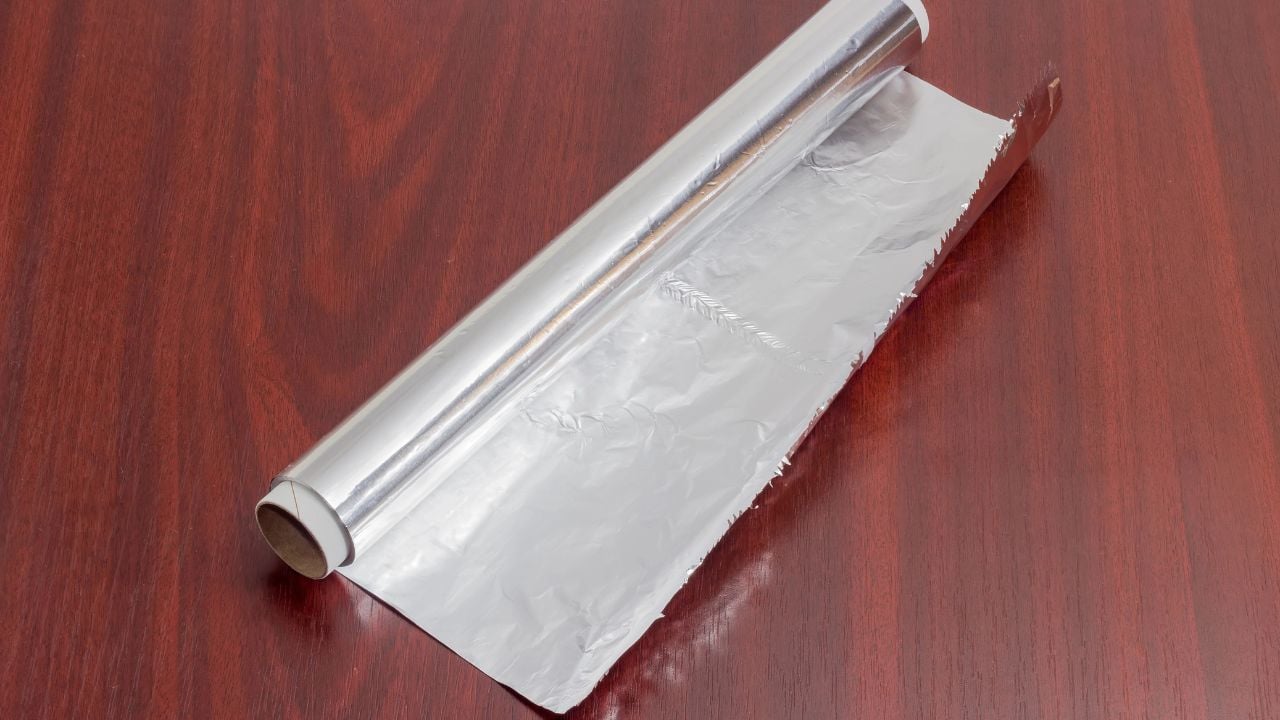
15 Aluminum Foil Tricks Pennsylvanians Are Sleeping On

Aluminum foil is the duct tape of the kitchen. It’s cheap, it’s everywhere, and it can do dozens of things nobody bothers to tell you about.
While you’ve been using it to wrap up leftover meatloaf, your neighbor has been using it to sharpen their scissors and stop her cat from jumping on the counter.
Most of these aluminum foil tricks fall into the category of “Wait, that actually works?” Here’s what Pennsylvanians never knew aluminum foil could do.
Sharpen Your Scissors
If your scissors have gone dull, fold a sheet of foil into quarters so you’ve got four layers, then cut through it seven or eight times with the dull pair.
The edges of the foil hone the blades just enough to bring them back to life.
This works on regular kitchen scissors, fabric scissors, and even those tiny ones you can never find when you need them.
It won’t fix scissors that are seriously damaged or rusted. But for the everyday “why won’t these cut anything” problem, it’s a 30-second fix.
The same trick works on garden shears, too, though you’ll want a thicker stack of foil for those.
Scrub Stuck-On Food
Stop buying steel wool.
Crumple a sheet of foil into a fist-sized ball, add a little soap and water, and scrub away at whatever is welded to your pan.
Foil balls work great on stainless steel, cast iron, glass, and aluminum cookware.
They handle baked-on cheese, burnt sauce, and grill grates without breaking a sweat.
Just make sure to keep them far away from nonstick pans, because foil will scratch the coating right off.
You can also rinse and reuse the same foil ball multiple times, which makes it cheaper than basically every scrubber on the market.
Iron Clothes Twice as Fast
Pull back your ironing board cover, lay a sheet of foil across the board, and put the cover back on.
Now, when you iron, the heat that normally gets absorbed into the board bounces back up through the fabric, ironing both sides at once.
This trick has been floating around since the 1950s, and it actually works.
You’ll cut your ironing time in half, which matters if you’re doing a stack of dress shirts or a tablecloth.
The foil stays in place under the cover for months. Just swap it out when it gets too crumpled to lay flat.
Soften Hard Brown Sugar
You go to bake cookies, open the bag of brown sugar, and find a brick.
Don’t throw it out.
Wrap a chunk of the sugar tightly in foil and put it in a 300-degree oven for five minutes. It comes out soft again.
The foil traps the small amount of moisture left in the sugar and forces it back into the crystals.
The same trick works for hardened cookies, dried-out marshmallows, and stale graham crackers.
If you don’t want to fire up the oven, you can also throw a slice of fresh bread or an apple wedge into the bag and let the sugar absorb the moisture overnight.
But the foil method is faster.
Move Heavy Furniture
Tip your couch or dresser back and slide a square of foil under each leg, dull side down.
The dull side is actually slipperier than the shiny side, and the foil glides across carpet like it’s been waxed.
This trick works on hardwood floors too, but it really shines on carpet, which is where furniture usually gets stuck.
You can move a loaded bookshelf across a room without scratching anything or pulling a muscle.
For really heavy stuff, double up the foil so it doesn’t tear under the weight.
Keep Celery Fresh for Weeks
Celery has one job, which is to be crispy.
And celery in plastic wrap turns into a wet, floppy disaster within a week.
The fix is foil. As soon as you get celery home from the grocery store, take it out of the plastic and wrap it tightly in aluminum foil.
The foil lets the natural ethylene gas escape while keeping the celery crisp.
Wrapped this way, celery can last two to three times longer than it does in a plastic bag.
Bonus: the same trick works on broccoli, lettuce, and most leafy greens.
Boost Your Wi-Fi Signal
If your Wi-Fi reaches everywhere except the one room where you actually want it, foil can help.
Cut a piece of foil into a curved shape, prop it up behind the router pointing toward your dead zone, and the foil reflects the signal exactly the way a flashlight reflector aims a beam.
Popular Science tested this, and it works.
Researchers found a noticeable boost in signal strength on the side of the router facing the foil, with a corresponding drop on the other side.
It’s not going to replace a Wi-Fi extender.
But if you’ve got a router shoved in a corner and a weak signal in the bedroom, ten cents of foil might do the trick.
Block Your Key Fob From Hackers
Modern car thieves don’t break windows anymore. They use signal amplifiers that can pick up the signal from your key fob inside your house and trick your car into thinking the fob is right outside the door.
Then they just open the car and drive off.
Wrapping your key fob in two layers of aluminum foil blocks the signal. Your fob goes silent, and the amplifier has nothing to grab.
You can also keep the foil-wrapped fob in a metal tin or buy a Faraday pouch, but the foil method costs nothing.
This is one of those hacks that sounds paranoid until you realize relay attacks are a real thing that happens in suburban driveways every night.
Cut Down on Dryer Static
Crumple two or three sheets of foil into tight balls about the size of a tennis ball, then toss them in the dryer with your wet clothes.
As the clothes tumble, the foil absorbs the static electricity that makes everything cling together.
Results vary on this one.
Some people swear it eliminates static completely. Others find it works a little better than nothing.
The foil balls also reduce wrinkles by keeping clothes from clumping together, which means less ironing.
Each ball lasts about six months before it gets too compressed to be useful. The big upside?
No chemical-laden dryer sheets, and a single roll of foil replaces about $20 worth of fabric softener.
Polish Silverware Without Scrubbing
If you’ve got real silver that’s gone dark, this trick is magic.
Line a glass pan with foil, shiny side up. Add silverware. Cover with boiling water mixed with a tablespoon of baking soda and a teaspoon of salt.
Let it sit for five minutes.
What happens next looks like a chemistry experiment.
The tarnish transfers from the silver to the foil through a reaction called ion exchange. You pull out silverware that’s as clean as the day you bought it, no scrubbing required.
The foil comes out looking gross, which is the whole point.
This works on silver flatware, jewelry, and serving pieces.
Don’t try it on silver-plated items with a lot of decorative detail, because the chemistry can be a little harsh on those.
Save Your Pie Crust Edges
If you’ve ever pulled a pie out of the oven only to find the edges of the crust burned black while the middle was still pale, you need foil shields.
Take a strip of foil about two inches wide and crimp it loosely around just the outer edge of the crust before baking.
You can put the shield on for the whole bake, or add it halfway through once the edges start browning.
Either way, the crust comes out evenly golden instead of having a charred ring around a soggy center.
You can also buy specialty pie shields for $10 at any kitchen store, but they only fit one size of pie pan. Foil fits anything.
Stop Paint From Drying Out in the Can
Anyone who has opened a half-used can of paint knows the misery: a thick skin of dried paint sitting on top, with chunks that fall into the good paint when you try to remove it.
Here’s how to prevent it: Before you put the lid back on a half-used can, trace the inside of the can on a piece of foil and cut out a circle.
Drop the foil disc onto the surface of the paint. Then take a deep breath and blow into the can before quickly sealing the lid.
The foil keeps a barrier between the paint and the air, and the carbon dioxide in your breath replaces some of the oxygen that would cause the paint to oxidize.
When you open the can next time, peel off the foil, and the paint underneath is fresh.
Protect Doorknobs When You’re Painting
Painting a door is easy. Painting around a doorknob is the worst.
Tape never sticks right, and you end up with white smudges all over the brass.
Wrap the doorknob in foil instead. Press it tight against the shape of the knob, then carefully run a utility knife around the base where the knob meets the door to trim off the extra foil.
Now you can paint right up to the edge with zero worry.
The foil pulls off cleanly when the paint is dry, and the doorknob underneath is exactly the way you left it.
The same trick works for hinges, handles, and anything else you don’t want to mask off with painter’s tape.
Stop Cats From Counter-Surfing
Many cats hate aluminum foil.
They hate the sound it makes when they walk on it, they hate the feel of it under their paws, and they hate the way it crinkles when they try to settle in for a nap.
If you’ve got a cat that keeps jumping on the kitchen counter, the dining room table, or the back of the couch, lay strips of foil across the surface for a week or two.
After a few crinkly landings, most cats will just stop trying.
After the cat has given up, you can take the foil down. The lesson tends to stick.
Reflect Heat From Your Radiator
If you’ve got an old radiator on an exterior wall, you’re basically heating the outside of your house. The wall absorbs a chunk of the heat and lets it leak through to the cold outdoors.
The fix is a sheet of heavy-duty foil taped to the wall behind the radiator, shiny side facing into the room.
The foil bounces the heat back into the room instead of letting it escape through the wall.
You’ll feel the difference within about a day, and your heating bill will feel it within a month.
Old British houses have used this trick for decades, and it’s making its way back as energy bills go up.
You can buy fancy radiator reflector panels at the hardware store for $20, or you can do the same job with foil from the dollar store.
A Dollar Store Tool With Endless Uses
The thing about aluminum foil is that it’s been hiding in plain sight in every American kitchen for nearly 80 years, and most of us only know it as a leftover wrap.
The same roll that covers your Thanksgiving turkey could be cleaning your silver, blocking car thieves, training your cat, and dropping your heating bill.
You don’t have to use all 15 of these tricks. You probably don’t even have to use ten.
But the next time you reach for that little box in the drawer, remember that you’re holding one of the most underrated tools in the house.
And if all else fails, it still wraps a great leftover meatloaf.
17 Life Hacks That Are Harder Than the Non-Hack

Life hacks are supposed to make your life easier, and sometimes they really do. However, the internet is rife with hacks that aren’t actually effective.
17 Life Hacks That Are Harder Than the Non-Hack
24 Items That Have Alarmingly High Levels of Microplastics
You can’t see, smell, or taste microplastics. But research reveals they’re showing up in our everyday lives.
Here are 24 common items where microplastics hide and why you need to pay attention.
