
18 Things Floridians Could Do With a Payphone Before Smartphones Took Over

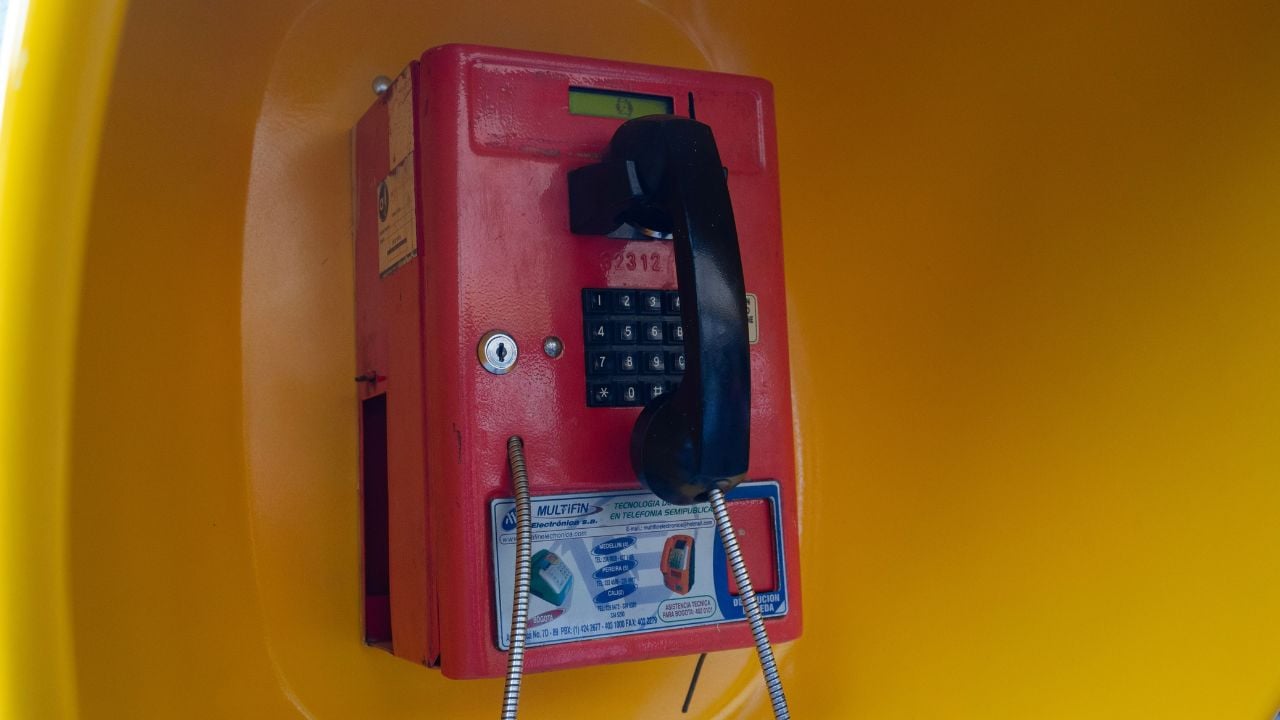
Long before iPhones and Wi-Fi, the payphone could seemingly do it all.
It connected people, shared news, started drama, and sometimes saved the day. You never needed an upgrade; just a quarter and the courage to talk in public.
Here are the things Floridians managed to pull off with a payphone, back when calling collect was the closest thing to unlimited minutes.
Call Collect and Lie About It
Calling collect was a survival skill. You’d dial zero, say your name when prompted, and squeeze in your entire message before the operator could connect.
“Mom, pickmeupatseven” became a full sentence.
Parents knew the drill. They’d decline the charges but still show up on time.
It was the original free text message, complete with bad audio quality and zero emojis.
If you never had to explain to a confused operator that your name wasn’t actually “ComeGetMeNow,” you missed out on a golden era of communication chaos.
Memorize Numbers Like a Genius
Before contact lists, people carried phone numbers in their heads. You didn’t need notes, just a little repetition and fear of being stranded.
Friends’ houses, your crush’s landline, and your grandma’s number were all filed away in your mental Rolodex.
You’d walk to the nearest payphone and punch in seven digits with confidence.
Now, most of us barely know our own numbers without checking our phones.
Check the Coin Return for “Bonus Quarters”
There was a universal truth about payphones: sometimes, if luck was on your side, there’d be a forgotten quarter in the return slot.
Kids treated it like winning the lottery. Adults pretended not to look but checked anyway.
People developed entire techniques, like brushing a hand over the slot or pretending to tie a shoe. Finding twenty-five cents was enough to buy another call or a soda from a nearby vending machine.
It was low-stakes treasure hunting that made you feel like a genius for spotting spare change.
Call Time and Weather Just Because
If you were bored or early, you’d call the time and weather line.
The robotic voice would calmly announce, “At the tone, the time will be 3:27 and 20 seconds,” like you were living in the future.
It was weirdly satisfying, like checking a clock just to make sure the universe still worked. The weather report felt cutting-edge, even if you could literally look outside.
Before apps, this was how you checked the forecast. It was free and accurate enough.
Make Prank Calls
Every generation thinks they invented prank calls, but the payphone era perfected them.
You’d gather with friends, feed in a quarter, and deliver comedy gold like, “Is your refrigerator running?”
Caller ID didn’t exist yet, so anonymity was guaranteed until someone’s parent got involved.
It was a simpler time when mischief required creativity, not a burner account.
Prank calling was the original social media: chaotic, hilarious, and always ended with someone yelling, “Hang up, they’ll trace it.”
Call the Operator Like a VIP
If you didn’t know how to make a call, you just dialed zero and asked for help.
The operator could connect you, reverse the charges, or even help find a number. They were the Google search bar of the 20th century.
Sometimes they were friendly, sometimes they sounded like they’d been working since the Eisenhower administration.
Either way, everyone treated them with a mix of awe and fear.
Getting an operator to do something for free felt like hacking the Matrix, only the Matrix had a perm and a rotary headset.
Coordinate Meetups Like a Spy
Before texting, “I’m here” required actual logistics.
You’d call from the payphone outside the mall, give a vague description of your outfit, and then wait by the planter near JCPenney until someone found you.
Friends who were late couldn’t just send a quick text. You either waited or assumed they’d died in traffic.
It was stressful, but it made every successful meetup feel like a victory.
Today’s AirTags have nothing on the thrill of trusting your timing and intuition.
Call Your Answering Machine from the Road
In the 1980s and 1990s, checking messages meant calling your own house and punching in a secret code.
You’d stand at a payphone in the rain, hoping no one nearby could hear your crush’s voicemail.
Half the time, you’d get your mom instead, who’d say, “You’re wasting money, come home.”
It’s wild to think we once needed an entire machine just to hear someone say, “Call me back.”
Use Calling Cards Like Credit for Communication
Long-distance calls were expensive, so phone companies invented prepaid calling cards.
You’d scratch off a metallic strip to reveal your secret access number, dial seventeen digits, and then finally reach your cousin in another state.
The cards were sold everywhere: gas stations, grocery stores, and 7-Elevens. People carried them in wallets like VIP passes.
Today, using one would feel like spending an unreasonable amount of time just to say hello.
Call a Radio Station to Request a Song
Every teenager with a crush called the local radio station to dedicate a song. You’d wait on hold forever, then nervously say, “This one’s for Jamie in tenth grade.”
The DJ would laugh, play the song an hour later, and you’d sit there hoping Jamie was listening.
It was low-tech romance at its finest.
No DMs, no filters. Just static, nerves, and a power ballad.
Report Car Trouble
If your car broke down, the payphone was your lifeline. You’d hike to the nearest booth, look up the number for AAA in a grimy phone book, and hope your coins didn’t run out mid-call.
This was before roadside apps, before GPS, and before “share location.”
You just described landmarks like, “I’m near a Shell station and a billboard for Dr Pepper.”
Miraculously, help usually found you… eventually.
Use It as a Weather Shelter
If you were caught in a downpour, a payphone booth was the closest thing to shelter.
You’d cram inside, slam the door, and watch the rain streak down the glass like a dramatic movie montage.
It wasn’t perfect; you’d still get wet, and it smelled faintly like wet carpet. But for a few minutes, it was your fortress.
Every romantic comedy from the 1980s owes at least one scene to this moment of soggy cinematic drama.
Get Directions the Old-Fashioned Way
Lost travelers didn’t have GPS. They had payphones.
You’d call a friend or gas station attendant and frantically ask, “How do I get to Route 6 from here?”
If you were lucky, someone picked up. If not, you used the attached phone book, which was somehow always missing the page you needed.
Getting lost was practically part of the adventure, and when you finally arrived, you acted like you’d survived the Oregon Trail.
Make “Emergency” Calls to Friends at Work
Before texting “I’m outside,” people called their friends’ offices from payphones.
You’d tell the receptionist, “It’s urgent,” just to avoid waiting in the parking lot.
Somehow, no one ever questioned it. The system ran on pure trust and mild chaos.
It was peak analog drama, especially when your friend picked up and said, “What’s wrong?” and you replied, “Nothing. I’m just bored.”
Listen for Coin Drops Like a Slot Machine
The sound of coins hitting the metal return was one of the most satisfying noises ever.
Each clink meant progress, power, and the sweet confirmation that your quarter hadn’t jammed.
People got so good at timing it, they could tell by sound alone whether a coin was accepted. Payphones were part communication tool, part slot machine for optimists.
Every call started with a gamble and ended with hope that your change came back.
Check Voicemail from Work or School
If you were waiting for big news, like a job offer or a date callback, you’d sneak out during lunch, find a payphone, and check your home messages.
There was suspense in every dial tone.
Would you hear good news? A telemarketer? Your mom reminding you about dentist appointments?
You couldn’t predict it, but that tiny moment of connection felt huge.
Tell a Stranger They Could Go First
There was an unspoken code of courtesy. If someone looked desperate, you offered to let them go first. Maybe their ride was late or their kid was sick.
The payphone queue was short but sacred.
People waited patiently. They nodded, shared change, and even offered advice on long-distance rates.
It was civilization in miniature, all happening next to a Coke machine.
Leave Graffiti Messages for the World
Payphones were public bulletin boards.
You’d find phone numbers scribbled in Sharpie, jokes, bad poetry, or mysterious messages like “For a good time, call…”
Teenagers wrote song lyrics. Tourists wrote names and dates.
Somewhere out there, a half-erased phone number from 1993 still tells a story no one remembers.
Weirdest Laws in Each State

Most Americans are clear on treating thy neighbor as they’d want to be treated to reduce the chance of fines and jail time. But did you know you could be breaking the law by carrying an ice cream cone in your pocket?
These are the weirdest laws in each state, most of which courts (thankfully!) no longer enforce.
Weirdest Laws in Each State That’ll Make You Chuckle
17 Life Hacks That Are Harder Than the Non-Hack

Life hacks are supposed to make your life easier, and sometimes they really do. However, the internet is rife with hacks that aren’t actually effective.
17 Life Hacks That Are Harder Than the Non-Hack
Think You Belong in a Different Decade?
From big bands to big hair, our playful Decade DNA Quiz reveals which classic American era fits your personality best. It’s fast, fun, and full of vintage flair.
Meet Your Match. Discover Your Decade DNA. (Your Vintage Roots Are Showing)

