

19 Phrases Georgia Baby Boomers Still Say Even When Gen Z Rolls Their Eyes

University of Georgia and Georgia Tech linguists combed through archived and new recordings of Georgia natives, and they found the state’s classic accent didn’t fade out gradually.
It changed hard, right between baby boomers and the generation that came after them.
These are the phrases Georgia baby boomers still say even when Gen Z rolls their eyes.
1. “Fixin’ To”
Baby boomers say “fixin’ to” before mowing the yard or running to the store, sometimes a good while before either one happens.
“Fixin’ to” means getting ready to do something, not doing it this minute.
It’s not a promise of speed.
It never is.
Families have kept saying it for generations, and today’s boomers picked it up the same way their parents did.
A Gen Z coworker still hears it and checks the clock, waiting on an action that might land in five minutes or two hours.
2. “Might Could”
Boomers pair “might” and “could” in the same sentence without blinking, stacking two modals that standard English keeps apart.
Linguists call it a double modal, and the construction has been documented across the Southern US for decades.
It sounds unfamiliar to anyone who grew up outside that pattern.
It isn’t broken.
The two words work together to mean something like “might be able to,” a shading boomers have used for generations.
A Gen Z coworker rereads a text twice, convinced one of the two words has to be a typo.
3. “I Don’t Care To”
Ask a boomer for a favor, and “I don’t care to” is a yes, not a no.
The phrase means “I don’t mind,” a flip from what it sounds like to anyone raised outside the South.
It trips up newcomers.
A public radio language show has fielded a call about this exact mix-up, from a listener whose newcomer friend took the phrase as a refusal.
A Gen Z coworker waits for a decline and gets the favor done anyway, no further reply needed.
4. Calling the Fridge an “Icebox”
Many boomers still call the refrigerator an “icebox,” well after actual ice disappeared from the process.
Ice never touches it.
A public radio show about word origins pegged the term as a generational habit more than a regional one, and a word that is fading fast.
It’s just the same appliance, humming in the same kitchen corner, under an older name.
A Gen Z relative pictures a literal box of ice and opens the freezer looking for it.
5. “Poke,” Not Bag
A grocery sack turns into a “poke” the moment a boomer picks it up at the register.
Merriam-Webster labels this sense of “poke,” meaning a bag or sack, chiefly Southern US and Midland US.
Nothing gets jabbed.
It’s the same sack either way, poke or bag.
A Gen Z cashier asks what a poke even means, and the boomer just points at the bag already in her hand.
6. “Carry” Someone Somewhere
A boomer offers to “carry” a neighbor to church, and nobody’s getting picked up and hoisted anywhere.
“Carry” means give a ride, drive, or take someone along.
Nobody’s lifting anybody.
It just means the car’s involved.
A Gen Z coworker still glances at the boomer’s arms, half-expecting an actual lift.
7. Asking for an “Ink Pen”
Boomers hand over an “ink pen” when someone asks to borrow a pen, and they mean the extra word as a specification, not a flourish.
The extra word exists because Southern speech runs “pin” and “pen” together into nearly the same sound.
Linguists call it a documented merger, and they’ve tracked it spreading north and west from its base in the South.
Without the fix, “pen” and “pin” sound identical.
So people added a word.
A Gen Z coworker hands over the nearest pen and gets asked, gently, if it’s the ink kind.
8. “The Devil’s Beating His Wife”
Boomers still use the phrase “the devil’s beating his wife” for rain that falls with the sun still shining.
The saying describes a sunshower, and families have kept repeating it for generations even though nobody agrees on where it started.
Nobody explains it.
They just say it and keep walking.
A Gen Z listener usually asks what a marriage has to do with the weather, and there’s no good answer waiting for them.
9. “High Cotton”
Boomers describe a good stretch of luck as being “in high cotton,” a phrase straight out of the South’s old cotton fields.
It simply means doing well.
By one common explanation, tall cotton plants meant a better crop for the farmers working the rows.
A new job, a paid-off truck, a good year, all of it counts as high cotton.
A Gen Z coworker who has never seen a cotton field still hears it and asks what a crop has to do with a good year.
Psst! How much do you know about Georgia’s history and geography? Take our quiz and see how many you can get right.
Quiz
Georgia IQ
Answer nine questions on Georgia’s history, geography, and landmarks. We bet you can’t get them all right. Prove us wrong?
Stone Mountain, just outside Atlanta, holds a record for being the world’s largest what?
10. "Conniption Fit"
Boomers warn that somebody's about to "throw a conniption fit" long before anybody raises their voice.
It's not a medical diagnosis.
It's simply a fit, the kind every family recognizes.
A conniption fit is a burst of temper or panic, and Merriam-Webster dates the word back to 1833.
A Gen Z niece hears "conniption" and pictures a medical emergency, not her uncle just mad about traffic.
11. "Toboggan," Not Sled
A knit winter cap turns into a "toboggan" the moment a boomer pulls one over her ears.
Merriam-Webster labels this sense of "toboggan," a stocking cap, chiefly Southern US and Midland US, the same label it gives "poke."
It isn't a sled.
The long wooden sled shares that same name too, and boomers know exactly which item they mean from context alone.
A boomer tells a Gen Z coworker to grab a toboggan before a cold snap, and the coworker looks around for something to ride down a hill.
12. "Mash" the Button
Boomers "mash" the elevator button, the garage door opener, and the TV remote instead of pressing any of them.
"Mash" means push or press, even though the word sounds like something done to potatoes.
Nothing gets smashed.
It doesn't break, either.
The boomer just presses it, same as anyone.
A Gen Z coworker watches a boomer "mash" the crosswalk button and asks if it survived the hit.
13. "Ill," Not Sick
Call a boomer's mood "ill," and they'll know you mean cranky, not coming down with something.
An Appalachian speech archive records "ill" meaning sharp-tempered in Southern mountain speech as far back as 1860.
No fever comes with it.
A doctor's visit would be wasted on it.
It's just a short temper on a long day, the kind every family has a name for.
A Gen Z relative still asks if grandma's contagious.
14. "I Reckon So"
Boomers reach for "I reckon so" instead of a plain yes more often than newcomers expect.
"Reckon" means think, guess, or suppose, and boomers have carried that folksy, unhurried word for generations.
It doesn't mean maybe.
It's just a slower way of saying yes.
A Gen Z listener hears hesitation where a boomer means simple agreement.
15. "Tote" That Bag
Boomers "tote" a bag of groceries, a pocketbook, or a sack of feed corn instead of carrying it.
Merriam-Webster dates "tote" to 1677 and traces it, probably, to an English-based creole akin to the Gullah word "tot."
The job stays the same.
Only the word changes.
A "tote bag" gets its name from the exact word boomers use every day without thinking about it.
A Gen Z shopper reaches for the plain word "bag" and never once reaches for "tote."
16. "Over Yonder"
Ask a boomer where something is, and "over yonder" might be the entire answer.
"Yonder" points at a spot in the distance, past arm's reach but too vague for a proper address.
It's somewhere out there, roughly.
It isn't right next door.
A whole county away isn't out of the question, either.
A Gen Z listener wants a mile marker, and a boomer just points.
17. "Directly" Means Soon
Boomers use "directly" to mean soon or shortly, not immediately the way it sounds to everyone else.
Tell a boomer you need something directly, and the task still waits its turn in line.
It doesn't mean right now.
It just means sometime before too long.
A Gen Z employee expects action within the minute and stands there waiting while the boomer finishes a whole other task first.
18. "Frog Strangler"
A sudden downpour earns the name "frog strangler" from a boomer, and the description does the explaining.
A public radio show about word origins filed the term and its cousin "toad strangler" among heavy-rain words that run very Southern.
Both describe rain heavy enough to raise water in a ditch or a marsh.
There's nothing mild about it.
The rain comes down hard and fast, and then it quits.
A Gen Z coworker just calls it pouring and gets a funny look back for leaving the frogs out of it.
19. "Awful Good"
A boomer might call a peach cobbler "awful good," meaning it's excellent, not troubling.
"Awful" works there the way "very" would, as an intensifier instead of a warning.
It's high praise, in other words.
It's not a complaint.
A Gen Z visitor braces for bad news and gets a second helping instead.
How Merriam-Webster Labels These Phrases
Merriam-Webster sorts several of these boomer phrases by how widely they travel.
Its entries mark "carry" in the sense of escort, and "reckon" in the sense of suppose, as chiefly dialectal.
The "very" sense of "awful" gets a different tag, chiefly US and informal, with no region attached.
The "shortly" sense of "directly" carries no label at all, so the dictionary treats it as standard English.
The Accent Behind the Words
Linguist Margaret Renwick led the University of Georgia and Georgia Tech team that pinned the accent break to the baby boomers.
It happened in one generation.
The sharpest break fell between boomers, born 1943 to 1964, and Gen X speakers, born 1965 to 1982.
Older speakers said "prize" closer to "prahz" and "face" closer to "fuh-eece."
Younger speakers now shift those same vowels toward "prah-eez" and "fayce," matching general American speech more closely.
The team worked from recordings of white Georgia speakers born from the late 1800s through the early 2000s.
7 Rules That Decide What Georgians Can Do About a Neighbor's Camera Pointed at Their Yard
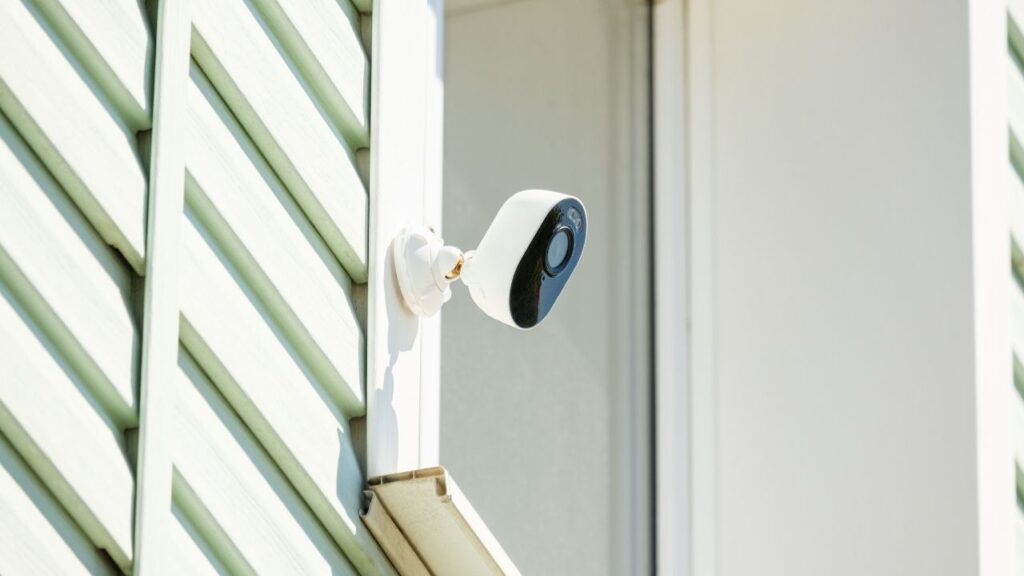
A neighbor's security camera pointed at the wrong patch of a Georgia backyard can turn into more than an awkward conversation.
State law treats it as a felony, and the penalty can run as high as five years behind bars.
7 Rules That Decide What Georgians Can Do About a Neighbor's Camera Pointed at Their Yard
8 North Georgia Mountain Trips Visitors Plan Wrong Every Fall
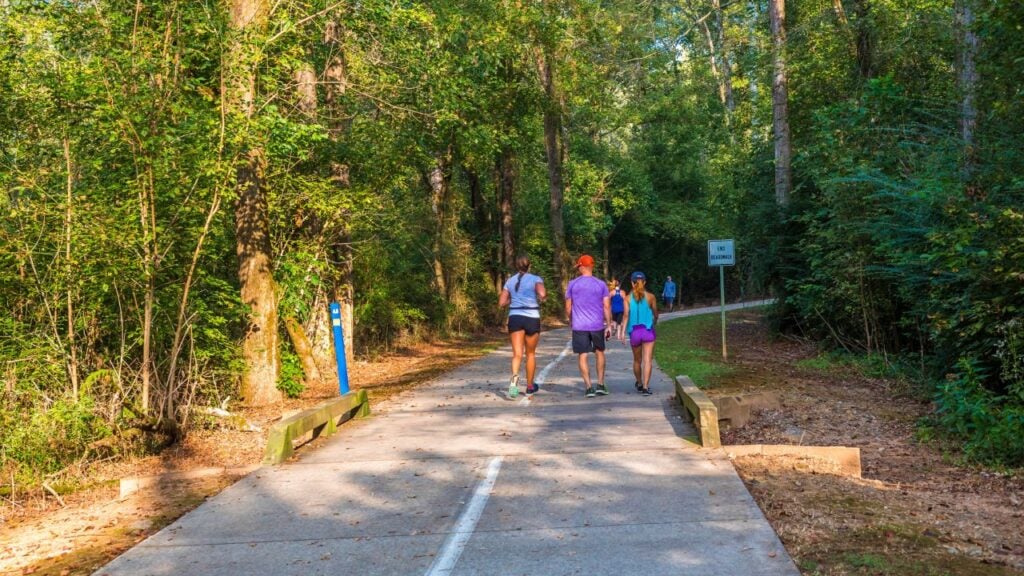
Every car parked at one of north Georgia's mountain parks this fall needs a ParkPass, and skipping it costs more than a scenic overlook is worth.
The pass runs $10 a day or $70 for the year, before a single hiking boot hits the trail.
8 North Georgia Mountain Trips Visitors Plan Wrong Every Fall
