
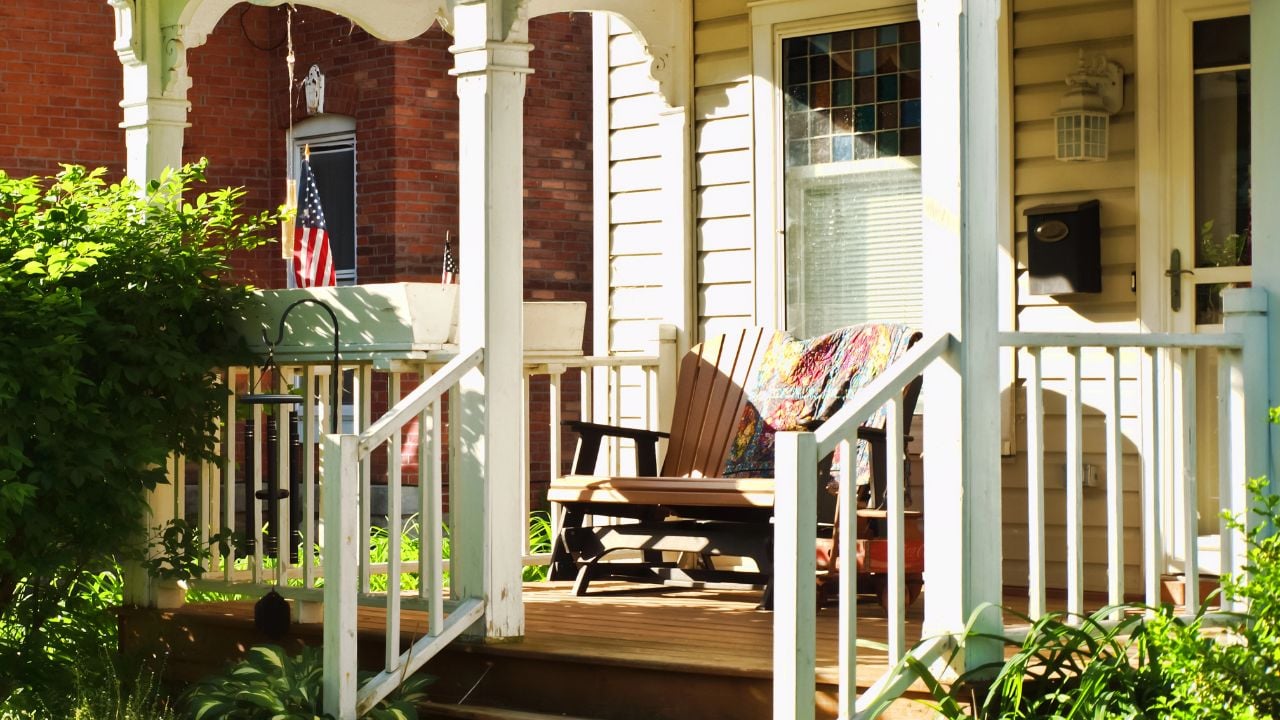
19 Ways America’s Front Porches Changed Over the Last 100 Years. Georgia Nostalgia Incoming!

America’s front porches were once the heart of the home.
Georgia residents sat for hours swapping stories, waving at neighbors, and watching the world go by.
Even as homes and lifestyles evolved, the porch remained a quiet symbol of comfort and connection. Here’s how porches in the U.S. have changed over the last 100 years.
Porches Used to Be the Primary Social Space
In the early 1900s, front porches were where neighbors gathered, kids played, and adults cooled off after dinner.
Without air conditioning or TV, people spent their evenings outdoors, chatting across yards or simply watching passersby.
The porch wasn’t just decoration, it was the living room with a breeze.
Over time, as indoor entertainment grew and backyard patios gained popularity, the porch’s role as a social hub began to fade.
Porch Size and Style Have Shifted with Each Decade
Older homes often featured wide, deep porches with plenty of room for rocking chairs and even swing beds. These were meant to be used, not just admired.
In the mid-century years, porches got smaller and more decorative, sometimes reduced to a narrow overhang above the front steps.
Newer homes sometimes skip them entirely or treat them as a visual detail rather than a functional space.
The classic wraparound porch is now more of a design throwback than a necessity.
They Were Once Built for Cooling Off
Before central air became common, porches served a real purpose. They gave people a place to escape the heat of the house.
With tall ceilings, shady overhangs, and breezy positions, they were designed to be comfortable in the warmer months.
Families would sit outside in the evening, often with fans or glasses of iced tea, waiting for the house to cool down.
The shift to climate-controlled interiors slowly made this routine feel less essential.
Porch Furniture Was Simple but Essential
A classic 1920s or 1930s porch didn’t need much, just a couple of sturdy chairs, a swing, or maybe a glider. These pieces weren’t fancy, but they were durable and well-used.
Later decades brought in trends like wrought iron sets, rattan furniture, and even plastic patio chairs.
Today’s porches often feature oversized sectionals and statement pieces, but many older generations still favor the basics that stood the test of time.
Screens and Enclosures Became More Common Over Time
In the early days, porches were wide open to the air, the bugs, and the world beyond the railing.
But by the 1950s and 1960s, more homeowners began adding screens to block out mosquitoes and give a bit of privacy.
Eventually, some porches were fully enclosed with windows, transforming them into sunrooms or bonus spaces.
What began as a breezy front-row seat to the neighborhood slowly turned into a more contained, private retreat.
Porch Sitting Gave Way to Backyard Living
As houses expanded and outdoor amenities improved, families began spending more time in the backyard instead of out front.
Fences, patios, fire pits, and decks became the new gathering spots.
Front porches, once the center of casual connection, started to feel less important.
The shift moved conversations out of view, changing the way people interacted with neighbors and the community around them.
Decorations Became a Reflection of the Season or Holiday
Porches used to stay mostly the same year-round, maybe with a seasonal plant or flag. Today, they’re often decorated with welcome signs, themed wreaths, and pillows that change with each holiday or season.
From Halloween skeletons to spring florals, porches have become an extension of personal style.
The space may not be used every day, but it still sends a message to the world outside.
Technology Changed What Happens on the Porch
In earlier decades, porches were quiet spots for reading newspapers, listening to the radio, or chatting with passersby.
Now, they’re just as likely to have someone scrolling a phone, working on a laptop, or watching a game on a mounted screen.
The porch is still a place to relax, but the activities have shifted with the times. The world outside is still there, but it’s often viewed through a screen.
Materials Shifted from Wood to Low-Maintenance Alternatives
Early porches were typically made from wood, and they required regular upkeep.
Homeowners had to repaint, reseal, or replace boards to keep them looking good and safe to use. It was part of the rhythm of home maintenance.
As time went on, new materials like vinyl, composite decking, and metal railings became more common.
These updates were easier to care for, but they sometimes lacked the charm and texture of traditional wooden porches.
The View from the Porch Changed as Neighborhoods Evolved
In the early to mid-1900s, front porches looked out onto sidewalks, tree-lined streets, and passing neighbors.
Homes were built close together, and people knew who lived down the block.
Modern developments often favor cul-de-sacs, garages in front, or large front yards without much foot traffic.
That shift has changed what people see from their porches, and it has made spontaneous conversations with neighbors a little less common.
Lighting Has Become More Stylish and Functional
Porch lights used to be simple, a single bulb near the door or a modest wall sconce.
It was enough to find your keys and welcome guests after dark. In older homes, that was all people expected.
Today, lighting has taken on a bigger role. From motion-activated fixtures to string lights and lantern-style pendants, porches now glow in ways that highlight the home’s design.
Lighting adds curb appeal and can turn a quiet porch into a nighttime gathering space.
The Porch Became a Statement Piece Again During the Pandemic
In the 2020s, front porches saw a quiet revival. As people stayed home more, they started using the space for everything from Zoom calls to happy hour.
It became a safe place to wave at neighbors or sit with a coffee when cabin fever hit.
Porches were decorated with signs of encouragement, birthday balloons, and chalk art.
What had become a forgotten space for some turned into a personal and public stage once again.
Porch Swings and Rocking Chairs Became Icons of Relaxation
For generations, a porch wasn’t complete without a swing or a pair of rocking chairs.
These pieces weren’t just for decoration; they were used daily, often passed down through families or built by hand.
A slow evening on a swing, listening to crickets or chatting with a neighbor, was part of everyday life.
Today, swings and rockers are still around, but they’re sometimes chosen more for aesthetic appeal than regular use.
Mail and Deliveries Changed the Function of the Porch
Back in the day, the porch was where the mailman might pause for a quick hello and hand over a letter. Packages were rare and small, and the porch wasn’t seen as a storage space.
In the modern era, it’s become a drop zone for online orders, grocery bags, and subscription boxes.
Many homes now add benches, storage bins, or even security cameras to manage the constant flow of deliveries.
Plants and Gardens Moved onto the Porch
Decades ago, porches often had a couple of potted plants, but the real gardening happened in the yard.
Over time, though, porches have become a haven for container gardens, hanging baskets, and planters filled with herbs or flowers.
This shift has turned porches into lush, lived-in spaces that feel more like outdoor rooms. It’s also allowed people in apartments or townhomes to enjoy a bit of greenery without a full garden.
The Porch Used to Be a Place to Watch the World Go By
One of the simplest pleasures of porch life was just sitting and watching, people walking dogs, kids riding bikes, or neighbors heading home from work.
It was passive, but peaceful, and it made people feel connected to their street.
As neighborhoods have changed and front-facing activity has slowed, that passive connection has started to fade.
Many porches now face quiet roads or empty driveways, which makes them feel more private but also more removed.
Some New Homes Don’t Include a Front Porch at All
In many newer developments, homes are built without a traditional front porch.
Builders focus on open interiors, backyard living, and curb appeal, but skip the wide, usable porch that once defined a home’s personality.
What used to be standard has now become a feature people specifically look for. For some buyers, a real porch is a must-have.
For others, it’s simply a nostalgic extra that brings back memories of how things used to feel.
Front Porches Were Once the First Impression of a Home
A century ago, the front porch was a home’s handshake.
Before you reached the doorbell, you already had a sense of the family inside, based on the neatness of the railing, the type of chairs, or the smell of flowers in the air.
Porches were swept daily, painted regularly, and often reflected pride of ownership.
As front entrances became less social and more private, that first impression shifted to entryways and foyers behind closed doors.
Neighborhood Events Often Started Right on the Porch
From lemonade stands to Halloween handouts, porches once played a big role in community traditions.
Kids would sell cookies from card tables set up near the steps, and adults would hand out candy, Christmas cards, or even homemade snacks from a folding chair.
These moments helped neighbors stay connected without planning anything formal.
Today, many of those interactions have moved online or into driveways, but for some communities, the porch still sets the stage for the best kind of small-town magic.
What Decade Were You Really Meant For?
Whether you’re dreaming of bell-bottoms or soda fountains, our Decade DNA Quiz will match you with the decade that fits your personality. No work deadlines here, just a fun escape when you need it most.
Meet Your Match. Discover Your Decade DNA. (Your Vintage Roots Are Showing)

25 Things From the Past We Took for Granted

Do our modern gadgets truly simplify our lives, or do they add unnecessary complexity? These are the things about the old days that Americans long to have back.
25 Things From the Past We Took for Granted. Now We Want Them Back
25 Discontinued Foods That Americans Miss Seeing on the Shelf

Every once in a while, big-name brands pull products with huge followings off the shelf, saddening Americans across the country. These are the foods Americans want back the most.
25 Discontinued Foods That Americans Miss Seeing on the Shelf

