

2 Charges That Double a North Carolina Water Bill After One Hidden Leak

The average household leak wastes more than 9,300 gallons of water a year, according to the Environmental Protection Agency.
Unfortunately for homeowners, it’s not always from a leak you can easily see.
These are the charges that turn one hidden leak into a doubled North Carolina water bill.
Note: This is general information, not financial advice. Water utility billing policies vary and are subject to change.
1. Tiered Rate Charge
Charlotte Water bills every residential account through four rising price tiers, and the jump from the bottom tier to the top tier is steep.
Steep is an understatement.
Charlotte Water measures usage in Ccf, short for a hundred cubic feet, or about 748 gallons.
The first four Ccf a household uses each month cost $2.11 apiece.
Usage rises fast from there: $2.73 a unit for the next four Ccf, then $6.30 a unit from 9 through 16 Ccf.
Cross 16 Ccf in one billing cycle, and every unit after that costs $11.93.
That’s almost six times as much.
A running toilet or a slab leak under the driveway doesn’t pause at the tier line.
It just keeps adding units, and the meter reads every one of them at whatever price applies once the household crosses each threshold.
The Math on a Charlotte Water Tier Jump
Say a Charlotte Water account normally reads 10 Ccf a month, and a hidden leak pushes that reading to 20 Ccf.
Those extra 10 Ccf don’t price out at the entry rate.
Six of them fall in the $6.30 tier and four hit the $11.93 tier, for a combined $85.52.
The same 10 Ccf at the first tier’s $2.11 rate would have cost $21.10, so the tier structure alone adds more than $64 to that single leak, before sewer charges add anything on top.
2. Sewer Usage Charge
Charlotte Water bills sewer service at a flat $6.88 per Ccf of metered water, up to 16 Ccf a month.
That number matters because Charlotte Water doesn’t calculate the sewer charge from what reaches the sewer system.
The utility pulls that number from the water meter instead.
A leak behind drywall or under a slab, the kind water utilities call a non-accessible leak, never reaches a drain at all.
The water seeps into the ground or the wall cavity, and the meter still counts every gallon as if it went down the kitchen sink.
The 16 Ccf cap cuts both ways on a bigger leak.
Past that point the sewer portion of the bill stops rising, but the tiered water rate above it doesn’t, all the way up to $11.93 a unit.
Durham bills sewer service under a similar structure.
Durham’s own billing FAQ confirms its sewer charge is “assessed at a uniform rate” per Ccf, billed right alongside the water charge.
Same idea, different city.
Whether the two utilities calculate it the exact same way behind the scenes isn’t spelled out, but the uniform per-Ccf structure works the same either way.
Raleigh’s Leak Adjustment Doesn’t Erase the Bill
Raleigh Water offers residents a way to fight a leak-inflated bill, called a leak adjustment.
It isn’t a full rescue, and it isn’t automatic.
Raleigh’s own policy sets a gate before any relief kicks in: A billing cycle’s usage has to run at least double the account’s normal monthly average.
Fall short of that line, and there’s no adjustment to apply for, no matter how clearly a leak caused the spike.
Clear that bar and document the repair with a receipt or other proof of repair, and the city recalculates both the water and the wastewater charges for a non-accessible leak.
It recalculates them to double the account’s monthly average, not back down to that average.
Double stays on the bill.
The relief only works once every twelve months.
Miss the window on a second leak within that year, and there’s no adjustment left to claim.
The city never adjusts base charges, watershed fees, or infrastructure fees, no matter how the leak happened.
Hidden Vs. Accessible Leaks
Raleigh Water splits every leak into two categories, and which one applies decides how much relief a resident gets.
An accessible leak is one a homeowner could reasonably see or hear: A running toilet, a dripping faucet, a leaking hose bib.
Fix one of those, and the city adjusts only the water charge.
Sewer stays full price.
A non-accessible leak is different: An underground line, a pipe inside a wall, a failing water heater, something nobody could reasonably spot without tearing into drywall or digging up a yard.
Only that category gets both the water and the wastewater charge adjusted because the utility accepts that hidden water never reached a drain.
The distinction rewards exactly the leak type a homeowner is least likely to catch early.
What a Leak Wastes Nationwide
The average household leak, in North Carolina or anywhere else, wastes more than 9,300 gallons a year, per the Environmental Protection Agency’s WaterSense program.
Spread across twelve billing cycles, that works out to roughly 775 gallons a month, just under 1 Ccf nobody meant to buy.
A leak that size alone won’t push a Charlotte Water account through a pricing tier in a single month.
Left running for a full year, though, it adds about 12 Ccf to the account’s annual total, and every one of those units still gets billed.
At Charlotte’s lowest tier rate alone, that’s more than $26 in extra water charges over twelve months, and the matching sewer charge on those same units adds even more.
Twelve bills, one leak.
WaterSense also found that fixing easily corrected leaks saves homeowners about 10% on their water bills, nationwide.
Ten percent sounds modest until it’s measured against a bill that already doubled from a tier jump and a full-price sewer charge.
Psst! How many of these leak-detection moves do you already do? Run through this checklist and see where you stand.
Newer Meters Catch It Faster
Cary’s water utility replaced its old monthly manual meter reads with a wireless system called Aquastar, and it changes how fast a resident notices a leak.
Aquastar collects several meter reads a day instead of one a month.
It isn’t instant.
Residents can log into the utility’s portal and set a daily usage alert in gallons, so an unusual spike triggers an email instead of waiting on the next bill.
Cary’s own description of the system says the alert doesn’t arrive at the exact moment usage spikes, so a slow leak can still run for a day or more before anyone hears about it.
Cary sets its own tier alerts at 5,000, 8,000, and 23,000 gallons of usage in a single billing period, the exact points where a resident’s rate jumps to the next bracket.
9 Back-to-School Costs Catching North Carolina Grandparents Off Guard in 2026

Wake County Public Schools raised its student meal prices again this year, the fifth straight increase in a row.
North Carolina grandparents picking up part of the back-to-school tab aren’t getting a break on any of it, and a few of this year’s costs are brand new.
9 Back-to-School Costs Catching North Carolina Grandparents Off Guard in 2026
9 North Carolina HOA Rules Homeowners Wish They’d Read Before Signing
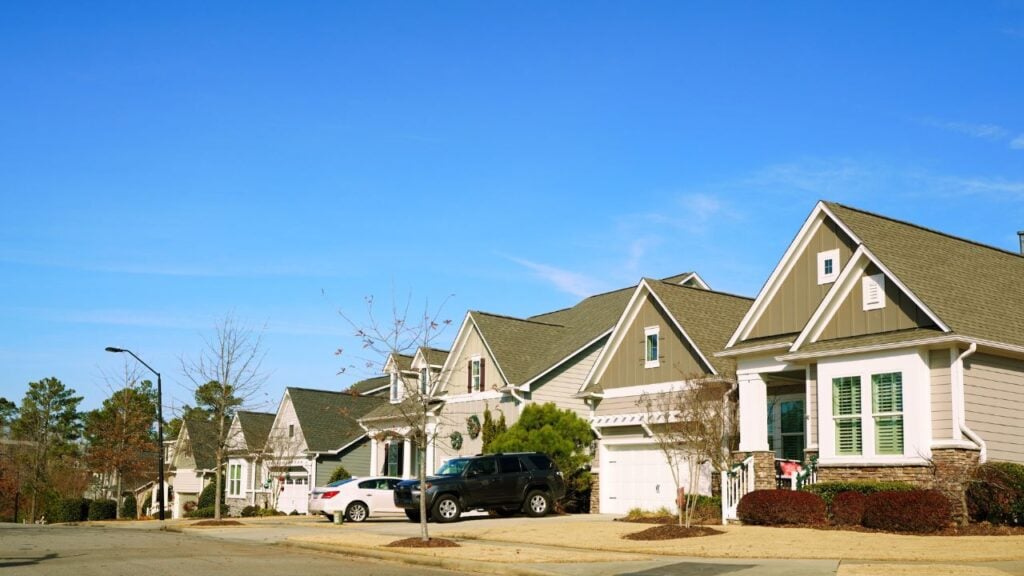
A couple signs the closing papers on a new build outside Cary and skims right past the thick stack sitting under the loan disclosures.
That stack is the declaration and bylaws for the homeowners association, or HOA, and North Carolina law backs every page of it, right down to the fines a board can charge.
9 North Carolina HOA Rules Homeowners Wish They’d Read Before Signing
