
2 Owls Pennsylvanians Hear From Fall Into Winter and How to Tell Them Apart

Step outside on a fall night, and you might hear something calling from the trees.
Pennsylvanians may hear more than one kind of owl this time of year, and the calls can be easy to mix up.
Here’s how to tell which owl you’re hearing.
1. Great Horned Owl
Step outside on a fall or early-winter night, and you may catch a great horned pair dueting in synchronized hooting sessions.
The Game Commission ties that to a courtship that runs from fall into early winter.
The Cornell Lab describes the great horned owl’s call as deep, soft hoots with a stuttering rhythm.
The usual call is five hoots, though it can run from three to eight.
In a duet, the female’s voice is higher in pitch than the male’s.
Mated pairs defend their territories with vigorous hooting, especially in the winter before egg-laying and in the fall when their young leave the area.
Not sure which one you’re hearing?
The Game Commission says barred owl hoots are more emphatic than those of a great horned owl, but not as deep or booming.
You can spot a great horned owl by its ear tufts, which reach up to 2 inches long.
Their eyes are yellow, too.
Size helps if you ever see them side by side.
A great horned owl weighs up to 3.5 pounds, while a barred owl tops out at 2.
A great horned owl’s wingspan runs from 3 feet to nearly 5 feet, against 44 inches for a barred owl.
Great Horned Owl Nesting Clock
Hear a great horned owl in fall or early winter, and you’re listening to it ahead of nesting.
The Game Commission says great horned owl females are on eggs in February and early March.
The Cornell Lab says pairs may roost together near the future nest site for several months before laying eggs.
So the pair hooting near you may already be close to where it will nest.
Incubation lasts 30 to 37 days, and the nestling period is 42 days.
2. Barred Owl
You don’t have to wait for a certain season to hear a barred owl because the U.S. Fish and Wildlife Service says barred owl calls can be heard year-round.
That covers fall and winter.
Of Pennsylvania’s owls, the barred is also the most vocal, according to the Game Commission.
You’ll know a barred owl by its rhythm of eight hoots in two groups of four.
The call goes like this: “Who cooks for you, who cooks for you all?”
Listen early in the night or around dawn, when a barred owl usually calls, and on the occasional cloudy day.
Courtship is when you’re more likely to catch a pair duetting.
The Cornell Lab describes those duets as a mix of cackles, hoots, caws and gurgles.
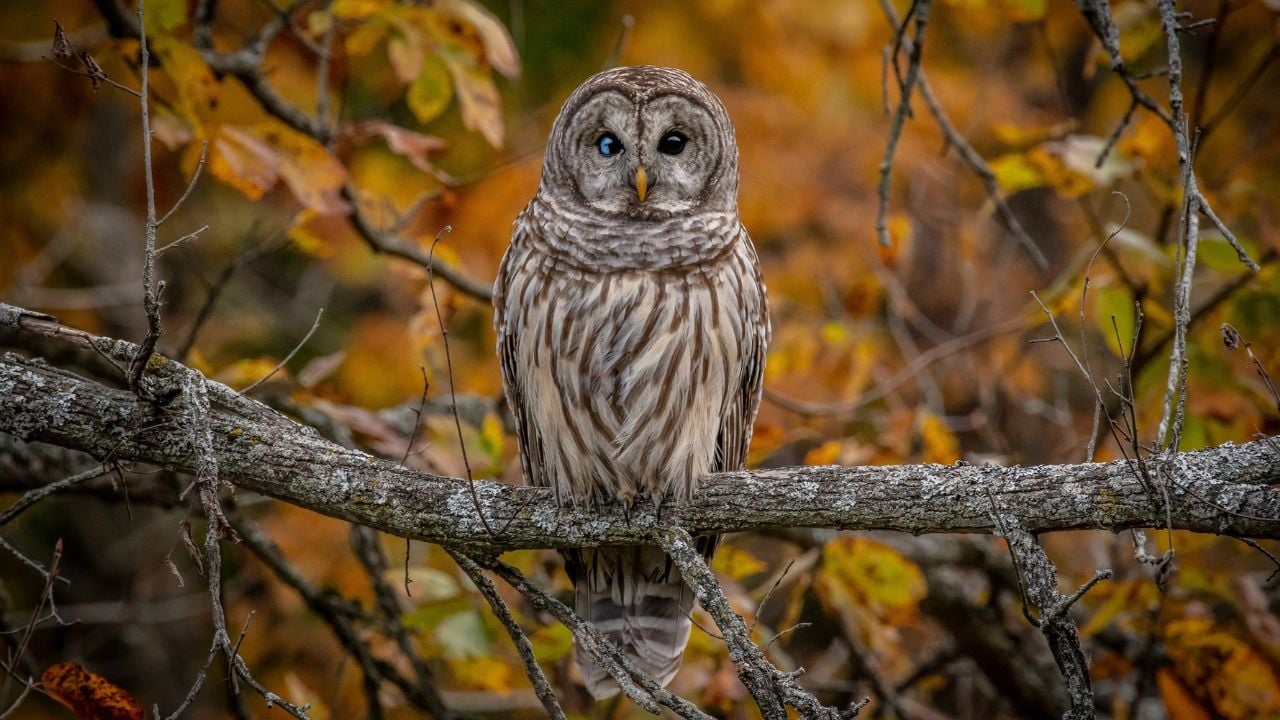
To pick one out by sight, look for the barring pattern, which is the owl’s most standout feature.
A barred owl has a rounded head with no ear tufts and brown eyes, and the Game Commission says it’s the only brown-eyed Pennsylvania owl except the barn owl.
Great Horned Versus Barred
Great horned owls and barred owls share the same woods, and the Cornell Lab calls the great horned the most serious predatory threat to the barred.
Great horned owls are fierce predators that can take large prey, including other owls.
Both are year-round residents in Pennsylvania, according to the Pennsylvania Society for Ornithology, so you aren’t waiting on either one to arrive.
Great horned owls also fly with very little noise on extremely soft feathers.
So you’re more likely to find one by its hooting than by the sound of its wings.
Where to Listen
The Game Commission says great horned owls are found across the state more commonly than any other owl.
So wherever you live, you have a shot at hearing one.
Barred owls are pickier.
They’re closely associated with large unfragmented forest tracts, particularly mature forests with large trees for nesting cavities.
Cornell says barred owls don’t migrate and don’t even move around very much, so a barred owl you hear in your woods this fall may still be nearby in winter.
The Owl You May Not Hear
Northern saw-whet owls move through the state in the fall, but you may not hear one.
Hawk Mountain Sanctuary says their autumn migration begins between September and early October and ends by early December.
Saw-whets are typically vocally active from March through May and thought to say little for the rest of the year.
Come March, you can listen for the call, a mellow, whistled note repeated often between 100 and 130 times a minute.
Saw-whets also make whines, guttural sounds, squeaks and high-pitched barks.
If you spot one, the Game Commission says it’s the smallest owl in Pennsylvania at 7 to 8 inches long, with no ear tufts.
Psst! How much do you know about owls? Take our quiz and see if you can ace it.
Quiz
Night Owl IQ
Answer these questions on owls and the night woods. We bet you can’t get them all right. Prove us wrong?
Which owl can find prey by sound alone better than any animal ever tested?
Winter Owling Basics
Most owls are heard more than seen, according to the Pennsylvania Society for Ornithology's winter owling column, so it helps to learn a few calls before you head out.
December and early January are great times to listen, as owls stake out territory and try to attract a mate.
A walk at dawn or dusk works too, and so does a full-moon night hike.
With the foliage gone, it's also a much better time of year to see an owl's silhouette through the bare trees.
Birding takes patience.
Layer up to stay warm.
Once you find one, keep your voice down and watch from a distance with binoculars, a camera or a spotting scope.
You can also scan tree trunks and branches for whitewash, the droppings that streak them, which the column calls a very good indication of a roosting site.
Pellets are the other clue, the dry, compact balls of undigested hair, bones, feathers, nails and teeth that owls regurgitate.
Dunkin', Not Starbucks, Owns Pennsylvania's Coffee Scene

Which coffee chain do Pennsylvanians search for more?
Dunkin' and Starbucks go head to head.
Dunkin', Not Starbucks, Owns Pennsylvania's Coffee Scene
8 Things Pennsylvanians Can't Legally Leave at the Curb
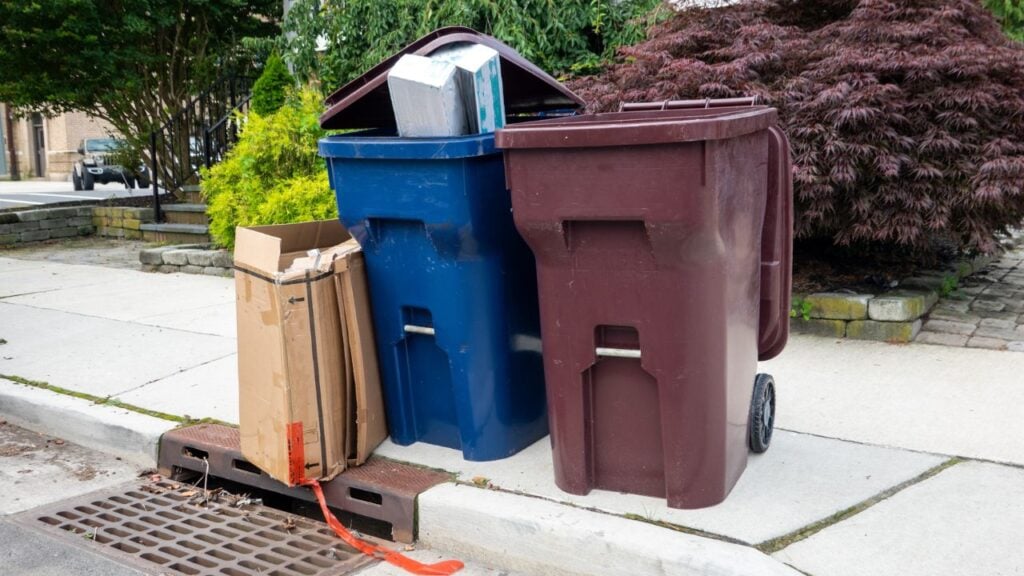
Some curb rules are easy to break without realizing it.
You may want to check before you set anything out.
