
23 Common “Facts” About Animals New Yorkers Believe That Are Completely Wrong

From “bats are blind” to “goldfish forget everything,” animal myths have lived rent-free in the minds of New Yorkers and Americans across the country for decades.
Many started with cartoons, old wives’ tales, or just someone sounding confident.
Now it’s time to finally set the record straight. Here are common “facts” about animals people believe that are completely wrong.
Camels Store Water in Their Humps
We’ve all pictured camels walking through the desert with humps full of sloshing water. But those humps are actually made of fat, which camels use for energy when food is scarce.
Not water. Not even close.
Their secret to surviving the desert heat is efficiency. They can go for long stretches without drinking because their bodies recycle moisture like pros.
So when you see a camel’s hump drooping, it’s not “low on water,” it’s just burning calories. Like the desert version of skipping lunch.
Bulls Hate the Color Red
Sorry, matadors, but bulls are color-blind to red. They charge because of motion, not because of color.
You could wave a pink bath towel or a polka-dot blanket, and that bull would still come running if it moves fast enough.
The myth stuck because of bullfighting culture, where the red cape (the muleta) hides bloodstains and looks dramatic. It’s showmanship, not science.
So no, bulls don’t have a vendetta against your red shirt. You’re safe, unless you’re waving it around like a maniac.
Bats Are Blind
Contrary to what we’ve all heard, bats aren’t blind. In fact, most species have perfectly good vision, some even seeing better than humans in low light.
They just prefer to use echolocation, which is like having built-in sonar goggles for the night sky.
The myth probably started because people noticed bats flying around after dark and assumed they must be navigating by magic. Turns out, they’re just multitasking geniuses, listening, squeaking, and seeing all at once.
Their eyes might not love daylight, but that doesn’t mean they’re useless.
If anything, bats are living proof that evolution decided, “Why choose between eyes and radar when you can have both?”
Elephants Are Afraid of Mice
Cartoons did elephants dirty with this one. In reality, elephants aren’t terrified of mice. They just get startled by sudden movements near their feet.
When you weigh 12,000 pounds, anything small and fast can be surprising.
Researchers have tested this and found that elephants are far more wary of bees or humans than rodents. Mice just don’t make their threat list.
So if you’re picturing Dumbo shrieking at a mouse, know it’s more myth than mammal.
Goldfish Have a Three-Second Memory
This one refuses to die. Goldfish actually have excellent memories that can last for months. Scientists have trained them to navigate mazes, recognize faces, and even respond to specific colors and sounds.
Three seconds?
Please. That’s an insult to their intelligence.
The myth likely came from bored aquarium owners assuming their fish couldn’t remember the glass walls. But really, it’s like living in a house made of mirrors.
Eventually, you’d stop noticing.
So yes, your goldfish absolutely remembers that time you forgot to feed it. It’s been plotting revenge ever since.
Ostriches Bury Their Heads in the Sand
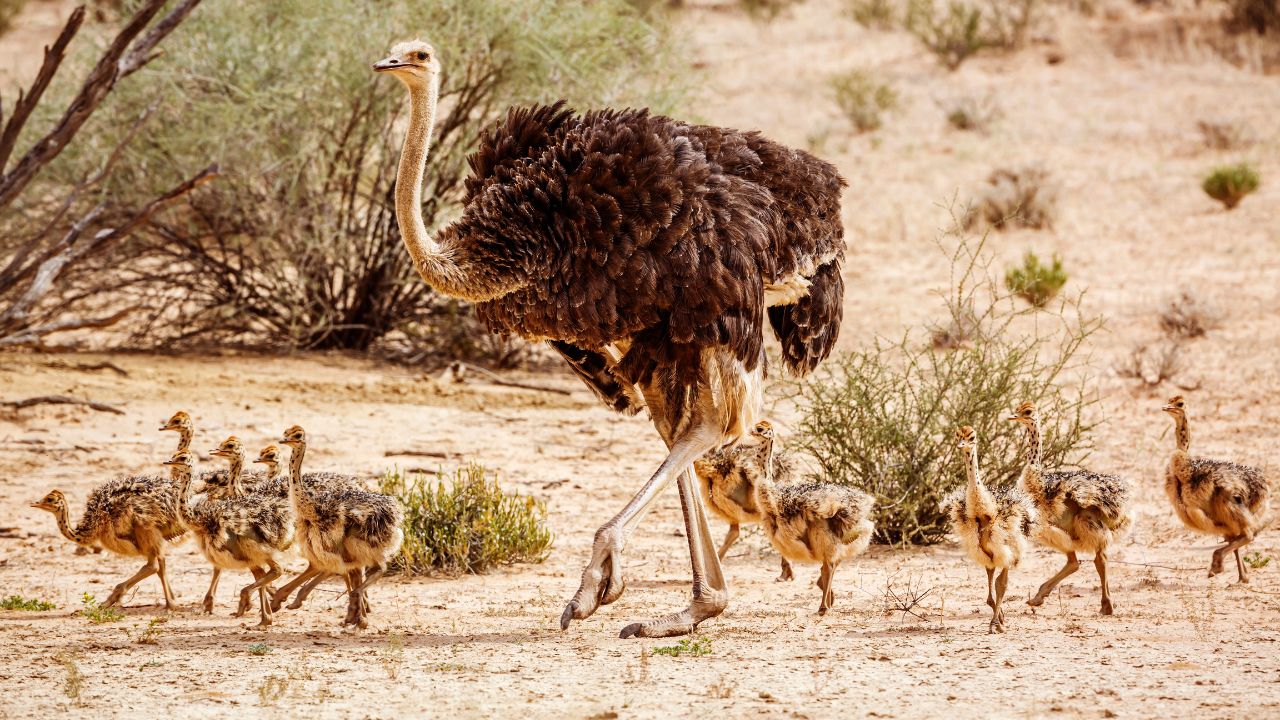
The image of an ostrich burying its head when scared is pure fantasy. What they actually do is lower their long necks to the ground to blend in, especially when guarding eggs.
From a distance, it might look like their heads are underground, but they’re not reenacting a Looney Tunes gag.
They also happen to be fast. Like, highway-speed fast. If they’re truly in danger, they’re sprinting away, not turning into feathery shovels.
The myth probably stuck because it’s such a perfect metaphor for human avoidance. But in nature, ostriches face problems head-on… just not in the ground.
Dogs Sweat Through Their Tongues
Panting helps dogs cool off, but their actual sweat glands are on their paw pads. That’s right, dog feet do the sweating, not their tongues.
Panting is mostly about evaporation and heat exchange, not dripping sweat.
So the next time you see your dog panting like it’s running a marathon, it’s just doing some natural air-conditioning. Their tongues may look dramatic, but it’s all about airflow, not perspiration.
Basically, dogs have built-in fans, not portable sprinklers. And somehow, they still smell like wet dog after a bath.
Frogs Give You Warts
Nope. Frogs and toads can’t give humans warts. Those come from human papillomaviruses, not amphibian bumps.
Their lumpy skin just happens to resemble warts, which made for an easy (and wrong) connection.
Kids in America were told this to stop them from picking up frogs, but really, the only risk was a slippery escape.
You can safely touch a frog, just wash your hands after. The only thing you’ll catch is maybe a new appreciation for slime.
Chameleons Change Color to Match Their Surroundings
This one sounds true, but chameleons actually change color for communication, temperature regulation, and mood, not camouflage.
They might shift shades to show dominance, attract mates, or just express stress.
When they do “blend in,” it’s usually a coincidence. Their pigments react to light and emotion, not background décor.
So no, your chameleon isn’t copying your couch color, it’s just having a feeling.
Penguins Mate for Life
The internet loves to say penguins are the ultimate romantics, but most species don’t stay together forever.
Many form strong pair bonds for a season, then find new mates next year. Penguin relationships are more like short-term leases than lifetime contracts.
Still, while they’re together, they’re deeply loyal, sharing egg duties and fish deliveries like true co-parents.
It’s sweet, but it’s not a fairy tale. Even penguins know when it’s time to move on.
Mice Love Cheese
Mice will nibble cheese, sure, but it’s not their favorite. They actually prefer grains, nuts, and fruit.
Cheese has strong odors and high fat, which doesn’t appeal to their natural diet.
The myth likely stuck because cheese was once a common household food left out in traps. People noticed mice eating it and assumed it was the top pick.
If you’re trying to catch one, peanut butter is the real MVP.
Sharks Can Smell Blood Miles Away
Sharks have powerful senses, but not superpowers. They can detect a drop of blood in about a swimming pool’s worth of water, not across the ocean.
Their accuracy depends on currents, not distance.
Movies exaggerated this myth into legend, making every surfer fear a papercut. In truth, sharks rely on multiple senses to track prey, smell, sight, and even electrical fields.
They’re hunters, yes, but not psychic ones.
Lemmings Commit Mass Suicide
Nope. That whole idea came from a fake documentary scene filmed by Disney in the 1950s, where producers literally herded lemmings off a cliff.
In reality, lemmings migrate in large groups and sometimes fall accidentally, but it’s not intentional.
The truth is far less dramatic. They just have population booms that make migration risky.
Nature’s tough, but lemmings aren’t forming cults.
Owls Can Turn Their Heads All the Way Around
Owls can rotate their heads up to 270 degrees, not 360.
It’s still impressive, but they can’t spin their heads like a horror movie. Their necks are designed with special arteries that keep blood flowing even when twisted.
It looks extreme because their eyes are fixed in place, so they have to turn their heads to look around.
So yes, they’re flexible, but not possessed.
Bears Hibernate All Winter Without Waking
Bears don’t fall into a months-long coma. They enter a state called torpor, where their metabolism slows down, but they still wake to stretch, shift, or even give birth.
It’s more like deep rest than full shutdown.
They can survive without eating or drinking for weeks, but they’re not unconscious the whole time.
Basically, bears invented the ultimate lazy winter retreat, low energy, minimal movement, zero guilt.
Cows Lie Down When It’s About to Rain
This is another weather myth Americans adore.
Cows lie down whenever they feel like it, usually to rest, ruminate, or save their spot in the grass. It has nothing to do with predicting storms.
Sometimes, the timing lines up with approaching rain, which helped the rumor spread. But cows aren’t built-in barometers.
If they could predict weather, farmers would’ve stopped watching the Weather Channel decades ago.
Porcupines Shoot Their Quills
Porcupines can’t fire quills like arrows.
Their quills detach easily when touched, which is still plenty intimidating. Each one has tiny barbs that make removal painful for predators.
The shooting myth probably came from observing quills stuck in animals after a close encounter. But those were contact hits, not long-range attacks.
Porcupines are defensive, not snipers. They’d rather be left alone to munch bark in peace.
Rabbits Love Carrots
Bugs Bunny lied. Rabbits can eat carrots, but they shouldn’t eat them often. Carrots are high in sugar, and too many can upset a rabbit’s digestion.
In the wild, rabbits mainly eat grasses, hay, and greens. The carrot myth took off because it looked cute in cartoons, and America ran with it.
A rabbit’s dream meal isn’t a carrot, it’s a fresh patch of clover.
Dolphins Are Always Friendly
Dolphins may look playful and sweet, but in the wild, they’re not all smiles. They can be territorial, aggressive, and even violent toward other animals.
They’re intelligent predators, not aquatic cheerleaders.
Humans just see the cute side, jumping through hoops, smiling faces, synchronized flips. But that’s trained behavior, not natural charm.
The truth: dolphins are brilliant, complex, and sometimes meaner than they look.
Snakes Chase People
Snakes aren’t plotting ambushes on hikers.
When they appear to “chase,” they’re usually fleeing toward shelter, and you just happen to be in their escape route.
They’re defensive, not aggressive, unless cornered. Humans just panic fast, and everything feels like a pursuit when you’re running uphill screaming.
So, the next time a snake slithers your way, relax, it’s trying to get away from you.
Sloths Are Lazy
Sloths aren’t lazy; they’re strategic. Their slow pace helps conserve energy since their leafy diet doesn’t provide much fuel.
Every slow climb is a survival tactic, not a lack of motivation.
They also move deliberately to avoid predators. Quick movement draws attention, and sloths are experts at not being noticed.
So no, they’re not couch potatoes. They’re masters of calm efficiency.
Crocodiles Cry While Eating
Crocodiles do “cry” while eating, but not out of guilt.
The jaw pressure during feeding squeezes their tear glands, causing liquid to flow from their eyes. It’s biology, not remorse.
The phrase “crocodile tears” came from this odd reaction, eventually meaning fake emotion.
So yes, they cry, but it’s from chewing, not feeling bad about it.
Ants Never Sleep
Ants actually do rest, just in micro-naps throughout the day and night. Their short sleep cycles add up to several hours of downtime every 24 hours.
They don’t have bedtime routines, but they do take power naps.
The myth that they “never sleep” probably came from how busy they always look. But even ants need a break from the grind.
24 Items That Have Alarmingly High Levels of Microplastics

You can’t see, smell, or taste microplastics. But research reveals they’re showing up in our everyday lives.
Here are 24 common items where microplastics hide and why you need to pay attention.
24 Items That Have Alarmingly High Levels of Microplastics
17 Life Hacks That Are Harder Than the Non-Hack

Life hacks are supposed to make your life easier, and sometimes they really do. However, the internet is rife with hacks that aren’t actually effective.
17 Life Hacks That Are Harder Than the Non-Hack
Think You Belong in a Different Decade?
From big bands to big hair, our playful Decade DNA Quiz reveals which classic American era fits your personality best. It’s fast, fun, and full of vintage flair.
Meet Your Match. Discover Your Decade DNA. (Your Vintage Roots Are Showing)

