
26 Everyday Weather Phenomena Vermonters Totally Misinterpret

For a nation obsessed with weather apps and radar maps, we still manage to get the basics wrong.
From blaming humidity for everything to thinking every cloud means rain, Vermonters and Americans across the country have turned everyday weather into a guessing game.
Let’s clear the air (literally) and look at some of the sky stuff we keep misunderstanding.
Thinking Clouds Mean Rain
Americans love to treat clouds like a mood forecast: gloomy sky equals a bad day. But most clouds aren’t even rain producers.
Those fluffy cumulus clouds you see on a sunny afternoon? They’re basically harmless cotton balls in the sky.
Rain usually comes from thick, dark nimbostratus or cumulonimbus clouds, which are two very different beasts.
The average American sees clouds roll in and immediately cancels their picnic, even though most of the time, they’re missing out on perfectly good sunshine peeking through.
Believing “Feels Like” Temperature Is a Scam
The “feels like” temperature isn’t a government plot to confuse us. It’s a calculation that considers humidity and wind chill.
Yet, when the weather app says it’s 88°F but feels like 99°F, half the country yells, “It’s not that hot!” while fanning themselves with a Chipotle napkin.
The “feels like” metric exists because heat and humidity change how our bodies perceive temperature. It’s not an exaggeration. It’s a survival guide.
Assuming Tornado Sirens Always Mean Danger
Here’s a Midwest reality check: tornado sirens don’t mean the same thing in every state. In many areas, sirens are tested every first Tuesday of the month, rain or shine.
Transplants from California or Florida often panic at noon on a random Tuesday, thinking it’s doomsday, while locals calmly keep eating their Panera salads.
Sirens are local warning tools, not universal codes.
If you just moved to a new city, it’s worth learning whether that siren means “take cover” or “just a drill.”
Calling Every Summer Rainstorm a Monsoon
A true monsoon isn’t just any heavy summer rain; it’s a seasonal shift in wind direction that brings moist air.
The Southwest, especially Arizona, actually does experience a real monsoon season.
But when someone in Ohio calls a ten-minute downpour a “monsoon,” meteorologists everywhere collectively sigh.
Confusing Fog With Smog
Fog is natural. Smog is our fault.
Fog forms when air cools enough for water vapor to condense near the ground.
Smog, on the other hand, is air pollution trapped by weather patterns, especially temperature inversions.
So if you’re in Los Angeles and say, “Look at that fog!” at noon, chances are, you’re actually admiring exhaust and ozone.
Thinking Lightning Never Strikes the Same Place Twice
It absolutely does, and often.
The Empire State Building gets struck by lightning roughly 20 to 25 times per year.
That myth probably started as a metaphor about bad luck, not meteorology.
Lightning favors tall, conductive objects. So yes, it’ll hit the same skyscraper, tower, or tree over and over, no problem.
Assuming Snow Has to Be Freezing
Here’s the kicker: it can snow even when the air temperature is above 32°F.
Snow forms higher up in the atmosphere, where it’s colder.
As long as it doesn’t melt before hitting the ground, you’ll still see flakes.
That’s why sometimes you get those weird slushy half-rain, half-snow situations that make driving absolutely miserable.
Thinking Thunder and Lightning Are Separate Events
They’re the same thing, just seen and heard differently.
Lightning is the flash; thunder is the sound caused by the shockwave of that lightning.
Americans often say, “The thunder’s getting closer!” but really, it’s the storm itself moving, not thunder chasing you down.
Count the seconds between lightning and thunder to estimate how far away the storm is. Every five seconds roughly equals one mile.
Believing a Cold Front Means Freezing Temperatures
When meteorologists say “cold front,” they mean a boundary between warm and cool air, not a deep freeze.
Sometimes a cold front just drops temperatures from 90°F to 75°F. It’s a little relief, not a crisis.
But every summer, Americans break out the sweaters and cancel pool parties like it’s November.
It’s a shift, not an apocalypse.
Assuming Rain Cleans the Air
Rain does help remove particles from the atmosphere, but it’s not a cure-all for pollution.
In fact, the first few minutes of rain can actually make air quality worse by knocking pollutants down to breathing level before washing them away.
So yes, that “fresh rain smell” might include a little car exhaust and dust.
Thinking Hurricanes Are Just Big Storms
Nope, hurricanes are massive, organized systems with sustained winds of at least 74 mph.
People often underestimate the danger by comparing them to thunderstorms. The difference?
A hurricane can last for days, flood cities, and knock out power across entire states.
If you’ve ever heard someone say, “I’ll just ride it out,” that’s not bravery. It’s a misunderstanding of physics.
Believing Dry Heat Means It’s Not That Bad
Sure, dry heat feels different, but 110°F in Phoenix is still 110°F.
Americans from humid states like Florida visit the desert and say, “Oh, this isn’t too bad!”—until they walk across a parking lot and their flip-flops start melting.
Humidity makes heat feel worse, but dry heat can dehydrate you before you even realize it.
Thinking Wind Direction Doesn’t Matter
Wind isn’t just background noise. It tells a story about what’s coming next.
A sudden shift in wind direction often means a front is moving in, changing the weather quickly.
But most people ignore that, blaming “bad luck” for getting caught in the rain instead of noticing the breeze literally warned them.
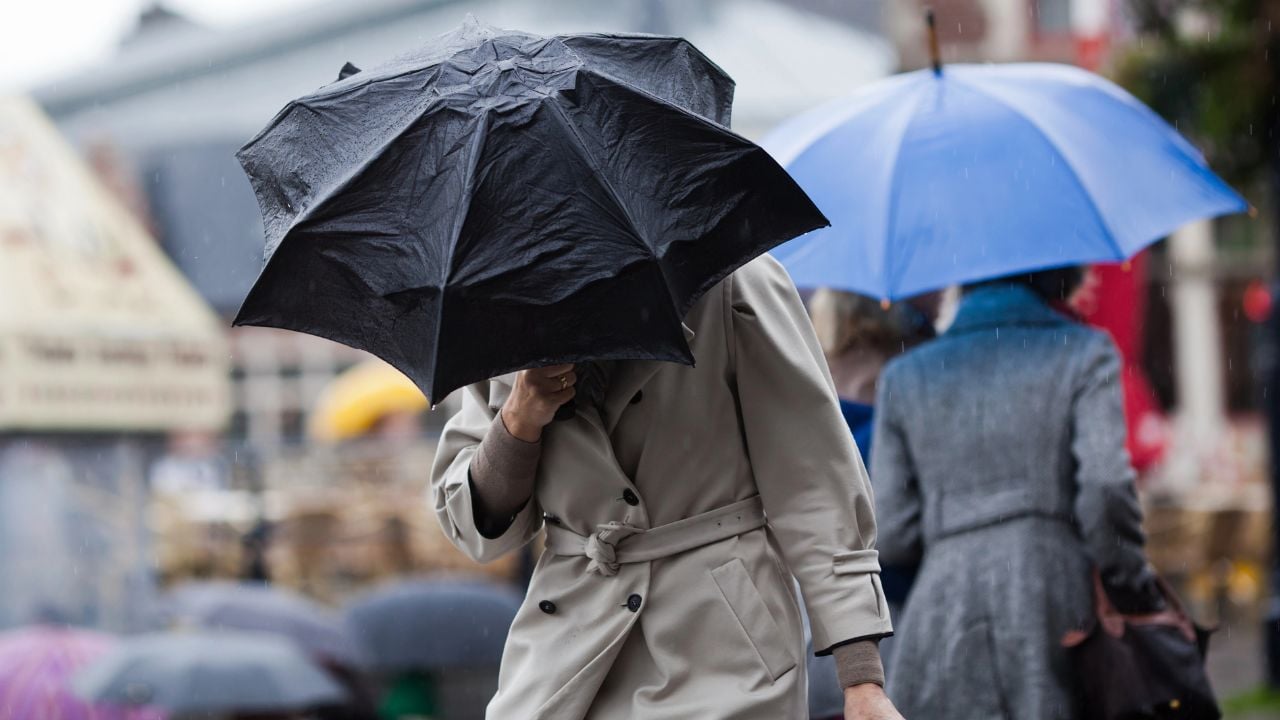
Next time you feel that gust flip your umbrella, know that it’s not random, it’s meteorology in action.
Assuming Rainbows Mean the Rain Is Over
A rainbow doesn’t necessarily signal the end of rain. It just means sunlight and moisture are mixing.
If you’re facing the rainbow, the sun is behind you. So, depending on where the storm is moving, it might actually be heading your way.
Basically, that Instagram-perfect rainbow might be the calm before round two.
Believing Snowflakes Are Always Unique
The old saying “no two snowflakes are alike” is technically true, in theory.
But scientists have found nearly identical snowflakes under microscopes before.
With billions falling every storm, it’s bound to happen.
So while each flake forms differently, there’s more overlap than we like to admit.
Thinking Lightning Only Happens During Rain
Lightning can strike up to ten miles away from a storm, sometimes even under clear skies.
It’s called “bolt from the blue,” and it’s as dramatic as it sounds.
So if you’re golfing and hear distant thunder, you don’t have more time. You already might be in range.
In short: when in doubt, head inside.
Assuming a Heat Wave Is Just a Few Hot Days
A true heat wave isn’t just about high temperatures. It’s prolonged and persistent heat that disrupts normal living conditions.
If it’s been over 90°F for several days and nights barely cool off, that’s a heat wave.
The danger comes from the body never getting a break, not just the high number on your dashboard.
Yet every summer, people dismiss warnings with “It’s just summer.” Then wonder why the ER is full of heat exhaustion cases.
Thinking Dew Means It Rained Overnight
Morning dew isn’t leftover rain, it’s condensation.
When the ground cools faster than the air overnight, moisture in the air turns into droplets on grass and cars.
That’s why your windshield looks wet even if it hasn’t rained in days.
So if you run outside yelling, “It rained!” every morning, your neighbor’s probably rolling their eyes.
Believing Partly Cloudy and Partly Sunny Are Different
They’re basically the same thing, just framed differently depending on your optimism level.
“Partly cloudy” implies more sun than clouds, while “partly sunny” sounds cheerier but means roughly the same sky conditions.
It’s weather semantics at its finest, and probably why people think meteorologists are trolling us.
Assuming Wind Chill Is Just an Exaggeration
Wind chill isn’t hype. It’s how wind removes heat from your skin faster.
At 30°F with strong wind, your body loses warmth as if it’s much colder.
That’s why “it’s only 30” can still feel brutal in Chicago or Minneapolis.
It’s not psychological, it’s physics (and a very good reason to actually wear that hat).
Thinking Overcast Means Stormy
An overcast sky simply means total cloud cover, not necessarily rain.
People see gray skies and assume storms when it might just stay dry and dull all day.
In fact, many overcast days are calm, with little to no precipitation.
So no, your brunch isn’t ruined. It’s just moody lighting for your pancakes.
Assuming Hail Only Happens in Winter
Hail is a warm-season phenomenon caused by powerful updrafts in thunderstorms.
Those ice chunks form high up in cumulonimbus clouds, where air currents toss water droplets so high they freeze and refreeze.
So yes, your summer car wash can end with golf-ball-sized damage.
Believing One Hundred Percent Humidity Means It’s Pouring
When humidity hits 100%, it just means the air is fully saturated, not necessarily that rain is falling.
You can have fog or dew without a drop of rain, especially early in the morning.
That “thick air” feeling isn’t precipitation. It’s just your skin begging for AC.
Thinking Weather Apps Are Always Accurate
Even with radar, satellites, and AI forecasting, weather apps still deal in probability.
That “20% chance of rain” doesn’t mean it’ll only rain for 20% of the day. It means there’s a 20% chance of measurable rain in your area.
But Americans take it personally, as if the app betrayed them when it drizzles during a barbecue.
Assuming Temperature Inversion Is a Movie Plot
It sounds sci-fi, but temperature inversions are real, and they trap pollution close to the ground.
Normally, air gets cooler with altitude, but during an inversion, warm air sits on top of cool air, creating a lid.
That’s why cities like Salt Lake City or Denver sometimes see smog hang around for days.
It’s not aliens. It’s thermodynamics.
Assuming Rain Always Comes From Clouds Above You
Some rain evaporates before it hits the ground, a phenomenon called virga.
It’s why you can see streaks of rain falling in the distance that never actually land. The desert Southwest gets this a lot, making “rain that doesn’t rain” a common sight.
So if you swear you saw rain but the ground’s dry, it’s not your imagination.
24 Items That Have Alarmingly High Levels of Microplastics

You can’t see, smell, or taste microplastics. But research reveals they’re showing up in our everyday lives.
Here are 24 common items where microplastics hide and why you need to pay attention.
24 Items That Have Alarmingly High Levels of Microplastics
Weirdest Laws in Each State

Most Americans are clear on treating thy neighbor as they’d want to be treated to reduce the chance of fines and jail time. But did you know you could be breaking the law by carrying an ice cream cone in your pocket?
These are the weirdest laws in each state, most of which courts (thankfully!) no longer enforce.
Weirdest Laws in Each State That’ll Make You Chuckle
What Decade Were You Really Meant For?
Whether you’re dreaming of bell-bottoms or soda fountains, our Decade DNA Quiz will match you with the decade that fits your personality. No work deadlines here, just a fun escape when you need it most.
Meet Your Match. Discover Your Decade DNA. (Your Vintage Roots Are Showing)

