
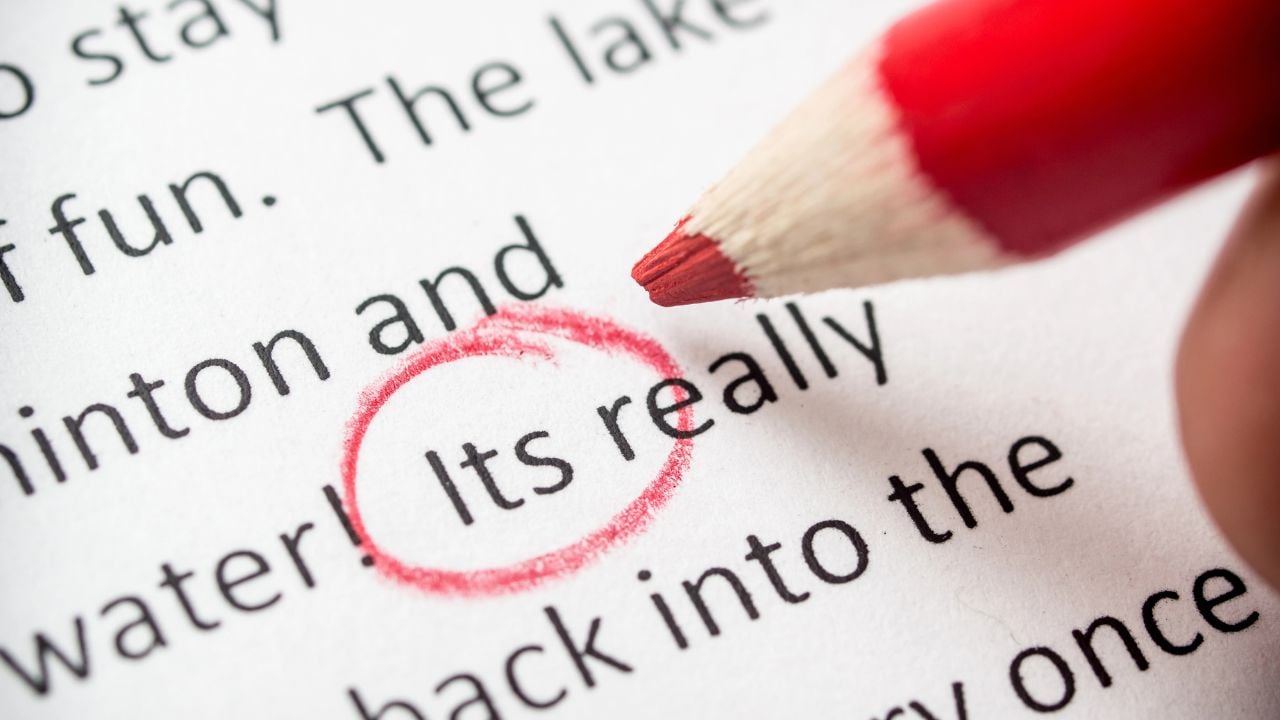
27 Common Grammar Mistakes Alabamians Make That Drive Editors Crazy

Editors have seen it all. From emails that start with “Hey their” to Facebook posts that confuse “your” and “you’re,” grammar crimes are everywhere.
Here are the most common grammar mistakes Alabamians and Americans across the country make that quietly drive editors to Google “remote cabin jobs with no Wi-Fi.”
Your vs. You’re
This is the grammar world’s version of forgetting your own birthday.
“Your” shows possession (“your coffee”), and “you’re” means “you are.” If you can replace it with “you are” and it still makes sense, you’ve got the right one.
“Your doing great” might sound encouraging, but it’s also sending editors to an early retirement.
There, Their, and They’re
“They’re” means “they are.” “Their” is possessive. “There” is a place.
Mix them up, and your sentence goes from confident to chaos.
If you’ve ever written “Their going over there with they’re dog,” it’s okay. We’ve all had a day like that.
It’s vs. Its
This one’s sneaky because it breaks the usual apostrophe rule. “It’s” means “it is,” while “its” shows ownership.
Think of it this way: if you wouldn’t say “her’s” or “him’s,” you shouldn’t add one to “its” either.
Once you get this one down, you officially speak better grammar than half the internet.
Then vs. Than
“Then” is about time. “Than” is for comparison.
You eat breakfast, then go to work. Your coffee is stronger than your will to attend that morning meeting.
Editors lose more sleep over this mix-up than over deadlines.
Affect vs. Effect
“Affect” is usually a verb. “Effect” is usually a noun.
If you can plug in “influence,” it’s probably “affect.” If it’s “result,” go with “effect.”
Example: “The rain affected my mood” versus “The rain had a gloomy effect.” Bonus: either way, you sound like you belong in a sad Taylor Swift song.
Who vs. Whom
Yes, “whom” still exists, and yes, you can survive without it — but editors will notice if you use it wrong.
“Who” does the action, “whom” receives it. “Who called you?” versus “Whom did you call?”
If it feels too formal, that’s because hardly anyone outside of academia uses it right. Even editors sigh over this one.
Me vs. I
People often overcorrect with “I.”
“My friend and I went to the store” is fine. “The gift was for my friend and I” is not. Drop the other person to test it. You’d never say, “The gift was for I.”
Sound it out, and you’ll save yourself from grammar guilt.
Fewer vs. Less
If you can count it, use “fewer.” If you can’t, use “less.”
Fewer cookies, less sugar. Fewer people, less noise.
It’s one of those distinctions that editors love and everyone else ignores until it shows up on a red-marked page.
Lie vs. Lay
Truly one of English’s cruelest jokes. “Lie” means to recline. “Lay” means to put something down.
You lie on the bed. You lay the blanket down.
Editors joke that if they had a dollar for every wrong use of “lay,” they could retire in Hawaii.
Alot vs. A Lot
There is no such word as “alot.” Never has been.
It’s “a lot,” two words. Always.
Even Grammarly sighs when it sees this one.
Could Of vs. Could Have
We say “could’ve,” but some people write it like “could of.”
It might sound right when spoken, but it’s never correct on paper.
Just remember: “of” is not a verb.
Literally
Stop. Before you say it.
“Literally” means something actually happened. If you say “I literally died laughing,” you didn’t. Unless this is your ghost typing.
Editors beg for mercy on this one daily.
Between vs. Among
You use “between” when you’re talking about two things, and “among” when it’s more than two.
So you’d say “between Coke and Pepsi” but “among all soda brands.”
Get this wrong, and editors picture you trying to divide a pizza between twenty people — and everyone going hungry.
Irregardless
Not a word. The one you’re looking for is “regardless.”
“Irregardless” is like double-negatives met at a bad grammar party.
Use it, and you’ll trigger someone’s inner English teacher.
Loose vs. Lose
“Loose” means not tight. “Lose” means not win.
“Don’t loose your keys” sounds like you’re encouraging chaos.
Tighten it up. Literally.
Everyday vs. Every Day
“Everyday” is an adjective, “every day” means each day.
Your sneakers are everyday shoes, but you wear them every day.
Miss this one, and your sentence starts sounding like a tongue twister.
Peek vs. Peak vs. Pique
“Peek” means to look. “Peak” is the top. “Pique” means to stimulate or spark interest.
“I peeked at the mountain peak, and it piqued my curiosity.”
Editors love this sentence. Everyone else wants a nap.
Compliment vs. Complement
A “compliment” is praise. A “complement” completes something.
Your shoes complement your outfit, but your friend compliments your shoes.
Mix them up, and someone’s going to think your outfit is emotionally supportive.
Literally vs. Figuratively
They’re opposites, but people use them interchangeably.
If you say “I’m literally freezing” while standing in 68-degree weather, you’re just cold — not an icicle.
Save “literally” for moments that don’t require sarcasm.
A While vs. Awhile
“A while” is a noun phrase. “Awhile” is an adverb.
You can wait a while or rest awhile.
If you’re not sure which one to use, don’t worry. Even editors Google this one sometimes.
Toward vs. Towards
Both are correct, but “toward” is preferred in American English.
If you write “towards,” you sound British. If that’s the vibe, go for it. Otherwise, editors will quietly delete the “s.”
Grammar doesn’t get pettier than this.
i.e. vs. e.g.
“i.e.” means “in other words.” “e.g.” means “for example.”
If you use them interchangeably, your sentence becomes a logic puzzle.
Editors can spot this mistake faster than they can say “copy edit.”
That vs. Which
“That” introduces essential information. “Which” adds extra info and usually follows a comma.
“The sandwich that fell on the floor is mine.” versus “The sandwich, which fell on the floor, is mine.”
Same sandwich, wildly different tone.
Too Many Adverbs
Adverbs aren’t bad, but too many can make writing sound like a fourth grader describing fireworks.
“I quickly, carefully, softly tiptoed across the room” just makes editors twitch. One strong verb beats three weak adverbs every time.
If your sentence ends in “-ly” more than twice, it’s time for an intervention.
Comma Splices
When two sentences are joined with only a comma, editors lose sleep.
“I went to Publix, I bought chicken tenders.” Wrong.
Use a semicolon, conjunction, or split them up. Grammar matters — especially when chicken tenders are involved.
Apostrophes for Plurals
Adding apostrophes to make things plural is an editor’s recurring nightmare.
No apostrophe in “tacos,” “1990s,” or “DVDs.” Apostrophes show ownership, not quantity.
If you’re ever tempted to add one, take a deep breath and step away from the keyboard.
Dangling Modifiers
This one’s a grammar classic. A dangling modifier happens when a descriptive phrase doesn’t clearly match the subject of the sentence.
Example: “Driving to work, the coffee spilled on my lap.” Unless your coffee got a driver’s license, that sentence doesn’t work.
A quick fix makes it right: “Driving to work, I spilled coffee on my lap.”
Editors live for that kind of save.
40 Most Confusing Acronyms

With many people wanting to send and receive information quickly, new acronyms seem to appear by the minute. The problem? Many Americans are left in the dust about what they mean.
16 Catchy ’50s and ’60s Sayings Older Folks Proudly Remember

In the 1950s and 1960s, you might have had it made in the shade, but if you didn’t cut the gas, you’d be cruisin’ for a bruisin’.
Can you dig it?
16 Catchy ’50s and ’60s Sayings Older Folks Proudly Remember
What Decade Were You Really Meant For?
Whether you’re dreaming of bell-bottoms or soda fountains, our Decade DNA Quiz will match you with the decade that fits your personality. No work deadlines here, just a fun escape when you need it most.
Meet Your Match. Discover Your Decade DNA. (Your Vintage Roots Are Showing)

