
3 Everyday Things That Get Harder for Older Floridians to Ignore

Some everyday moments can start to take more effort as the years go by.
Researchers who study aging have looked into why.
Here’s what that research says, and what it may mean for older Floridians.
Note: This is general information, not medical advice. Guidelines are subject to change, so talk to a doctor about your situation.
1. Headlight and Sunlight Glare
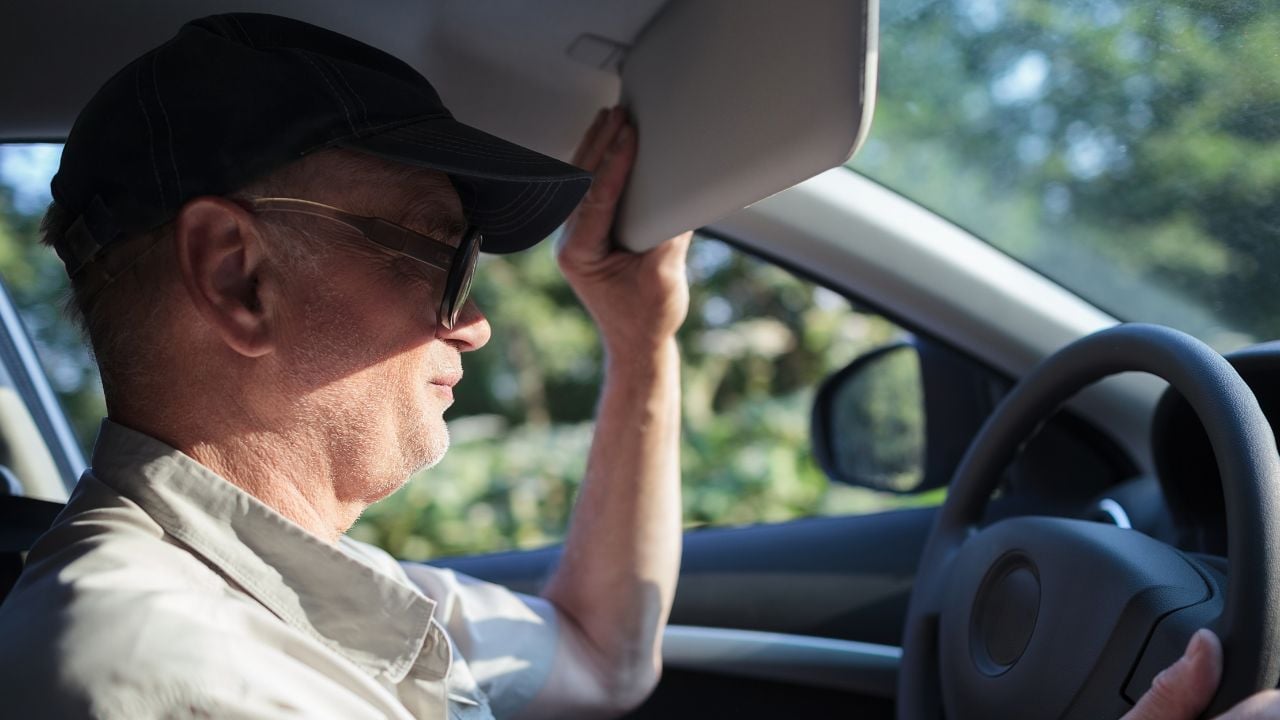
Older adults may become less able to tolerate glare, according to MedlinePlus, a health information site from the National Library of Medicine.
Its example is glare from a shiny floor in a sunlit room, which can make it difficult to get around indoors.
Headlights add to it.
The National Highway Traffic Safety Administration told Congress in 2007 that discomfort from bright headlamps may lead some people to drive less at night, particularly as they get older.
If you’ve cut back on night driving, glare may be part of the reason.
Older drivers’ eyes also take longer to recover their sensitivity after exposure to glare.
The Insurance Institute for Highway Safety analyzed crash reports from 11 states, and in those reports, drivers older than 70 seem to be most affected by headlight glare.
Two Kinds of Headlight Glare
Older drivers and everyone else face two kinds of headlight glare, and the agency’s report to Congress defines both.
Discomfort glare is the annoyance, or even pain, you feel when a bright light sits in your field of view.
Disability glare works differently, since scattered light in your eye lowers the contrast of what you’re looking at.
2. Interruptions
Older adults had more trouble letting go of an interruption in a 2011 University of California, San Francisco, memory experiment inside a brain scanner.
The experiment compared young adults, average age 24.5, with older adults, average age 69.1.
Each person viewed a natural scene and held it in mind for 14.4 seconds while blood flow in their brains was tracked.
Partway through, a picture of a face appeared.
Each person had to judge its sex and age.
In both groups, the brain moved attention from the remembered scene to the face.
The younger adults then let go of the face and restored the brain network that held the scene.
On average, the older adults did neither.
That was a lab task.
It can’t tell you how you’d handle a phone call.
Psst! How much do you know about how your senses change with age? Take our quiz and see if you can ace it.
Quiz
Aging Senses IQ
Answer nine questions on how eyes, ears, taste, and smell change with age. We bet you can’t get them all right. Prove us wrong?
As you age, which colors does MedlinePlus say get harder to tell apart?
3. Background Distractions
If you've ever struggled to tune out background distractions, two lab studies used brain imaging to see how older adults' brains handle them.
The first was a 2005 University of California, Berkeley, study in Nature Neuroscience.
It tested 17 younger adults, ages 19 to 30, and 16 older adults, ages 60 to 77.
Volunteers saw two faces and two natural scenes and had to remember either the faces or the scenes.
The other images were irrelevant.
The younger adults were easily able to suppress brain activity in areas that process the irrelevant images.
The older adults were less able to suppress that activity.
The second was a 2008 study by researchers at Baycrest Centre for Geriatric Care.
It analyzed brain scans from 12 younger adults, average age 26, and 10 older adults, average age 70.
When they failed to remember a face, the older adults showed more activity in the auditory cortex and left prefrontal cortex, which may reflect environmental monitoring.
The authors proposed that the noisy scanner may have been one source of that distraction.
Where 65-Plus Adults Outnumber Children
The Census Bureau counts adults 65 and older as older adults and people under 18 as children.
Across the country, children still outnumber older adults, 73.1 million to 61.2 million.
But 11 states, Florida among them, have more older adults than children.
The gap between the two groups has shrunk from a little over 20 million in 2020 to a little under 12 million in 2024.
In 2020, only Maine, Vermont, and Florida had more older adults than children.
By 2024, Delaware, Hawaii, Montana, New Hampshire, Oregon, Pennsylvania, Rhode Island, and West Virginia had joined them.
That's a big change.
If you live in one of those states, many of your neighbors may see themselves in the studies above.
Glare Isn't Only About Age
Older drivers have company when they complain about headlight glare after dark.
A 2026 AAA survey of U.S. adults 18 and older found that six in ten drivers say it's a problem.
Age alone didn't have a statistically significant effect on who called glare an issue.
Among drivers who experience it, 73 percent said the problem has intensified over the past decade.
If you're picturing crashes, the records tell a different story.
That same institute analysis found glare cited as a factor in only one or two out of every thousand nighttime crashes from 2015 to 2023.
That's a small share.
Hearing Loss, Not Only Age
The National Institute on Aging lists a problem understanding speech because of background noise as a sign of hearing loss in older adults.
About one-third of older adults have hearing loss, and the chance of developing it increases with age.
That makes trouble with noise a hearing question as much as an age question.
A 2022 University of Illinois Urbana-Champaign study in Scientific Reports asked 31 adults, all 60 or older, to rate how much restaurant-style noise disturbed conversation.
At the same noise level, participants with mild hearing loss scored the disturbance about 9 percent higher than participants with normal hearing.
The comparison was between hearing levels, not between younger and older listeners.
The authors recommend keeping background noise below 50 decibels so older customers can talk with less vocal effort and understand conversations better.
If you often ask people to repeat what they're saying, the institute lists that as another sign.
Raise either with your doctor.
Indoor Temperature Is an Exception
If you expect older adults to be more dissatisfied with indoor temperature, field studies found the opposite.
A 2025 systematic review in the Journal of Building Engineering covered 31 studies, 19 in laboratories and 12 in the field.
Field studies in the review indicate that older occupants living in everyday settings were less dissatisfied with indoor temperatures than younger occupants.
Older occupants were also more likely to describe the temperature as neutral.
That flips the usual assumption.
So your thermostat debate may not be about age.
In stable conditions, there were no differences in thermal sensation between older and younger people.
When people moved suddenly into cold conditions, older subjects were less sensitive than younger subjects.
12 Things Florida Grandparents Did That Their Kids Would Never Allow Now
Congress created the Consumer Product Safety Commission in 1972.
Those are the calls Florida grandparents made that their grown kids wouldn't allow now.
12 Things Florida Grandparents Did That Their Kids Would Never Allow Now
9 Things Floridians Do in October That Snowbirds Never Notice

Florida's wildlife commission opens stone crab season in state waters on October 15.
These are the October habits year-round Floridians know and snowbirds don't.
9 Things Floridians Do in October That Snowbirds Never Notice
