
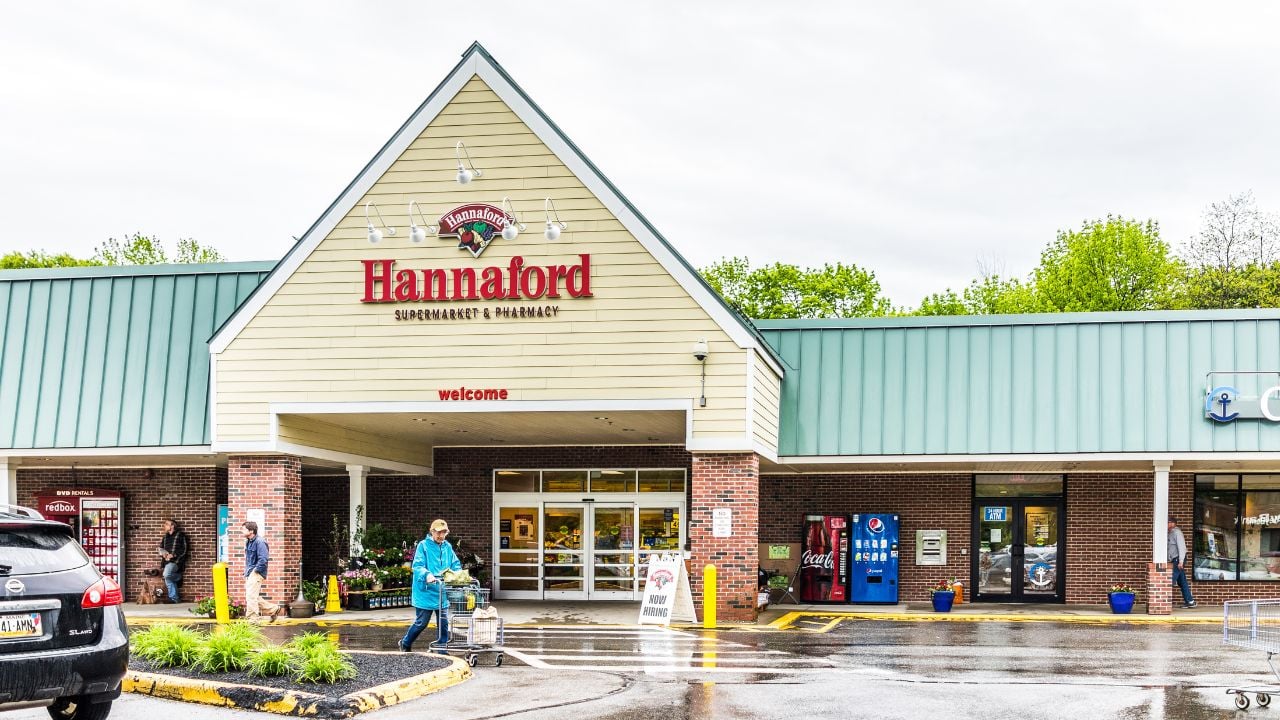
3 Things Hannaford Employees Wish Mainers Would Stop Doing at Checkout

Nobody wants to be the reason the checkout line slows down.
Hannaford cashiers see the same small snags all day, and most are easy to avoid.
Here’s what employees wish Mainers would stop doing at the register.
Note: This is general information, not legal or tax advice. State rules and tax rates are subject to change.
1. Forgetting Your Reusable Bags
Hannaford said in 2021 that its paper bags would cost 5 cents, according to the Sun Journal.
The company encouraged shoppers to bring clean reusable bags.
Maine’s law requires most stores to charge at least 5 cents for a paper or reusable plastic bag at the point of sale.
Maine’s Department of Environmental Protection (DEP) says in its guidance that the fee applies only to bags the store provides.
A bag, box, or container you bring from home costs nothing.
If you walk in without a tote, each paper bag at the register costs you at least a nickel.
Many cashiers would probably appreciate a shopper who has bags in hand before the first item moves.
The statute also bars a store from rebating any part of the fee to you.
Stores can also offer single-use plastic produce bags for loose items, but a store that does has to serve as a recycling drop-off for them.
The Legislature accepted a report on April 10, 2025 that LD 56, a bill to remove the fee, ought not to pass.
2. Paying With SNAP for Ineligible Items
Supplemental Nutrition Assistance Program (SNAP) benefits don’t cover every item in your Hannaford cart.
The U.S. Department of Agriculture (USDA) tells retailers in a notice not to accept SNAP benefits for hot food, alcohol, or non-food items.
That list includes beer, wine, pet food, tobacco, toilet paper, and paper towels.
State grocery bag fees can’t be paid for with SNAP benefits.
You pay those fees with cash, a credit card, or non-SNAP debit.
Maine stores must charge the bag fee to SNAP shoppers too, according to the DEP’s guidance.
USDA also says stores licensed for SNAP may not charge sales tax on SNAP purchases.
Sales tax charged on the part of an item paid for with a manufacturer coupon can’t be paid with SNAP benefits.
Four paper bags at the 5-cent minimum cost you 20 cents.
Bag fees aren’t taxable, so that’s the whole charge.
3. Leaving Your Photo ID Behind
Hannaford’s Portland store lists wine, liquor, and beer among its departments.
Maine’s definition of liquor includes spirits, wine, malt liquor, and hard cider.
Maine law bars a licensee’s employees from selling liquor to anyone under 27 without verifying a photo ID with a birth date.
The check applies at any age under 27, not just to shoppers who look young.
A licensee can also refuse a sale to anyone who can’t show a state ID card or a license with a photo.
Many cashiers would likely wish you’d have your ID out before they ask.
Sales Tax on Prepared Food
Some ready-to-eat food at Hannaford is taxed at a different rate than the groceries in your cart.
Hannaford’s Portland store page lists a café, sushi, and a wing bar alongside its grocery aisles.
Maine’s statute defines prepared food as food a retailer prepares that is ready for consumption.
It also lists sandwiches and salads among items that aren’t grocery staples.
Maine Revenue Services lists the prepared-food rate at 8% and the general rate at 5.5%.
Grocery staples are generally exempt from the sales tax.
If you pick up a sandwich with your groceries, the sandwich is still prepared food.
Same store, different rate.
Prepared-Food Tax at Hannaford
At a grocer like Hannaford, Maine Revenue Services says heated food or drinks, sandwiches, and salad-bar items are taxable at the prepared-food rate.
Slicing a grocery staple doesn’t make it prepared food, as with a pound of ham sliced from the deli case at your request.
Fruits and vegetables cut and repackaged in cups or bowls count as exempt grocery staples.
Deli and bakery platters are the exception to that rule.
On a $9 sandwich, the 8% rate comes to 72 cents.
Clynk Bottle Returns
You can get deposits back on bottles and cans through Clynk, a service listed on Hannaford’s Portland store page.
Maine puts a 5-cent deposit on beer, hard cider, wine coolers, soda, and noncarbonated water, according to Maine’s environmental agency.
The program excludes milk and dairy-derived products.
Clynk lists three steps on its website.
You fill a green bag with redeemable containers, scan the bag’s code at a Clynk station, and drop the bag off.
The green bags are sold inside the store, typically near the kiosk or check-out lanes.
Redemption stations are in the parking lot or inside the store.
Your redemption credit is deposited into your account within 24 to 48 hours.
Psst! How much do you know about bag, bottle, and checkout rules? Take our quiz and see how many you can get right.
Quiz
Bags, Bottles, and Benefits IQ
Answer these questions on bag, bottle, and checkout rules. We bet you can’t get them all right. Prove us wrong?
Which drink made in Maine falls outside the bottle bill’s deposit?
Lottery Tickets and Minors
Lottery tickets are among the services Hannaford's Portland store lists.
Maine law bars selling a lottery ticket to anyone under 18.
The statute's penalty applies to a licensee who knowingly sells or offers to sell a ticket to someone under 18.
If you're 18 or older, you can still buy a ticket as a gift to a minor.
You can buy the ticket yourself and tuck it into a birthday card for a nephew under 18.
Giving isn't buying.
9 Things Everyone Gets Wrong About Maine, According to Mainers

In 2025, Maine had 14.15 million visitors, down 4.4% from the year before, and they spent $9.37 billion.
Many of them likely left sure they had the state figured out.
9 Things Everyone Gets Wrong About Maine, According to Mainers
10 Maine Words and Phrases That Make No Sense to the Rest of the Country

Maine has many words and phrases that leave visitors guessing.
Some of them would stump people from anywhere else in the country.
10 Maine Words and Phrases That Make No Sense to the Rest of the Country
