
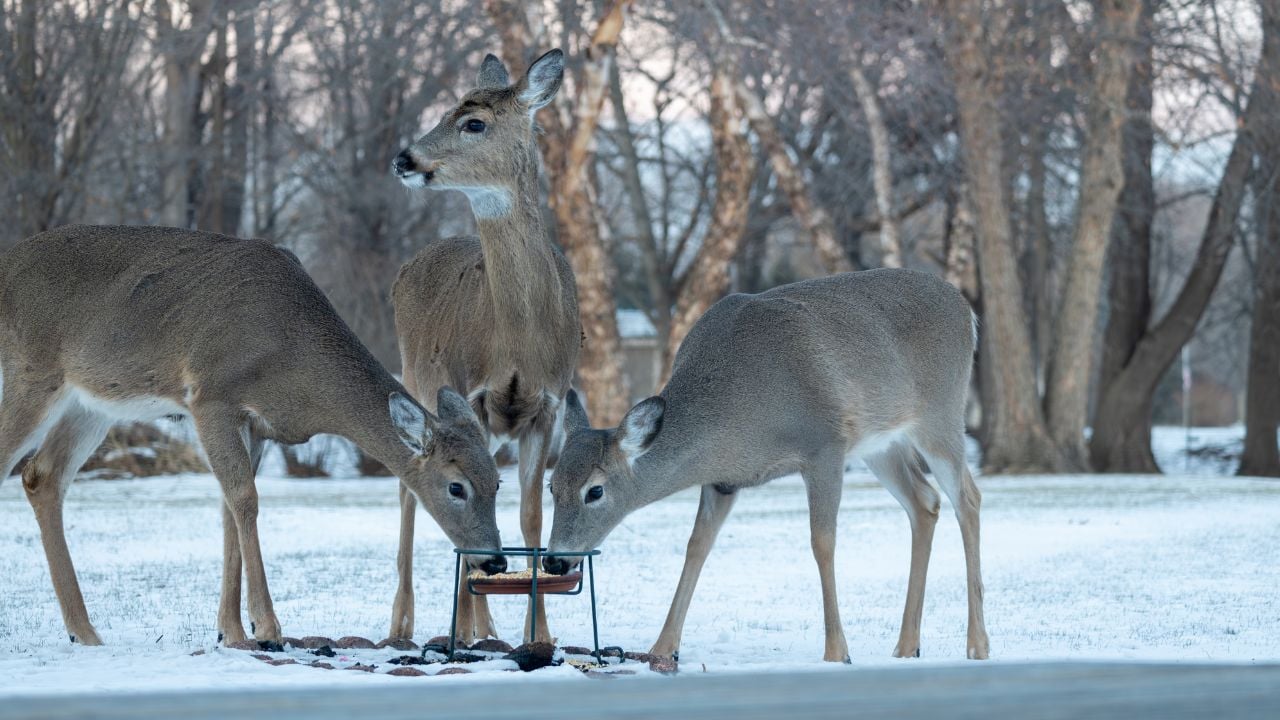
3 Wildlife Feeding Rules Kentuckians Can Be Fined for Breaking

They say no good deed goes unpunished.
Putting out food for wild animals feels like a good deed.
But in Kentucky, it can come with a fine.
These are the wildlife feeding rules Kentuckians can be fined for breaking.
Note: This is general information, not legal advice. Wildlife rules, fines and county lists are subject to change, so confirm the current details with the Kentucky Department of Fish and Wildlife Resources (KDFWR).
1. Feeding Black Bears
Kentucky bans direct or indirect feeding of black bears, so handing a bear a snack isn’t the only way to break the rule.
KDFWR calls it a crime punishable by a fine of up to $1,000, up to a year in jail and up to three years without hunting and fishing privileges.
Indirect is the catch.
Neither the bear regulation nor the Black Bears page defines it, though the page names garbage, bird feeders and pet food as attractants.
Black bears are found mainly in eastern Kentucky, and their numbers and range are increasing.
If you live in bear country, take your bird feeders down while bears are active and bring pet food indoors.
Garbage needs the same care, so store it in a closed structure and put it out the morning of pickup, not the night before.
Clean and store your grill and smoker, and tell your neighbors when bears are around.
If you see someone feeding a bear, report it immediately at 1-800-25ALERT.
2. March-to-July Feeding Ban
In many places, a scoop of feed for wildlife that’s fine in September can get you fined in April.
The state bans feeding wildlife from March 1 through July 31.
The penalty?
The feeding regulation lists none, but Kentucky’s wildlife penalty law covers wildlife regulations like that.
Under that law, the fine for breaking such a regulation runs from $50 to $500.
If you scatter corn for deer in April, that could be your fine.
3. Feeding and Baiting on Wildlife Management Areas
A pile of corn to draw in deer can get you fined on a wildlife management area (WMA), where KDFWR says feeding and baiting are illegal.
Kentucky’s public-use rules for WMAs bar placing or distributing bait.
If you hunt a WMA, the same rules bar hunting over bait.
Those rules list no penalty.
The wildlife penalty law’s $50 to $500 fine could apply instead.
12 Things Kentuckians Take Personally That Out-of-Staters Don’t Mean as Insults

A harmless comment can land very differently depending on who’s listening.
Some Kentuckians bristle at a few things out-of-staters say, no matter how good the intentions are.
12 Things Kentuckians Take Personally That Out-of-Staters Don’t Mean as Insults
Contact Feeders in the CWD Zone
If you hunt in the chronic wasting disease (CWD) Surveillance Zone this deer season, Kentucky’s feeding rules loosen and baiting is allowed with restrictions.
Contact feeders are the exception.
If your feeder is a trough, a funnel or a gravity feeder without spreading capabilities, KDFWR still bans it.
The zone page names no fine for breaking its special regulations, only penalties that could range from a warning to losing hunting or firearm rights to jail time.
You can still use scent attractants and deer urine products, but baiting stays banned on WMAs and public lands.
The zone page’s baiting list ends with a pointer to mandatory sampling requirements further down the page.
Psst! How much do you know about Kentucky’s wild side? Take our quiz and see how many you can get right.
Quiz
Kentucky Wild Trivia
Answer these questions on Kentucky’s elk, bears, caves, and wild places. We bet you can’t get them all right. Prove us wrong?
Cumberland Falls draws visitors on clear nights for what rare sight?
The Reason Behind the Limits
The feeding regulation helps protect native species, KDFWR says.
Limits on feeding and baiting help reduce the impact of disease and of predators crowding into one area.
Crowding is the CWD worry.
The announcement that expanded the zone warned that baiting promotes unnatural congregation of deer, which raises the risk of CWD spreading through saliva, urine and feces from infected animals.
If you hunt in the zone, that's the risk to weigh before you bait.
Exceptions to the Feeding Ban
The feeding ban has exceptions.
Many of them depend on where you are.
The regulation lets you feed wildlife year-round in public areas that are closed to hunting and trapping, unless another law or local ordinance says otherwise.
Your home's immediate yard, which the regulation calls the curtilage, is exempt too, and bird feeders in that yard are permissible statewide.
Black bear territory is different because the bear feeding ban has no exceptions.
KDFWR permits salt and mineral licks for wildlife statewide, except in the CWD Surveillance Zone counties.
Inside the zone, the regulation still exempts bird feeders in your yard, wildlife food plots and plantings, and normal farming from its baiting ban.
What Counts as Feeding Under Kentucky's Rule
Under Kentucky's wildlife feeding regulation, feeding means "willingly, wantonly, or knowingly" depositing, distributing or scattering feed for wildlife to eat.
That feed includes corn, millet, milo, safflower seed, sunflower seed, thistle, wheat, other grain and any manufactured feed or food product.
The definition leaves out plantings for wildlife, foods scattered by normal farming and standing farm crops.
The definition exempts livestock feed only where livestock are eating it on a daily basis.
Rule Changes Ahead
The CWD zone's feeding rules now reach nine more counties after KDFWR expanded the zone in December 2025, following a CWD detection in a deer harvested in Pulaski County.
The additions were Casey, Laurel, Lincoln, McCreary, Pulaski, Rockcastle, Russell, Wayne and Whitley, so if you live in one of those nine counties, the zone's feeding rules apply to you.
The same announcement said baiting was allowed in every zone county as long as it didn't go through contact feeders.
County lists can change again.
The commissioner's September letter authorized baiting in the zone until the end of the 2026-2027 deer season or until amended regulations take effect.
The same letter says amendments to the regulations will go to the state's Legislative Research Commission.
The feeding regulation took effect in its current form in June 2023 and is set to expire in 2030.
7 Roadside Rules That Catch Kentuckians Off Guard on Rural Highways
A cow standing on a dark back road isn't rare in Kentucky.
Whose fault a collision becomes is one of several answers packed into a chapter of state law.
7 Roadside Rules That Catch Kentuckians Off Guard on Rural Highways
