
4 Foods and Drinks Invented in Florida That Many Floridians Think Came From Somewhere Else

Some food and drink favorites feel like they’ve always been around, and you don’t necessarily assume they were born in your home turf.
Floridians may be surprised how close to home a few of them actually started.
Here are the everyday foods and drinks with Florida roots.
1. Burger King’s Whopper
If you’ve ever ordered a Whopper, you’ve ordered a burger with Florida roots.
James McLamore and David Edgerton opened Insta Burger King in Miami in 1954, according to the Roanoke Times.
The pair went on to create the broiled Whopper.
Britannica says the Whopper was introduced in 1957, when McDonald’s was still selling only small hamburgers.
Other sources trace the chain back to Insta-Burger King, founded in Jacksonville in 1953.
Both cities are in Florida.
2. Frozen Orange Juice Concentrate
Frozen orange juice concentrate began as a World War II project to give troops better-tasting juice, according to the University of Florida’s citrus research center.
The patent is credited to three scientists, L.G. MacDowell, E.L. Moore and C.D. Atkins.
Time reports that a group of U.S. Department of Agriculture scientists working in Florida developed the process in 1945.
A company called Florida Foods became Vacuum Foods Corporation in 1946 and began selling the nation’s first concentrated frozen orange juice.
The Smithsonian’s record names a different group, scientists at a research company, the National Research Corporation, working with support from the federal government and the Florida Department of Citrus.
Those two credits don’t match.
If you’ve ever stirred frozen concentrate into your pitcher, both Time and the Smithsonian tie it to work in Florida or support from a Florida agency.
What Cut-Back Does to Frozen Orange Juice Concentrate
The Smithsonian says frozen orange juice concentrate came from a process that evaporated the water from fresh juice in a vacuum at very low temperatures.
The resulting flavor was too concentrated to taste like fresh juice.
Researchers restored the flavor by adding more fresh juice to the concentrate as it came out of the evaporator, a step called cut-back.
The cut-back process was patented in 1948.
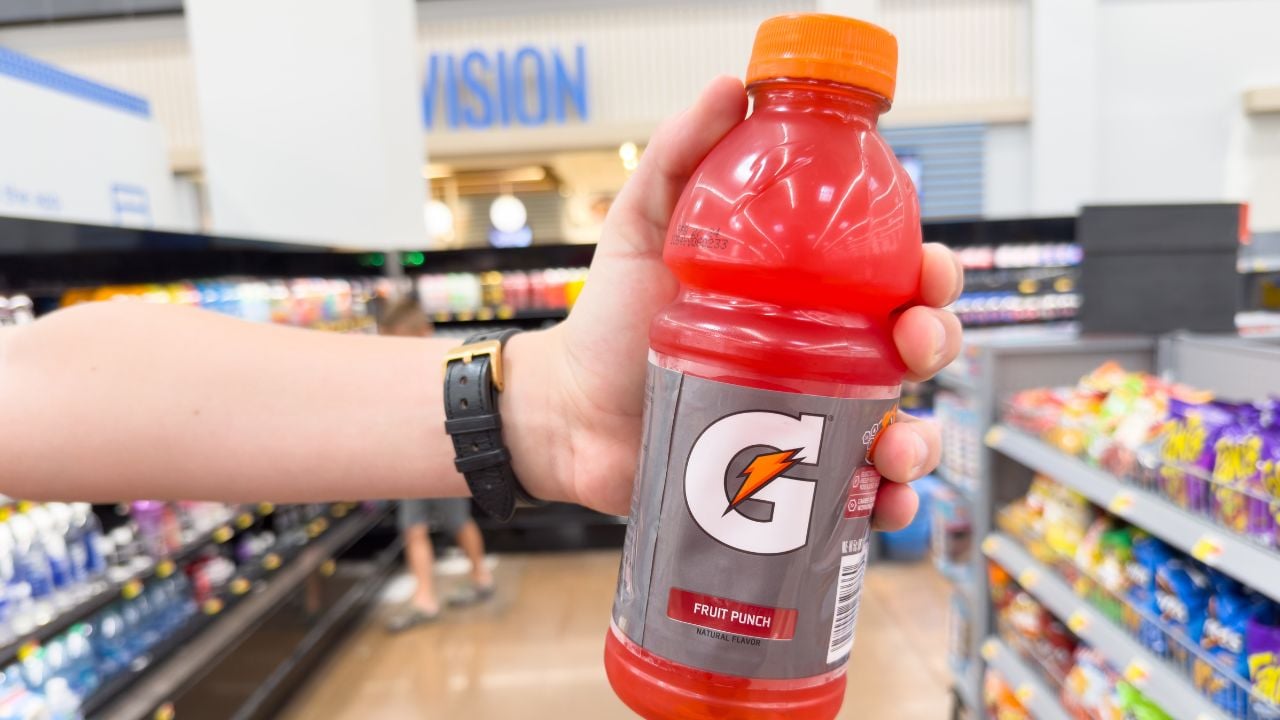
3. Gatorade
Gatorade’s 1965 invention at the University of Florida started with Dr. Robert Cade and his colleagues, the school’s athletics site says.
Cade found that Gators football players’ electrolytes were out of balance, and their blood sugar and total blood volume were low.
His answer was water with salt in it, plus enough sugar to keep blood sugar up without upsetting stomachs.
The Gators saw results on the field immediately, often coming from behind to win games.
Other teams followed.
If you’ve ever grabbed a bottle at a gas station, you’ve picked up a drink that started with that research.
Psst! How much do you know about the inventions behind your favorite foods and drinks? Take our quiz and see how many you can get right.
Quiz
Food Inventions Pop Quiz
Answer these questions on foods, drinks and the people behind them. We bet you can’t get them all right. Prove us wrong?
Minute Maid’s frozen orange juice sales rose from just under $3 million to almost $30 million in three years after which singer came on board?
4. Minneola Tangelos
The Minneola tangelo is a fruit invented in Florida, since the U.S. Department of Agriculture produced it there, according to the Citrus ID database.
It was named and released in 1931.
Honeybell is listed there as another name for it.
Its fruit is deep reddish-orange, with a pronounced neck at the stem end and tender, juicy, aromatic flesh with a rich, tart flavor.
Harvest runs mid to late season, from December through February.
It's a winter fruit.
If you're hunting for one, you'll know it by the pronounced neck at the stem end.
Key Lime Pie's Paper Trail
Key lime pie is a food with a disputed origin, and the television network CBS News put two experts on opposite sides of it.
Cookbook author David Sloan argues that Key West fishermen made the first ones on their boats.
Pastry chef Stella Parks says the earliest recipe she could find is from 1931 and came from a dairy company in New York City.
Parks has acknowledged that an older recipe could still turn up.
The question stays open.
If you want to settle a Key lime pie argument at your table, you'll need a recipe older than 1931.
Devil Crab's Croquette Counterclaim
Tampa's devil crab has two origin stories, according to the Southern Foodways Alliance.
Many point to Ybor City and a cigar factory strike in 1920 as the origin.
Others suggest the dish arrived in Tampa as a Spanish croquette that Sicilian, Spanish and Cuban communities took on.
Devil crabs were made at home, but street vendors made them popular, including Francisco Oscar Miranda and Cesar Beiro.
They pushed carts through the streets of Ybor City.
Each sold for a nickel.
The mix is crab meat, fried green peppers, onion, garlic, tomato sauce and spices.
If you order one, you'll get a fried ball, traditionally rolled in crumbs from day-old Cuban bread and fried in lard.
The group says devil crab continues to hold fast to its Italian, Cuban and Spanish roots.
Cuban Sandwich Origins
The Cuban sandwich's origin points to Havana, according to Andrew Huse, curator of Florida Studies at the University of South Florida (USF) Tampa Library.
The sandwich appeared on Havana menus in the 1800s, before it showed up in a Tampa restaurant.
Havana came first.
If you're deciding which city gets the credit, USF's account says Tampa deserves it for popularizing the sandwich.
Chris Spata, a USF journalism graduate, is credited with creating National Cuban Sandwich Day in 2016.
Tampa had the nation's largest Cuban population for more than half a century before Miami became the center of Cuban culture in the 1960s.
If you order one in Tampa or Miami, you're eating what people in Cuba called a mixto, or a combination.
7 Florida Rivers Floridians Refuse to Swim In
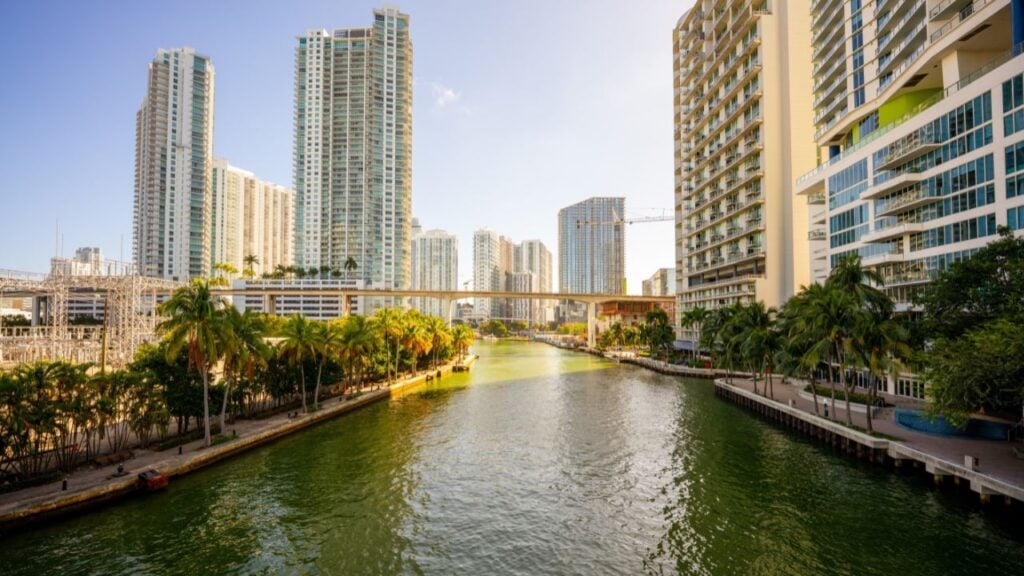
Florida's health department issues blue-green algae alerts for stretches of its rivers.
That's only one reason locals avoid swimming in certain rivers.
7 Florida Rivers Floridians Refuse to Swim In
8 Florida Small Towns That Change Completely in October
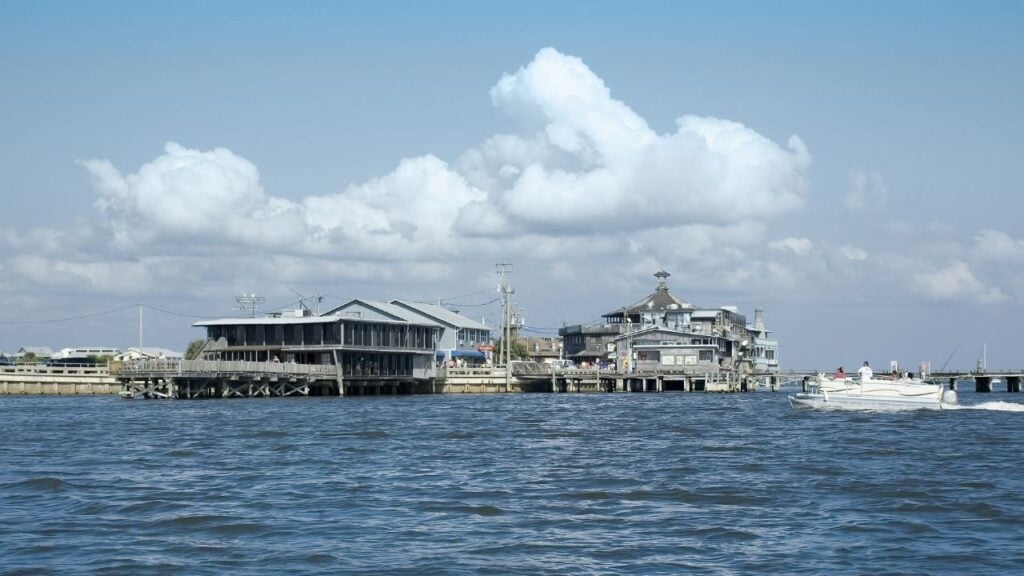
October turns a handful of sleepy Florida towns into somewhere else.
A fishing dock goes from empty to elbow-to-elbow, and it happens fast.
