
7 Florida Rivers Floridians Refuse to Swim In

Florida’s health department issues blue-green algae alerts for stretches of its rivers almost every year.
That’s only one reason why locals avoid swimming in certain rivers.
These are the Florida rivers people refuse to swim in.
1. Fenholloway River
The Fenholloway River near Perry carries a distinction no other waterway in the state holds.
In 1947, Florida lawmakers designated it the state’s only industrial river, opening the door for a paper mill to dump waste directly into the water for decades.
A scientist studying the river later found female mosquitofish developing male traits, a change tied to the mill’s chemical discharge.
Florida reclassified the Fenholloway as swimmable in 1998.
Locals kept their distance anyway, and many still do.
They’ve called it Florida’s Forgotten River for decades.
The name stuck.
Georgia-Pacific spent more than $300 million rerouting the mill’s wastewater away from the river, a project finished in 2020.
The mill closed for good in 2023, laying off hundreds of workers not long after Hurricane Idalia hit the region.
Georgia-Pacific is now asking state regulators for a new permit to discharge up to 12 million gallons of wastewater a day back into the river.
The new permit would treat runoff left behind at the shuttered mill site.
Taylor County residents packed a public hearing to fight it, and a coalition is circulating petitions to kill it.
Many Floridians outside Taylor County have never heard the fight is happening.
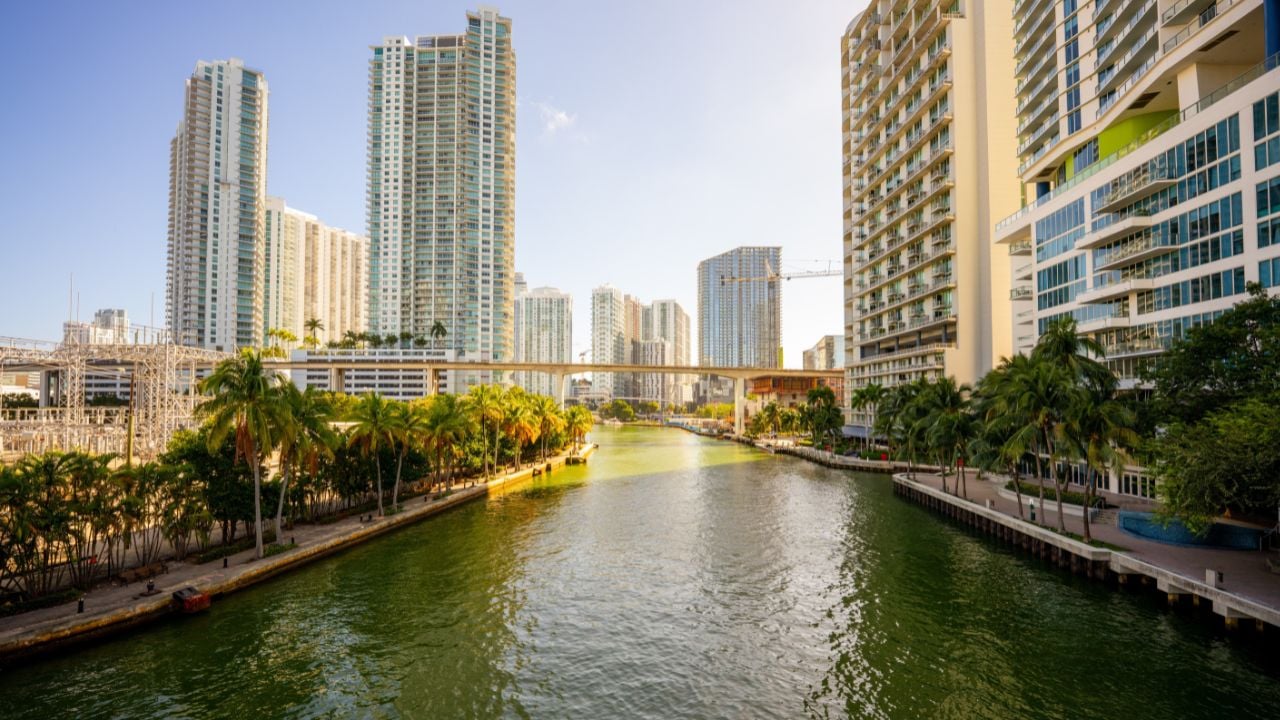
2. Miami River
The Miami River cuts through the heart of Miami-Dade County.
Decades of industrial dumping and urban runoff left the Miami River carrying bacteria levels that keep tripping the region’s safety standard.
Boat traffic and heavy rain both stir up more of it.
A Miami Herald investigation done with Miami Waterkeeper found a testing site near Jose Marti Park on the river failed its bacteria checks 59.7% of the time in 2022.
That’s not close.
That contamination trail traces back to the late 1800s, when the city’s earliest development began draining straight into the water.
Ask why locals skip a swim here, and many point to the boat traffic and the current.
The health department’s numbers say otherwise.
3. Weeki Wachee River
The Weeki Wachee River begins at the same spring that made the area famous for its mermaid shows.
Florida’s health department has posted water-quality advisories for the river’s lower stretch near Pine Island multiple times since 2024, most recently in the spring of 2026.
Hernando County says failing septic systems account for close to a third of the nitrogen reaching the springshed’s groundwater.
The county is now spending on a septic-to-sewer conversion to meet standards set by the state’s 2016 Springs and Aquifer Protection Act.
Many of the tourists who buy tickets for the mermaid show never see this stretch of the river, and nothing at the park mentions it.
The postcard shows one river.
The advisory describes another.
4. Caloosahatchee River
The Caloosahatchee River flows through Fort Myers and Cape Coral.
Florida’s health department has issued blue-green algae alerts for stretches of the river multiple times in 2026 alone.
Florida’s health department in Lee County is blunt about it: Don’t drink, swim, wade, or touch the water wherever a bloom is visible.
The water turns pea-green.
News crews cover the algae every time it blooms, but rarely explain why it keeps coming back.
The U.S. Army Corps of Engineers releases water from Lake Okeechobee into the Caloosahatchee for flood control.
Those releases carry nutrient pollution that feeds the algae blooms downstream.
Boat ramp signs mention the algae.
They don’t mention the floodgates upstream.
5. Halifax River
The Halifax River runs behind Daytona Beach as part of the Intracoastal Waterway.
The state classifies it as impaired for excess nitrogen.
Septic tanks are the reason.
Tens of thousands of aging septic tanks line Volusia County’s coast.
They leach nitrogen straight into the groundwater that feeds the river.
Holly Hill’s water reclamation plant discharges treated wastewater into the same river, permitted to handle up to three million gallons a day.
Many locals skip a swim near the outfall, even though there’s no sign there telling them why.
That slow, invisible pollution is tied to the same seagrass collapse that has starved manatees across the wider lagoon system in recent years.
Nobody photographs a septic tank for the evening news.
6. New River
The New River runs straight through downtown Fort Lauderdale.
A series of pipe breaks between December 2019 and February 2020 sent more than 211 million gallons of raw sewage into the city’s waterways, the New River included.
That isn’t a typo.
The state ended up fining the city $2.1 million over the spills, the largest penalty for a sewage spill in Florida history.
The city spent $65 million on a new sewer pipe to fix it.
The spills stopped making headlines once the immediate cleanup wrapped up.
The aging pipes underneath the city weren’t all fixed at once.
So the river’s water quality still depends on which stretch someone tests.
Timing matters just as much.
What 211 Million Gallons Means
Fort Lauderdale’s New River spill worked out to roughly 320 Olympic-sized swimming pools of raw sewage.
The $65 million pipe built to replace the old one only carries what used to leak out along the way.
Psst! How much do you know about Florida’s rivers and springs? Take our quiz and see if you can ace it.
Quiz
Florida Waterways IQ
Answer these questions on Florida’s rivers, springs, and swamp legends. We bet you can’t get them all right. Prove us wrong?
Which Florida river is unusual because it flows north instead of south for nearly its entire length?
7. St. Johns River
The St. Johns River flows past Jacksonville for the final stretch of its 310-mile run toward the Atlantic Ocean.
Florida's Department of Health in Duval County has issued repeated blue-green algae alerts for stretches near Mandarin Point in recent years.
The alerts keep coming back.
A University of North Florida monitoring project has tracked the chronic pollution behind those blooms for years.
Researchers tie it to decades of runoff from the surrounding watershed, not any single event.
Many people who grew up nearby just shrug it off as ordinary and keep their kids out of the water after a heavy rain.
Florida runs a statewide water-quality dashboard through its Department of Environmental Protection, tracking algae reports for the St. Johns and every other waterway in real time.
The dashboard updates continuously and stays public, but many swimmers never look before wading into the Jacksonville stretch.
The Alligator Math
Florida's Fish and Wildlife Conservation Commission (FWC) has tracked unprovoked alligator bites statewide since 1948, and the running count passed 500 by early 2026.
That number keeps rising.
FWC counts a bite as unprovoked only when a wild alligator attacks without anyone feeding, handling, or cornering it first.
Then June happened.
A swimmer died near the Econlockhatchee River's Barr Street Trailhead that same month, well after the count had already crossed 500.
FWC's guidance treats every freshwater body in the state the same way: Any pond, canal, or river could hold an alligator.
The agency's public numbers don't break down by individual river or lake.
A major bite needs medical treatment beyond first aid, while a minor bite needs only basic first aid.
A swimmer can't look up one stretch of water's bite history before wading in.
4 Things Publix Did in the '90s That Floridians Still Miss
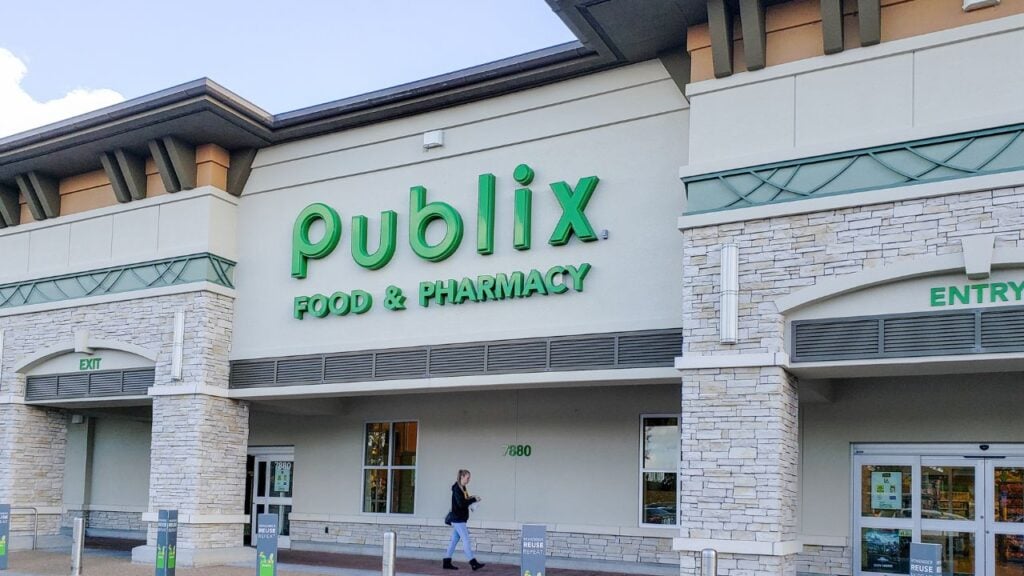
Publix has let a few small conveniences slip away over the years.
One of them let shoppers do their banking without ever leaving the store.
4 Things Publix Did in the '90s That Floridians Still Miss
7 Driving Rules Floridians Follow That Are Nowhere in the Handbook

No single handbook could ever cover every habit that Florida's 18.5 million registered drivers pick up on their own.
Local drivers pass these habits down at the wheel, and no class or manual ever mentions a single one of them.
7 Driving Rules Floridians Follow That Are Nowhere in the Handbook
