
4 Massachusetts Town Commons Nobody Can Agree How to Use

Boston set aside fifty acres of land for its residents in 1634, and the National Park Service still calls it the country’s oldest public park.
Nearly four centuries later, towns across Massachusetts are still arguing about what shared ground like it is for.
These are the Massachusetts town commons nobody can agree how to use.
1. Lexington Battle Green
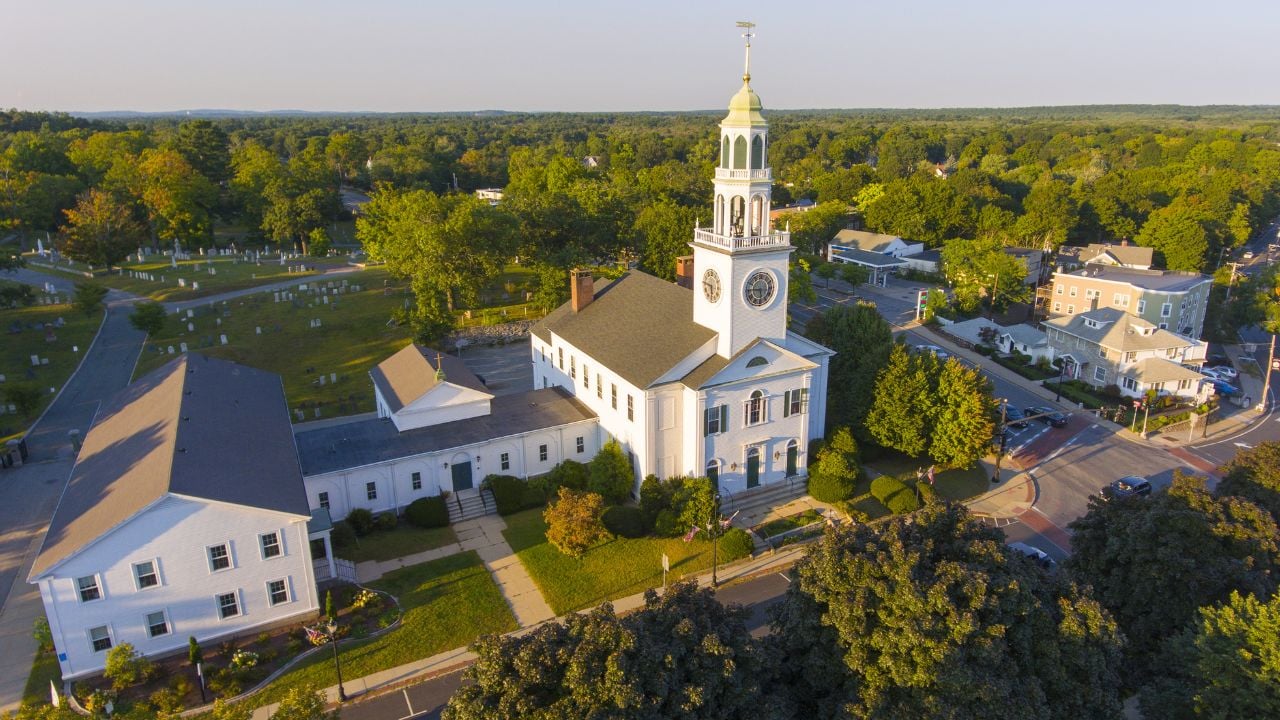
Lexington’s Battle Green, the town’s historic common, is where the first shots of the Revolutionary War rang out on April 19, 1775.
In 2025, the town spent months arguing over who gets to stand on it.
The Lexington Police Department proposed requiring advance permits for anyone protesting near the Captain Parker statue, the bronze Minuteman that anchors the green’s eastern corner.
A new crosswalk from a recent streetscape project now funnels foot traffic straight toward the statue.
Police argued a permit requirement would let officers plan ahead for crowds and emergencies.
Not everyone bought it.
Select Board members pushed back on the idea of the birthplace of American liberty making it harder for residents to exercise free speech.
One resident even invoked Tiananmen Square as a warning about where permit requirements can lead.
The board rejected the police proposal at its June 9, 2025 meeting.
Rather than drop the issue, it formed a working group to find a version of the rule that could satisfy both public safety and the First Amendment.
The group asked residents to weigh in through the town newsletter instead of settling anything on the spot.
Lexington still hasn’t decided who controls the ground where the Revolutionary War started.
Who Owns a Massachusetts Town Common?
A town common usually isn’t just another park a select board can redesign on a whim.
Article 97 of the Massachusetts Constitution protects land that’s been clearly dedicated to public use and used that way for years.
Land under that protection can only change purpose with a two-thirds vote of the state Legislature, not a town vote.
A 2017 Massachusetts Supreme Judicial Court ruling on a Westfield playground confirmed that a formal deed isn’t even required for a space to qualify, just decades of dedicated public use.
Many Massachusetts town commons have been public gathering ground since the 1600s and 1700s, so the fights described here are rarely just about one select board’s preference.
2. Amherst Town Common
Amherst’s Town Common carries two flagpoles, and for years nobody in town could agree on what belonged on them.
One pole traditionally flies the American flag alongside the Prisoner of War (POW) / Missing in Action (MIA) flag.
The other pole carries the United Nations flag plus a rotating second flag that has included banners for Puerto Rican Heritage Day, Tibetan National Uprising Day, and Pride Month.
A 2022 U.S. Supreme Court ruling pushed Amherst to face the same question.
The court had ruled against the city of Boston, which refused a Christian group’s flag request and ended up paying a $2.1 million settlement.
Town Manager Paul Bockelman and the town’s diversity director proposed a policy declaring the flagpoles government speech rather than an open forum.
Under that policy, any flag would need a town councilor’s sponsorship and a council vote instead of a resident’s request alone.
Not every councilor agreed a resident’s simple ask should carry less weight than a councilor’s backing.
There was no easy consensus.
Amherst still argues the same question every time a new flag request comes in.
Whose voice gets the final say over what the common represents?
Psst! How much do you know about the history of the New England town common? Take our quiz and see how many you can get right.
Quiz
Town Common IQ
Answer these questions on the history of the New England town common. We bet you can’t get them all right. Prove us wrong?
Legend says George Washington took command of the Continental Army under a famous elm on Cambridge Common in 1775. What do historians now say about that story?
3. Reading Common
Reading's Select Board split 3-2 in November 2022 over what belongs on the town's Common during the holidays.
The winning side wanted a Christmas tree and a menorah displayed together as a statement about the town's commitment to diversity.
Two of the board members who voted no argued the exact opposite.
Featuring only two faiths out of dozens practiced in town wasn't inclusive at all, and the board should either represent every tradition or none.
A former board member raised a separate objection.
A town common is supposed to stay neutral ground for residents' expression, this argument goes, not a place where the government makes statements on their behalf.
Reading had three different, reasonable positions and one holiday display.
There was no clean answer.
The 3-2 vote settled that particular December, and Town Hall hasn't pretended it settled anything beyond it.
4. Boston Common
Boston's Common has been public land since 1634, when colonists bought it from an early settler and set it aside for the town's shared benefit.
The National Park Service backs that history, calling it the country's oldest public park.
Nearly four hundred years on, Boston still hasn't settled who decides what happens there.
An October 7, 2025 rally marking the anniversary of the Hamas attack on Israel drew hundreds of demonstrators to the Common.
It turned violent, leaving several officers injured, with some hospitalized, and ending with 13 arrests.
The event proceeded without the special event permit the city says is required for an outdoor gathering that size.
Two city councilors publicly criticized Mayor Michelle Wu's office for letting an unpermitted rally happen at all, saying it put officers and the public at risk.
The mayor's office never fully explained why the event went forward without one.
It was the same fight in a new decade.
Boston Common has hosted this same argument before, including past demonstrations that organizers held without permits over city officials' objections.
Twelve of the 13 people arrested were released on bail of $500 to $1,000, each one barred from returning to Boston Common while the case is pending.
City Hall and the Common's neighbors will likely spend 2026 arguing over the same permit question the next time a large rally is planned.
The permit rule already on the books didn't stop October's rally, and nobody at City Hall has proposed a different one yet.
5 Market Basket Deli Counter Mistakes Massachusetts Shoppers Keep Making
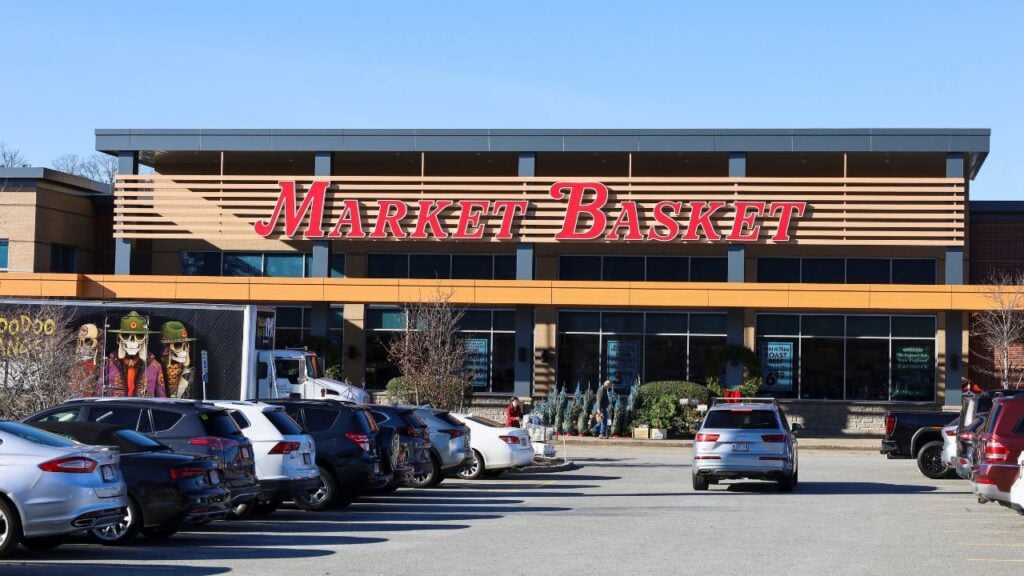
The longest part of a Market Basket deli order shouldn't be realizing there was a faster way to get it.
Shoppers routinely wait for items they could grab immediately, overlook faster options at the counter, and miss the small habits that separate a quick stop from a long one.
5 Market Basket Deli Counter Mistakes Massachusetts Shoppers Keep Making
